Every girl child has the right to education, but not every girl child has access to the tools, training, and mentorship needed to explore a future in tech education. As this year’s Internatio
Every girl child has the right to education, but not every girl child has access to the tools, training, and mentorship needed to explore a future in tech education.
As this year’s International Day of the Girl Child explores the theme “End child marriage and invest in girls’ rights,” it is worth asking what it would take to give more girls a fair chance in tech.
For many girls in underserved communities, the challenge goes beyond affordability. Gender stereotypes still frame tech as a male-dominated field, making it harder for them to see themselves as future developers, designers, or innovators.
Speaking with a tech educator, LindaGift Awo Johnson emphasised that digital literacy and access to tech skills training should be essential parts of every girl child’s education. However, digital literacy goes beyond knowing how to operate a smartphone or browse the internet.
“Girls should have opportunities to understand how technology works, use digital tools safely and responsibly, evaluate information critically, solve problems, and eventually create with technology. Depending on their interests and abilities, this could include writing code to solve problems, data analysis, digital design, artificial intelligence, digital marketing and other emerging fields,” Johnson said.
She added that these skills can expand their educational and career options, strengthen their financial independence, and equip them to become creators and innovators rather than merely consumers of technology.
Frankly, making this a reality requires confronting the barriers that prevent many girls from accessing digital education in the first place.
A UNICEF Generation Unlimited report titled ”From Access to Employment: Addressing the Barriers to Digital Skills Development for Nigerian Girls”, draws on research involving more than 500 girls and young women in Lagos and highlights challenges including the cost of training, limited access to devices and internet connectivity, unreliable electricity, and gender stereotypes.
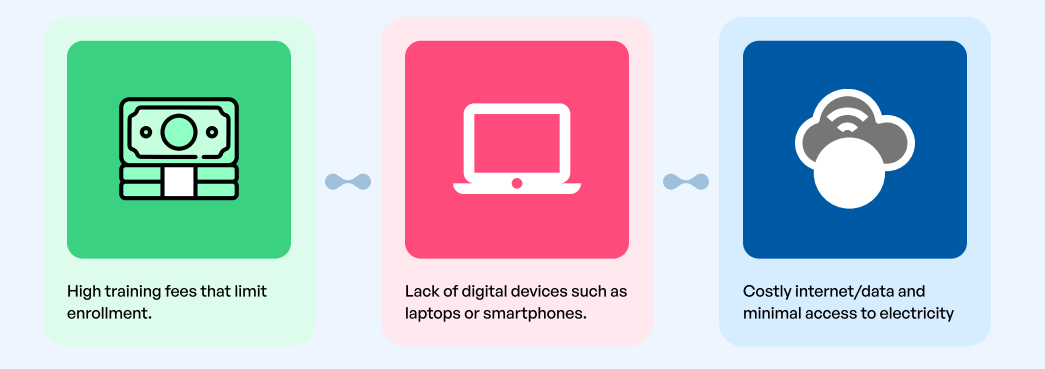 Source: UNICEF Generation Unlimited report, 2026
“In many households, girls rely on shared family phones or outdated computers, often competing with siblings for limited usage time. Frequent power outages, high data costs, and cultural norms that prioritise boys’ digital exposure further restrict their engagement,” the report said.
The report further notes that even in Lagos, an urban centre, inequality persists within institutions and training environments, reflecting broader gender disparities in access to devices and the internet.
These challenges show that access to digital education involves more than making a course available online. A girl may be interested in learning to code but have no laptop on which to practise. She may enrol in a digital skills programme but struggle to afford data, transport, or the cost of completing her training.
Even when these resources are available, she may encounter environments where technology is still perceived as a male-dominated field.
Based on our research and conversations with women in tech, here are 10 practical ways to invest in girls in tech
1. Take the conversation directly to girls in their communities
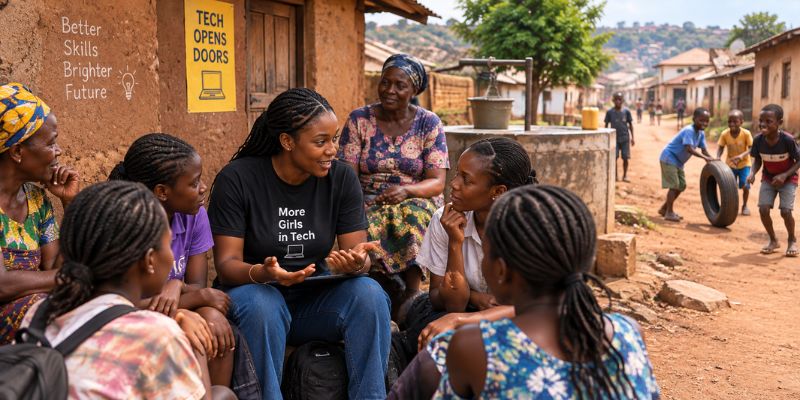
Tech enthusiasts, women in tech, and girl-child advocates can organise community outreach visits to speak with girls about technology and the opportunities available to them. These conversations should address stereotypes that portray tech as a male-dominated field, introduce girls to different tech careers, and help them see that they can pursue these paths too.
Sometimes, the first investment is simply helping a girl realise that technology is an option for her.
2. Visit schools to educate girls about technology careers
Industry experts can organise educational sessions in public and private secondary schools, particularly for girls aged 14–19.
Unlike community conversations, these sessions can take a more structured approach, explaining digital literacy, available tech career paths, the skills required, and how students can begin learning. Speakers can also distribute notebooks, introductory learning materials, or storybooks featuring girls and women in technology to encourage further learning after the sessions.
3. Organise free digital skills training
Tech educators can volunteer to teach girls foundational digital skills at no cost. This could begin with digital literacy and progress to introductory coding, UI/UX design, data analysis, cybersecurity, or other areas of technology.
Training can take place during school holidays, on weekends, or through short community-based workshops, making it easier for girls to participate without disrupting their education.
4. Provide girls with free access to technology tools
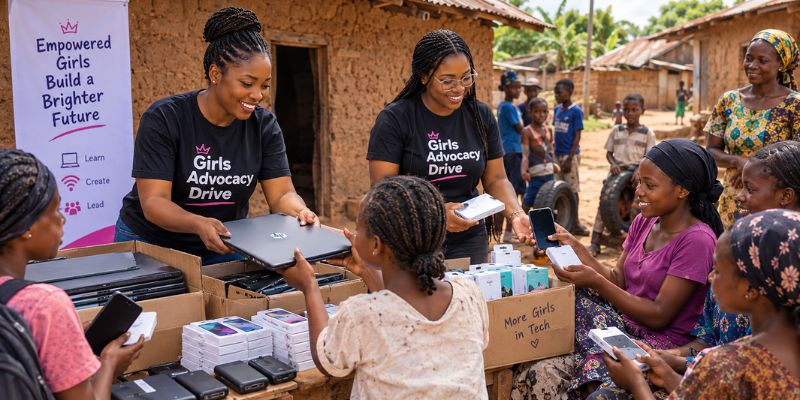
A girl who wants to learn technology needs the tools to practise. Tech founders can donate functional, refurbished laptops, lend devices to learners, or create laptop scholarship programmes in which girls apply based on their learning goals and financial needs.
Where individual device donations are not possible, professionals can arrange supervised access to computers through shared workspaces, training centres, or office facilities.
5. Help girls overcome internet and electricity challenges
Providing a laptop is only useful if a girl can power it and connect to learning resources. Mentors, founders, and technology companies can support girls by providing data stipends, mobile internet allowances, power banks, or access to locations with reliable electricity and internet connectivity.
Even a small monthly data allowance or a few hours of reliable computer access each week can help a learner continue practising outside formal training sessions.
6. Connect girls with mentors who can guide their progress
Tech professionals can commit to mentoring one or two girls over a defined period, helping them understand career options, choose learning paths, set goals, and navigate challenges. Mentorship can happen through monthly virtual meetings, in-person sessions, portfolio reviews, or career guidance.
The goal is to give girls access to people who can answer their questions, share their experiences, and help them identify their next steps.
7. Sponsor continuous learning through online courses
Learning technology takes time, and a single workshop rarely provides enough knowledge to develop a career-ready skill. Tech professionals can curate free online courses, recommend beginner-friendly learning resources, and sponsor course subscriptions or certification examinations where necessary.
They can also organise regular study sessions to help girls stay accountable and complete the courses they start.
8. Bring girls into communities of like-minded learners
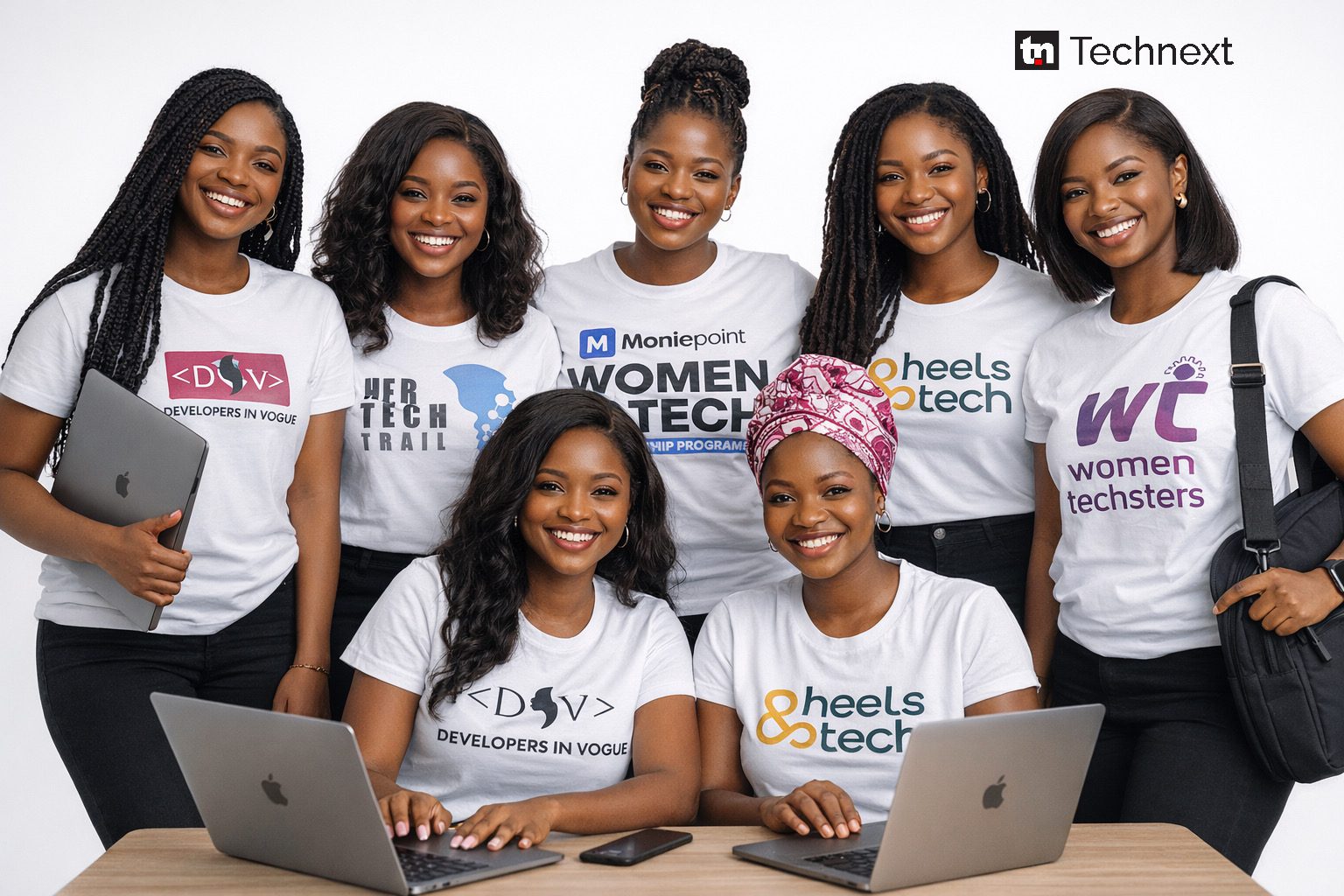
Girls need spaces where they can ask questions, share progress, collaborate on projects, and learn alongside people with similar interests. Tech professionals can create dedicated learning communities through platforms such as WhatsApp, Discord, or Telegram, with appropriate safeguarding for minors.
These communities can share learning resources, announce opportunities, host peer-learning sessions, and help girls stay motivated when learning becomes difficult.
9. Fund girls’ ideas and provide resources to build projects
Girls should have opportunities to turn what they learn into something practical. Founders, mentors, and industry experts can offer small project grants, sponsor software subscriptions, provide cloud credits where appropriate, or supply materials needed to build prototypes.
For example, a girl learning web development could receive support to build her first website, while a learner interested in product design could receive resources to develop a portfolio. Small, targeted investments can help girls move from learning about technology to creating with it.
10. Open doors to real industry experience and career opportunities
As girls develop their skills, professionals can help them take the next step through job shadowing, workplace visits, internships, apprenticeships, and supervised industry projects. Founders can offer placements to qualified young learners, while mentors can review CVs and portfolios or introduce them to relevant professional networks.
For younger girls who are not yet ready for employment, exposure to real tech workplaces can help them understand what different careers involve and what they need to learn to pursue them.
Read also: Children’s Day: 10 best learning apps for children in 2026