BitcoinWorld 18,000 in Sight: Why the Indonesian Rupiah Is Heading for Fresh Historic Lows Despite Hefty Rate Hike Jakarta — The Indonesian rupiah is under renewed pressure, sliding toward th
BitcoinWorld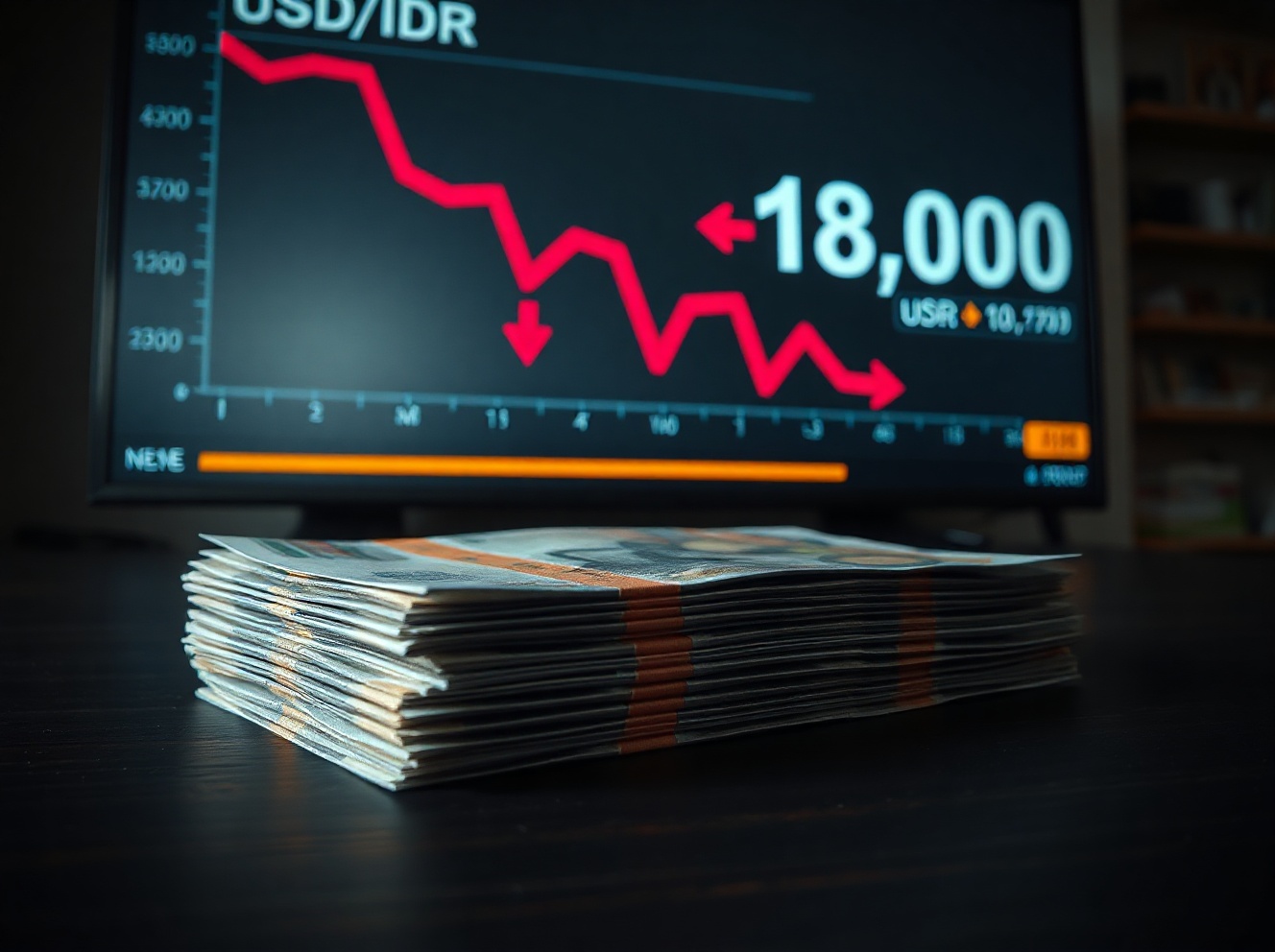 18,000 in Sight: Why the Indonesian Rupiah Is Heading for Fresh Historic Lows Despite Hefty Rate Hike
Jakarta — The Indonesian rupiah is under renewed pressure, sliding toward the psychologically critical level of 18,000 against the US dollar, even after Bank Indonesia delivered an aggressive rate hike. The currency’s persistent weakness has caught the attention of markets and policymakers alike, raising questions about the effectiveness of traditional monetary tools in the face of powerful external headwinds.
Rate Hike Fails to Stem the Tide
Bank Indonesia raised its benchmark interest rate by 25 basis points to 6.25% in a surprise move last month, the highest level in over a decade. The central bank’s goal was clear: defend the rupiah by making the currency more attractive to foreign investors seeking higher yields. However, the immediate market reaction was muted. The rupiah continued its downward trajectory, breaching the 17,500 level and now trading dangerously close to the 18,000 mark — a threshold not seen since the depths of the 1998 Asian financial crisis.
The limited impact of the rate hike underscores a deeper structural issue. Indonesia’s economy, while resilient, remains highly sensitive to global capital flows and commodity price fluctuations. The US dollar’s sustained strength, driven by the Federal Reserve’s prolonged tightening cycle and robust American economic data, has overwhelmed the appeal of Indonesia’s higher yields. The interest rate differential, once a reliable buffer, is no longer sufficient to offset the gravitational pull of the greenback.
Global and Domestic Pressures Converge
Several factors are converging to push the rupiah lower. First, the Federal Reserve’s signal that interest rates will remain higher for longer has strengthened the dollar across the board. Emerging market currencies, from the Turkish lira to the Brazilian real, have all felt the strain. The rupiah, however, has been among the hardest hit due to Indonesia’s reliance on foreign portfolio investment to finance its current account deficit.
Second, Indonesia’s trade surplus has narrowed significantly. While the country remains a net exporter of coal, palm oil, and nickel, falling global commodity prices have reduced export earnings. At the same time, import demand, particularly for capital goods and raw materials, has remained robust as the domestic economy expands. The shrinking surplus reduces the natural demand for rupiah from trade flows, further weakening the currency.
Third, political uncertainty ahead of the upcoming presidential transition has added a layer of risk premium. Foreign investors are adopting a wait-and-see approach, delaying new investments and repatriating dividends, which puts additional selling pressure on the rupiah.
What This Means for Indonesian Consumers and Businesses
The rupiah’s decline has immediate and tangible consequences. Imported goods, from electronics to raw materials, become more expensive, feeding into domestic inflation. Companies with foreign currency-denominated debt face higher repayment costs, squeezing profit margins. For the average Indonesian, the cost of living rises as imported food items and fuel prices adjust upward.
Bank Indonesia faces a difficult balancing act. Raising rates further could dampen domestic economic growth, which is already showing signs of slowing. The central bank’s benchmark rate is now at its highest since 2014, and further hikes risk choking off credit to businesses and households. Conversely, failing to act decisively could trigger a full-blown currency crisis, with the rupiah breaking through 18,000 and potentially testing even lower levels.
Conclusion
The Indonesian rupiah’s journey toward 18,000 per dollar reflects a complex interplay of global monetary policy, domestic economic fundamentals, and investor sentiment. While Bank Indonesia’s rate hike was a necessary step, it is unlikely to be sufficient on its own. The currency’s fate now hinges on external factors — particularly the path of US interest rates and global commodity prices — that are largely beyond the central bank’s control. For now, the 18,000 level looms as a stark reminder of Indonesia’s vulnerability to global financial tides.
FAQs
Q1: Why did Bank Indonesia raise interest rates if it didn’t stop the rupiah from falling?The rate hike was intended to attract foreign capital by offering higher returns. However, the strength of the US dollar and global risk aversion overwhelmed this effect. The hike also signals the central bank’s commitment to fighting inflation, which can support the currency in the medium term.
Q2: What would happen if the rupiah reaches 18,000 per USD?Crossing 18,000 would be a psychological blow, potentially triggering further capital outflows. It would increase the cost of imports, fuel inflation, and raise the burden of dollar-denominated debt. The government may need to intervene more aggressively or seek external support.
Q3: Is this a repeat of the 1998 Asian financial crisis?No. Indonesia’s economy today is far more resilient, with stronger foreign exchange reserves, a more flexible exchange rate regime, and a healthier banking system. However, the current pressures are a serious challenge and require careful policy management to avoid a prolonged downturn.
This post 18,000 in Sight: Why the Indonesian Rupiah Is Heading for Fresh Historic Lows Despite Hefty Rate Hike first appeared on BitcoinWorld.