Markets5 min read
JUST (JST) Price: What the Data Shows
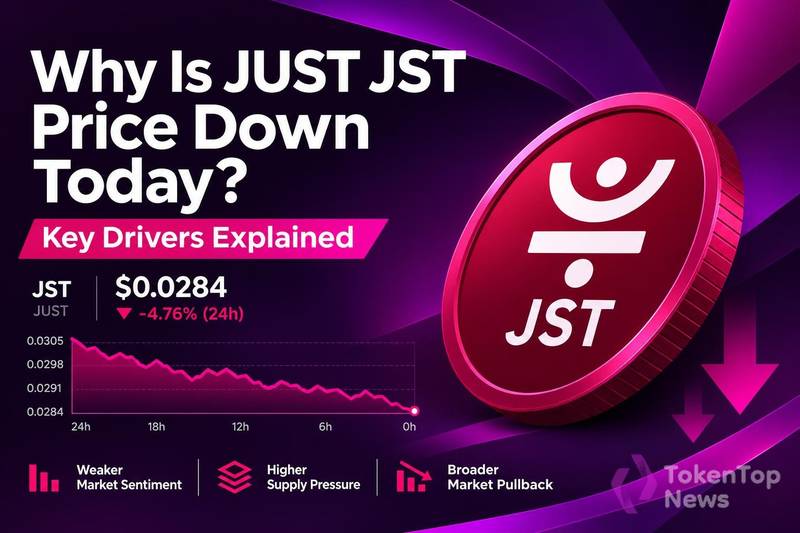
JUST (JST) Price Today: How Far Has JST Fallen? JST price and trading activity On Binance, the JST/USDT spot pair recorded a 24-hour high of $0.14938 and a low of $0.14273 as of 02:52 UTC on
BitcoinWorld 1Password Confirms Breach Behind Phishing Risk 1Password disclosed on November 25, 2026 that an attacker had copied customer records after compromising an employee’s corporate Gi
BitcoinWorld 1Password Confirms Breach Behind Phishing Risk
1Password disclosed on November 25, 2026 that an attacker had copied customer records after compromising an employee’s corporate GitHub account, a breach the company says did not reach the encrypted vaults where users store their passwords. According to Ambcrypto, the stolen information raises the risk of impersonation attempts against customers.
1Password said the breach exposed customer names, email addresses and account identifiers, but not vault contents, passwords or Secret Keys. The primary risk is phishing, because stolen account details could help scammers craft believable recovery or invitation messages.The disclosure came after an investigation that began on November 19, when 1Password detected that an intruder had reached its backend systems through an employee’s GitHub account and used that access to push malicious code into backend services.
The attacker’s path ran through an employee account rather than through the encryption that protects vaults. 1Password said it disabled the compromised account and rotated potentially exposed credentials, and that it had no internal evidence of account takeovers via the exposed provisioning tokens.
Company design limits the blast radius of a server-side breach: 1Password does not store account passwords or the Secret Keys required to open vaults, so access to backend records does not translate into decrypted vault data. Decrypt reported that the apps and browser extensions continued to work normally.
Critics focused less on the vault architecture than on how a single employee account opened so much access. Akash Network founder Greg Osuri said his trust was “heavily diminished” and called for an option to keep vaults entirely local. Crypto and blockchain CTO Nicki Sanders drew attention to the intrusion route, while Trading Strategy co-founder Mikko Ohtamaa argued for open-source alternatives that could make persistent attacks easier to detect.
Others took a narrower view. X user Tom Lombardi described the incident as bad but not a deal killer. Binance co-founder Changpeng Zhao initially urged users to change all passwords; after 1Password said passwords remained unexposed, he acknowledged the clarification and instead suggested weak-password checks and changing login emails to blunt phishing.
The 1Password incident landed on the same week that South Korean exchange Bithumb widened its own disclosure. crypto.news reported on November 25 that Bithumb identified additional affected individuals and data types from an October breach, including identity documents, bank account numbers, resident registration numbers, transaction histories and cryptocurrency wallet addresses.
Bithumb traced unauthorized access to its internal groupware system, DaouOffice, between 1:49 p.m. on October 12 and 3:22 p.m. on October 27. The exchange said DaouOffice operates separately from its trading infrastructure and that investigators found no evidence of direct unauthorized access to trading services or its customer database. It introduced round-the-clock monitoring of unusual logins and suspicious withdrawals.
The two reports differ in scope. 1Password has not disclosed how many customers were affected, while Bithumb’s November update did not provide a revised total for affected individuals. 1Password’s exposure centers on account and contact metadata; Bithumb’s includes financial identifiers and wallet addresses that are harder to replace.
The surrounding pattern extends beyond these two companies. Decrypt noted that Trezor customers received fraudulent phone calls after a shipping partner breach involving approximately 27,000 orders, and crypto.news reported that Coinone disclosed a customer information breach involving its outsourced customer service provider, MetaM.
Password managers concentrate trust: a single backend compromise can hand attackers the contact details and account context needed to impersonate a trusted security brand. For crypto holders, that impersonation is often the first step toward a seed-phrase or wallet-drain scam.
Neither company has reported direct loss of customer funds from these incidents, but the exposure of emails, identifiers and, in Bithumb’s case, bank and wallet details leaves a long tail of targeted phishing attempts that users must fend off themselves.
Watch for 1Password’s post-incident report and any customer notification counts, and for how Bithumb’s compensation process for confirmed losses unfolds. Any evidence of account takeovers through the exposed provisioning tokens would materially change the reading of both incidents.
No. 1Password says vault contents, encryption keys and Secret Keys were not exposed, and it does not store account passwords or Secret Keys on its servers.
What should 1Password users do after the breach?Be wary of unexpected emails or invitations mentioning 1Password, and only enter credentials in the official app or on the official site after opening it yourself. The company said there is nothing in user accounts that needs changing.
How is the Bithumb breach different from the 1Password incident?Bithumb’s October breach exposed a broader set of personal and financial data, including resident registration numbers, bank account numbers and crypto wallet addresses, according to crypto.news. 1Password’s exposed records were limited to account and contact metadata.
Who is targeting crypto users with phishing after these breaches?Ambcrypto cited Unit 42 research tracking fake IT-support voice calls aimed at more than 150 employees across at least ten companies between January and April 2026, alongside documented WhatsApp impersonators and fake Ledger support calls.
This post 1Password Confirms Breach Behind Phishing Risk first appeared on BitcoinWorld.