A transfer of 230 million USDT from Bitfinex to the Tether Treasury has been flagged by on-chain tracking services, drawing attention to one of the larger stablecoin movements between the exc
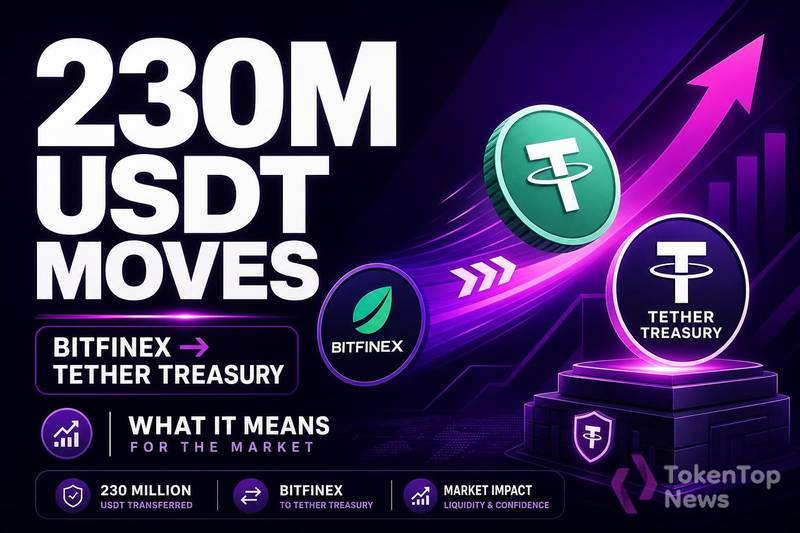
A transfer of 230 million USDT from Bitfinex to the Tether Treasury has been flagged by on-chain tracking services, drawing attention to one of the larger stablecoin movements between the exchange and its affiliated issuer.
What Happened in the 230 Million USDT Transfer
Blockchain monitoring service Whale Alert recorded the transaction, showing 230 million USDT moving from Bitfinex wallets to a Tether Treasury address.
Large USDT transfers between Bitfinex and the Tether Treasury attract scrutiny because the two entities share common ownership. Movements of this size can signal shifts in stablecoin supply management or exchange liquidity positioning.
The Tether Treasury wallet serves as a holding address where USDT can be stored before redistribution or redemption. Tokens sent to the treasury do not necessarily leave circulation permanently.
Why a Transfer to Tether Treasury Matters
When USDT moves from an exchange to the treasury, it can indicate several things: a redemption by a large client, internal rebalancing of reserves, or preparation for reissuance on a different blockchain network.
A treasury-bound transfer is distinct from a token burn. USDT held in the treasury remains minted but sits outside active exchange order books. This reduces the immediately available stablecoin supply on the sending platform without permanently destroying the tokens.
Market participants often monitor these flows alongside broader stablecoin activity. The movement comes as crypto markets continue to see large-volume transfers across exchanges, with developments across major blockchain ecosystems keeping traders attentive to liquidity signals.
However, an on-chain transfer alone does not confirm the underlying motive. Without an official statement from Bitfinex or Tether, any interpretation of the transfer's purpose remains speculative.
What Traders Should Watch Next
Follow-up wallet activity will determine whether this transfer represents a temporary parking of funds or a longer-term supply adjustment. If the treasury redistributes the USDT to other exchanges or chains, it would suggest routine liquidity management.
If the tokens remain in the treasury without reissuance, it could point to a net reduction in circulating USDT supply, which some traders interpret as a signal of reduced demand for stablecoin-denominated trading. Changes in exchange reserve balances across platforms would add further context.
Stablecoin supply shifts have previously coincided with broader market moves, though the relationship is not always direct. As regulatory discussions around stablecoins continue in the United States, large treasury movements may draw additional attention from both market participants and policymakers watching the crypto sector.
No single transfer should be treated as definitive proof of bullish or bearish intent. The 230 million USDT movement is one data point that gains meaning only when paired with subsequent on-chain activity and exchange balance trends.
Additional source references: source document 1.
Disclaimer: This article is for informational purposes only and does not constitute financial or investment advice. Cryptocurrency and digital asset markets carry significant risk. Always do your own research before making decisions.
Read original article on tokentopnews.com