This publication is sponsored and written by a third party. Coindoo does not endorse or assume responsibility for the content, accuracy, quality, advertising, products, or any other materials
This publication is sponsored and written by a third party. Coindoo does not endorse or assume responsibility for the content, accuracy, quality, advertising, products, or any other materials on this page.
What defines crypto projects gaining attention in 2026: users, transactions, or price gains? Internet Computer processed over 3 billion transactions in July, Stellar reached a record 11.1 million daily transactions, while Chainlink quietly supports key infrastructure. By usage, all three already stand out. Yet their prices have not fully reflected that activity.
BlockDAG approaches the same question from another angle, developing usage and price structure together from Stage 1. Priced at $0.00002 under the project’s stated terms against a $0.10 launch reference according to the project, it is building a gap that could allow early activity to translate into price growth instead of leaving the two disconnected.
1. BlockDAG (BDAG): Presale Activity Reaches $2M in Just 24 Hours
Rather than waiting for launch day to build activity, BlockDAG (BDAG) already has several parts moving. X1 Miner is live, putting BDAG into users’ hands, while the Super App and BlockDAGX exchange remain under active development. That early activity gives the project a base that a crypto project gaining attention in 2026 would need before wider awareness arrives.
Stage 1 remains priced at $0.00002 under the project’s stated terms against a $0.10 launch reference according to the project, creating a 50x difference based on the current presale stage. BlockDAG has also reported $2 million raised within 24 hours. Zero team allocation across the 150 billion supply and planned $100 million launch liquidity add further structure to the model.

With usage and pricing considered together, BlockDAG looks more like an early network than a typical presale. Each completed stage reduces access to the current price, making Stage 1 important for those tracking the project before later stages begin.
2. Internet Computer (ICP): Heavy Activity, Weak Price
July brought 3.16 billion transactions for Internet Computer, making it the second-most-active blockchain by this measure. Yet ICP trades near $2.20, more than 99% below its 2021 high of $700. The contrast between network activity and price is one of the clearest gaps in crypto.
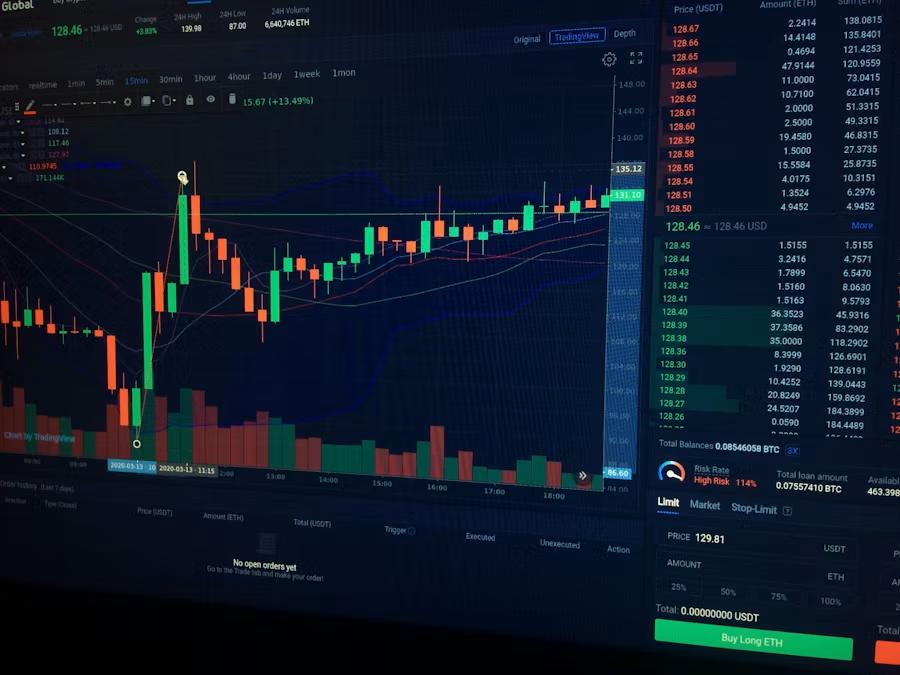
Another issue is valuation, with ICP’s market cap sitting around 91 times its DeFi TVL. Its more than $500 million in research and development has created a strong technical base, while an MCP beta linking AI agents to the network offers another possible growth path. Still, transaction activity must gain stronger economic support before ICP can rank among the crypto projects gaining attention in 2026 by price performance.
3. Chainlink (LINK): Strong Infrastructure Faces a Price Test
Chainlink trades near $8.76 and is testing resistance, while about 75% of its 1 billion total supply is already circulating. This means much of the potential supply increase is already behind LINK. Standard Chartered has also suggested a long-term $200 target, based on its view that wider tokenisation could expand DeFi infrastructure sharply.
That $200 figure remains a long-range idea, not an immediate target. LINK still needs to move above current resistance before the wider forecast becomes relevant. Its oracle network remains deeply used across institutional systems, keeping Chainlink in discussions around crypto projects gaining attention in 2026 even while price movement remains limited.
4. Stellar (XLM): Record Activity Meets a Familiar Price
A new daily record of 11.1 million transactions was reached by Stellar on August 10, showing continued network use. During the same period, Axelar connected Stellar with XRP and Hedera, supporting wider links between three payment-focused networks. XLM remains near $0.16, about 81% below its $0.8756 all-time high.
U.S. regulators gave Stellar a digital commodity designation in March. The network also supports more than $1.2 billion in tokenised real-world assets across over 170 countries for cross-border payments. Price has not matched those developments, but network growth continues regardless of whether XLM becomes one of the leading crypto projects in 2026 for payment use.
Which Project Has the Strongest Setup?
ICP, Chainlink, and Stellar show that strong usage does not always produce immediate price gains. Each continues developing useful infrastructure while its market value remains below earlier highs. That difference can be frustrating, but it also shows why network activity and price should be judged separately.

BlockDAG is attempting to build both sides together from its Stage 1 price of $0.00002 under the project’s stated terms against a $0.10 launch reference according to the project. Its early products, reported $2 million raised in 24 hours, and planned ecosystem additions give it a different starting point. For those comparing crypto projects gaining attention in 2026, BlockDAG is becoming one of the names being watched for its attempt to connect early usage with future market demand.
This publication is sponsored and written by a third party. Coindoo does not endorse or assume responsibility for the content, accuracy, quality, advertising, products, or any other materials on this page. Readers are encouraged to conduct their own research before engaging in any cryptocurrency-related actions. Coindoo will not be liable, directly or indirectly, for any damages or losses resulting from the use of or reliance on any content, goods, or services mentioned.
The post 4 Crypto Projects Gaining Attention in 2026: BlockDAG, ICP, Chainlink, and Stellar appeared first on Coindoo.