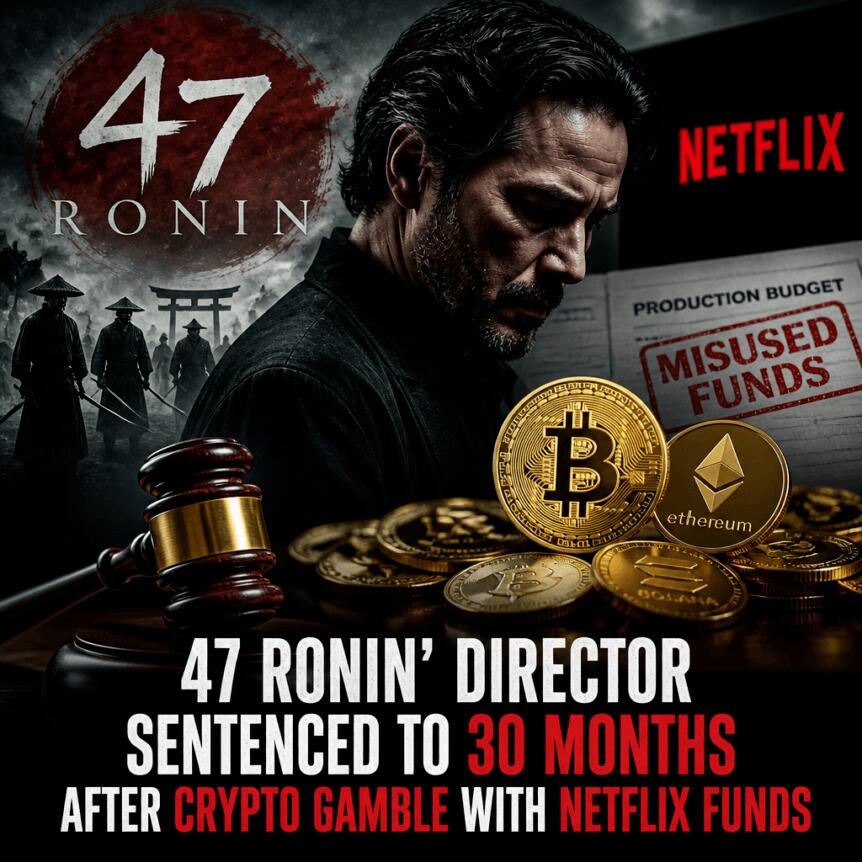
Hollywood director Carl Rinsch has been sentenced to 30 months in federal prison after prosecutors said he defrauded Netflix out of $11 million intended to finance a science-fiction televisio
Hollywood director Carl Rinsch has been sentenced to 30 months in federal prison after prosecutors said he defrauded Netflix out of $11 million intended to finance a science-fiction television production. According to U.S. authorities, Rinsch diverted the funds into speculative trading—including cryptocurrency—before spending large portions on personal expenses and luxury purchases.
The case, handled in Manhattan federal court, closes a 15-month legal saga that began with Rinsch’s arrest in March 2025. He was convicted in December on charges that included wire fraud and money laundering and then faced sentencing for additional counts related to financial transactions tied to alleged unlawful activity.
Key takeaways
- Rinsch received a 30-month prison sentence for a scheme prosecutors say involved $11 million wired by a streaming company for a TV project.
- Prosecutors said the money was used for speculative bets in crypto and stocks, rather than completing the show.
- The court ordered $11 million in forfeiture on top of the prison term and supervision.
- The sentence was far below the maximum penalty the government said he faced across all counts, which totaled up to 90 years.
Fraud scheme tied to a streaming production
Manhattan U.S. Attorney Jay Clayton said in a statement that Rinsch “orchestrated a scheme to steal millions” by seeking $11 million from a subscription streaming service, claiming the funds would be used to finance his television show. Prosecutors said that representation was false.
Instead, Clayton stated, Rinsch made what the government characterized as risky bets on speculative stock options and cryptocurrency and also spent millions on luxury goods. “Today’s sentence sends a deterrent message: fraud will not be tolerated,” Clayton added.
Rinsch, best known for directing the 2013 film “47 Ronin” starring Keanu Reeves, was convicted in December on counts including fraud and money laundering. At sentencing, the court also considered defense arguments that he had mental health issues, including support letters submitted by people close to him.
Prosecutors said the case began as a continuation of an earlier funding arrangement. Earlier reporting and court filings cited in the case describe that Rinsch initially received $44 million from the streaming service for a project later renamed “Conquest,” after a show initially titled “White Horse.” The additional $11 million was wired in March 2020, according to the indictment and accounts described in court materials.
Crypto trading and the Dogecoin liquidation
One of the central claims in the case involved how Rinsch allegedly used part of the new $11 million to attempt to multiply the money through market speculation. According to a March 2025 indictment and reporting connected to a confidential arbitration described by the New York Times, Rinsch used $10.5 million from the additional funding to gamble in the stock market and quickly lost about half within weeks, as described in the indictment.
Prosecutors also said Rinsch moved more than $4 million of remaining funds to the crypto exchange Kraken and then “went all in” on Dogecoin (DOGE). The indictment materials referenced by the article state that the DOGE trade generated about $27 million after he liquidated in May 2021, based on a statement described as seen by The Times.
For readers tracking how court cases interpret crypto activity, the case offers a clear example of prosecutors linking on-exchange transfers and concentrated positions to broader alleged intent. Here, the government framed crypto trading not as a detached investment decision but as part of an overall use of client funds that prosecutors argued was deceptive.
Spending that allegedly followed the trades
After the reported DOGE winnings, prosecutors alleged Rinsch spent about $10 million on personal expenses and luxury purchases instead of completing the show or returning the money. The indictment described expenditures including $1.8 million on credit card bills, $1 million for lawyers to sue Netflix, $3.8 million on furniture and antiques, and large purchases of luxury vehicles, including Rolls-Royces and a Ferrari.
The indictment also cited smaller but specific categories such as $652,000 for watches and clothes, alongside other personal spending. Prosecutors said Rinsch never finished the television project and did not return the funds that had been provided.
While the sentence itself is a criminal-law outcome, the underlying narrative—funds intended for production allegedly redirected into speculative markets and then into personal consumption—highlights how financial misuse allegations can draw on both traditional asset trading records and crypto exchange activity.
What prosecutors sought vs. what the court imposed
At trial, Rinsch was convicted of one count each of wire fraud and money laundering. Each of those counts carried a maximum of 20 years in prison, prosecutors said, while five additional counts involving monetary transactions tied to unlawful activity carried maximum penalties of up to 10 years each.
In a mid-June sentencing memo filed in court, prosecutors asked for a five-year prison term, after Rinsch argued for a sentence without incarceration. The court ultimately imposed a 30-month term—shorter than the government’s request.
Along with prison time, prosecutors said the judge ordered three years of supervised release, $11 million in forfeiture, and $700 in mandatory special assessments.
The defense argued Rinsch’s mental health played a role in his behavior around the time of the alleged offenses, and support letters included submissions from friends and family, as well as a letter from Keanu Reeves. Authorities, however, emphasized the deliberate nature of the scheme, including the alleged misrepresentations used to secure the $11 million.
For investors and crypto users, the practical takeaway is less about any single coin and more about how courts may interpret crypto trading activity when prosecutors tie it to alleged fraud, money laundering, and diversion of funds. Readers should watch how similar cases develop evidence standards—particularly how exchange withdrawals, concentrated token bets, and liquidation timing are presented as part of intent and purpose in fraud prosecutions.
This article was originally published as ‘47 Ronin’ Director Sentenced to 30 Months After Crypto Gamble With Netflix Funds on Crypto Breaking News – your trusted source for crypto news, Bitcoin news, and blockchain updates.