Creativity has always been part of Nigeria’s identity. What has changed is how easily talent can now become a business, powered by a smartphone, internet connection and social media. A comedi
Creativity has always been part of Nigeria’s identity. What has changed is how easily talent can now become a business, powered by a smartphone, internet connection and social media.
A comedian no longer needs a TV slot before becoming popular. A dancer does not have to wait for a stage performance to be discovered. A fashion designer can sell clothes through Instagram without owning a physical store. A makeup artist can teach online classes. A storyteller can build an audience on TikTok, YouTube, X or Instagram and turn attention into income.
What used to depend heavily on physical spaces, industry gatekeepers and traditional distribution channels has moved into a new digital era.
Here is a quick backstory. Nigeria’s creative economy did not begin with the internet. Long before social media platforms became powerful, the country already had a strong creative culture built around music, film, theatre, fashion, dance, literature, visual arts, comedy, crafts and oral storytelling. Traditional artists performed at festivals, concerts, religious gatherings, weddings and community events. Fashion designers built their businesses through referrals, exhibitions and local markets. Actors depended on stage plays, television appearances and film productions. Musicians needed radio airplay, record labels, marketers and live shows.
These systems helped build Nigeria’s cultural identity, but they also had limits. Many creatives needed access to the right people before their work could travel far. Distribution was expensive. Visibility was not guaranteed. A talented person outside Lagos or Abuja could struggle for years before being noticed.
Technology changed that structure.

Social media
As smartphones became more common and internet access expanded, creative work started moving from physical stages to digital platforms. Instagram became a portfolio. YouTube became a broadcast channel. TikTok became a discovery engine. WhatsApp became a sales tool. X became a place for conversations, criticism and community-building. Streaming platforms changed music and film distribution. Digital payment systems made it easier for creatives to sell products and services directly to audiences.
This shift has turned Nigeria’s creative economy into one of the clearest examples of how technology is changing work, culture and entrepreneurship.
Also read: Google and Idris Elba to give 100,000 African creators free access to AI tools in $1 million initiative
It also explains why the sector is now receiving more attention from government, investors and global platforms. The Federal Ministry of Art, Culture, Tourism and Creative Economy identified the sector as a driver of job creation and economic growth, with government plans targeting major expansion in the coming years. In 2025, the ministry announced plans around creative and tourism infrastructure aimed at supporting growth and creating millions of jobs.
PwC also identifies Nigeria as the fastest-growing entertainment and media market in Africa in its Africa Entertainment and Media Outlook 2025–2029. The report says growth is being driven by internet advertising, video games and esports, OTT streaming, music, radio and podcasts, with mobile internet and video streaming expected to lead further expansion.
That growth is not only happening in boardrooms or policy documents. It is visible every day on Nigerian social media.
Six years ago, many people still saw content creation as unserious work. Today, it has become a career path, a business model and, for some, a route into global opportunity.
The first major change technology brought to Nigeria’s creative economy is visibility.
Before digital platforms, many creatives needed access to formal media or physical events to get attention. A comedian needed a show. A musician needed radio. An actor needed a casting opportunity. A fashion designer needed a runway, boutique or celebrity client. A painter needed a gallery. Social media reduced those barriers.
Today, a creator can record content from a bedroom, street corner, studio, market, school or office and reach thousands of people without waiting for permission from traditional gatekeepers. People who may not have had access to mainstream media can now build an audience directly. This is why many of Nigeria’s most recognisable digital creators did not begin with television, radio or film. They began with consistency, relatability and a platform algorithm that helped their content travel.
But visibility has also changed the pressure on creatives. The digital stage rewards speed, consistency and engagement. Creators now have to understand trends, captions, editing, analytics, audience behaviour and platform rules. Talent alone is no longer enough. The modern creative is also a marketer, editor, strategist and community manager.
2. The digital content creation culture
The second major change is the rise of content creation as everyday work.
In the past, creative labour was often attached to specific industries like music, film, fashion, theatre or publishing. Today, almost every skill can become content. A lawyer explains legal issues on TikTok. A doctor creates health videos. A teacher sells online classes. A chef shares recipes. A tailor documents the making of an outfit. A saxophonist posts performance clips. A repair technician shows before-and-after videos. A journalist breaks down news in simple language. This has expanded what counts as creative work.

Content creation is no longer limited to entertainment. It now cuts across education, business, lifestyle, technology, finance, culture, religion, comedy, fashion, beauty and personal branding. For many Nigerians, content has become the bridge between skill and income.
A person who knows how to do something can now teach it. A person who sells something can now market it. A person with an opinion can now build a community around it. A person with a story can now find an audience.
3. The creator-as-business culture
The third change is that creators are no longer just seeking fame. Many are trying to build businesses they own.
In the early days of social media growth, virality was often the main goal. A creator wanted views, likes, shares and followers. Those numbers still matter, but they are no longer enough. Today, Nigerian creators are learning that attention must lead somewhere. That is why many are moving into brand partnerships, paid communities, courses, consulting, merchandise, live events, digital products, affiliate marketing and production companies.
This shift is important because platform popularity is unstable. Algorithms change. Accounts can be suspended. Views can drop. Monetisation policies can exclude some markets. Brand deals can be inconsistent. Creators who build direct relationships with their audiences will have more control than those who depend only on social media reach.
The fourth change is distribution.
For years, Nigerian creatives struggled with how to get their work to audiences. Music now travels through Spotify, Apple Music, Boomplay, Audiomack, YouTube and TikTok. Films and series move through Netflix, Prime Video, YouTube and local streaming platforms. Fashion designers use Instagram and WhatsApp to reach buyers. Visual artists showcase their work on digital portfolios and online marketplaces. This has made Nigerian creativity more global.
Afrobeats, Nollywood, fashion, comedy and digital storytelling now travel faster than ever before. A song can become popular because of a dance challenge. A film clip can go viral before the full production is released. A skit maker can build fans outside Nigeria without leaving the country.
5. The new creative jobs
The fifth change is employment.
The rise of digital content creation has created jobs that did not exist at scale before. Today, behind one successful creator, there may be a video editor, scriptwriter, photographer, social media manager, brand strategist, talent manager, makeup artist, stylist, graphics designer, sound engineer, animator, community manager and legal adviser.
This means the creative economy is not only producing visible stars. It is also creating support industries.
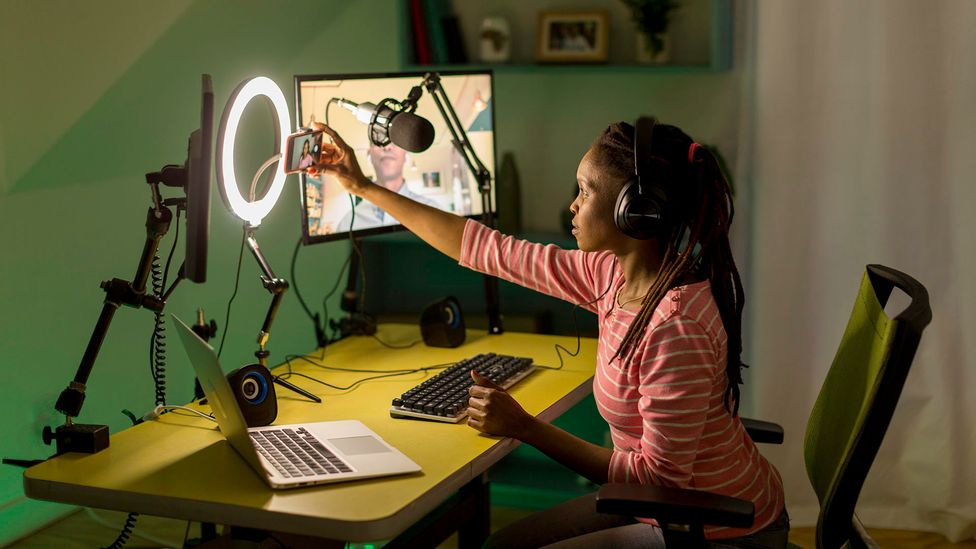
A Content Creator
For a country with a young population and limited formal jobs, this matters. Creative work is becoming one of the ways youths create income outside traditional employment. It is flexible, informal and sometimes unstable, but it is also opening doors for people who may not fit into conventional career paths.
The challenge is that many of these jobs are still poorly structured. Contracts are often informal. Payments can be inconsistent. Intellectual property is not always protected. Young creatives may work long hours without clear rates, benefits or legal protection. This is where policy, education and industry organisation become important.
6. The traditional arts revival
The final change is that digital technology is not only creating new forms of content. It is also giving old forms of creativity new life.
Traditional dancers can document performances and reach younger audiences. Textile artists can explain the history behind fabrics. Sculptors can show their process online. Cultural performers can preserve indigenous music and oral traditions. Local craftsmen can sell beyond their immediate communities. Museums, galleries and cultural festivals can use digital platforms to attract attention.
This matters because the rise of digital content creation should not erase traditional arts. It should extend them. Nigeria’s creative economy is strongest when it connects the old and the new: the talking drum and the TikTok sound, the stage play and the YouTube series, the local fabric and the Instagram fashion campaign, the oral storyteller and the podcast host, the gallery artist and the digital illustrator.
The creative economy is not just a story about social media fame. It is a story about how technology is changing access, work, income and ownership. The talent has always been there. What has changed is the technology around it.
The next challenge is whether Nigeria can build the institutions, policies and infrastructure needed to help creatives retain more of the value they create.
Similar read: How AI-powered Plotweaver seeks to unlock Africa’s £100B+ creative potential