US Crypto Scam Network Hit as DOJ Freezes $938 Million In one of the biggest crypto news today headlines, US authorities have moved to choke off a massive US crypto scam operation. The Depart
US Crypto Scam Network Hit as DOJ Freezes $938 Million
In one of the biggest crypto news today headlines, US authorities have moved to choke off a massive US crypto scam operation.
The Department of Justice's Scam Center Strike Force, working with the Treasury Department, has restrained close to one billion dollars in assets tied to the network.
The latest strike targeted Xinbi Guarantee, a Chinese-language marketplace that ran on Telegram and connected scam center operators with vendors offering money laundering, fake investment sites, and trafficking recruitment services.
A federal court unsealed a seizure warrant on September 7, 2026, authorizing action against Xinbi's Telegram infrastructure. The formal announcement followed two days later, on September 9, when officials confirmed the results of the operation.
How Much Crypto Did the DOJ Freeze in the US Crypto Scam?
Officials said roughly $52 million in cryptocurrency was restrained in a single day, pushing the Strike Force's running total to approximately $938 million since the unit was formed in November 2025.
It ranks among the largest coordinated crypto scam money laundering interventions the Strike Force has carried out so far.
Metric
Figure
Restrained in one day
$52 million
Total restrained since Nov 2025
$938 million
Xinbi transaction volume since 2022
$24 billion+
Reported Xinbi user base
650,000+
Wallets seized directly
2 (about $12 million)
Additional wallets targeted for forfeiture
47
Xinbi Guarantee US Crypto Scam Explained
Xinbi Guarantee operated as an escrow-style Telegram crypto scam marketplace, holding vendor payments until scam center operators confirmed services were complete.
Treasury's Office of Foreign Assets Control designated Xinbi a significant transnational criminal organization and named two support entities alongside it:
Anwen Technology, the Cambodia-based developer of the XinbiPay wallet
SafeW Technology, the Singapore-based developer of an encrypted messaging app used across the network
Treasury data shows the platform processed more than $24 billion in digital asset and fiat transactions since it began operating around 2022, making it one of the largest Chinese scam network crypto hubs feeding Southeast Asia's fraud economy.
This US crypto scam bust was also flagged early on social media, ahead of wider coverage. @MartiniGuyYT posted the DOJ's restrained-funds figures and the Xinbi user count shortly after the announcement.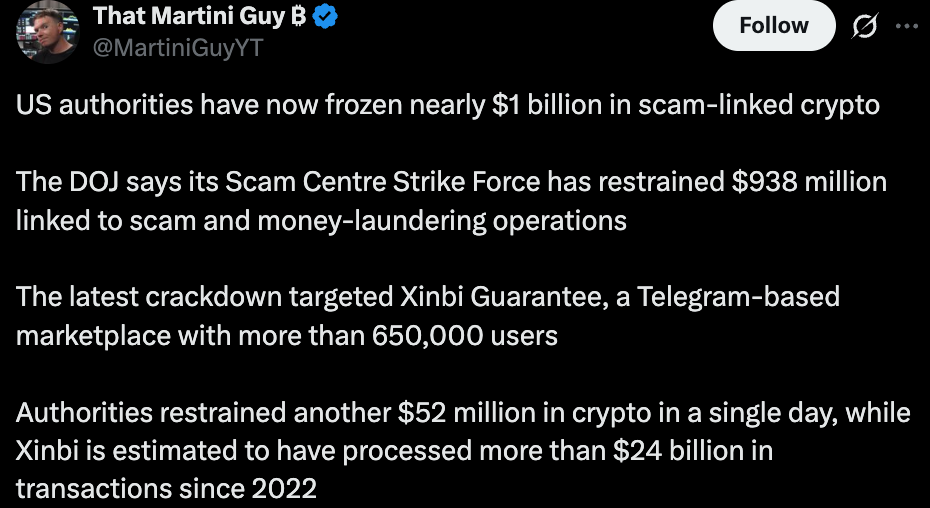
Biggest US Crypto Scam Seizure of 2026: What Comes Next
Beyond the Xinbi crypto asset seizure US authorities carried out on home soil, the Strike Force also sent a team to Madagascar for two weeks, helping local authorities dismantle 13 scam compounds allegedly run by Chinese organized crime groups, an operation officials say led to hundreds of arrests.
The Justice Department said its investigation into the scam compound crypto funds network remains active, with further wallet forfeiture actions expected against Xinbi's vendor base.
The Treasury OFAC crypto sanctions action means all Xinbi-linked property within US jurisdiction is now blocked, and US persons are barred from transacting with the network going forward. The move builds on a similar UK sanctions action against Xinbi from March 2026.
Expert Opinion
Crypto news watchers say this action signals a shift toward targeting scam infrastructure itself rather than individual fraud cases one at a time.
Analysts note that dismantling escrow marketplaces like Xinbi could disrupt the plumbing several scam operations rely on at once, rather than removing a single bad actor.
The scale of the DOJ crypto scam crackdown, paired with earlier UK action, suggests coordinated international pressure on Southeast Asian scam networks could continue through the rest of 2026.
Disclaimer: This article is for informational purposes only and does not constitute financial or legal advice. All figures are based on official statements from the US Department of Justice and the US Department of the Treasury. Readers should conduct their own research before making any related decisions.