A buyer considering a used commercial generator wants to know how it has been treated. In a hypothetical tokenized sale, the seller supplies a token associated with the equipment and a digita
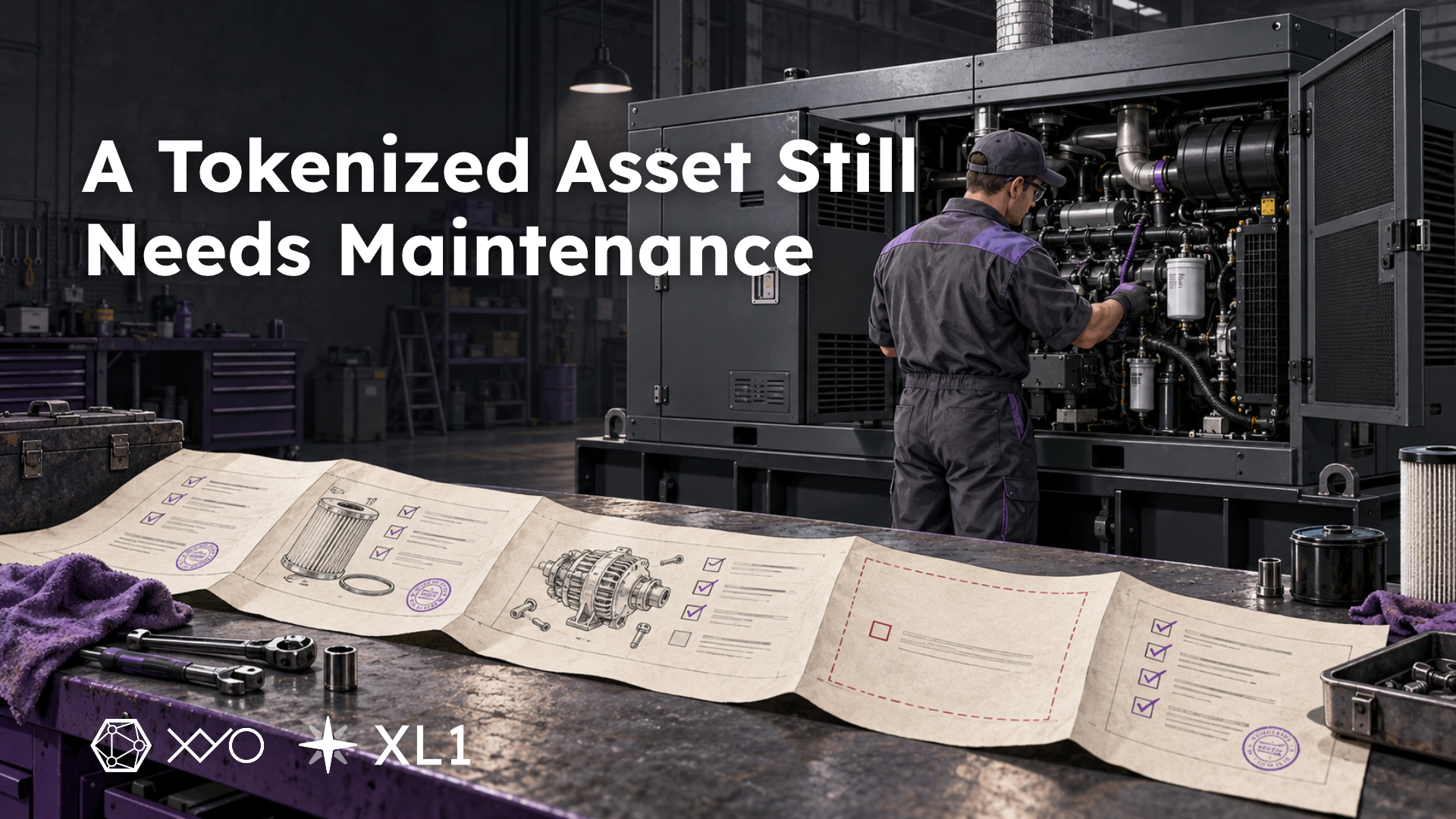
A buyer considering a used commercial generator wants to know how it has been treated. In a hypothetical tokenized sale, the seller supplies a token associated with the equipment and a digital record identifying the unit. During the inspection, the buyer learns that its alternator was replaced six months ago and that it has since moved to a facility with a heavier workload. The seller also mentions an annual inspection, but nobody can find the report. Before making an offer, the buyer needs to understand what those changes mean for the machine they’re about to purchase.
Tokenizing a physical asset creates a responsibility to maintain its digital history as the asset changes. A generator can remain associated with the same token while its components and operating condition change over years of use. For the next owner, the value of that history depends on whether they can follow it back to the equipment and examine the evidence behind its entries.
The connection begins when the generator enters the system. Its serial number identifies the unit, while photographs and an initial inspection provide supporting detail. Whoever creates that first record needs to document where the information came from. A manufacturer’s specification describes how the model was designed; an inspector’s report describes what someone found when examining this particular generator.
That connection needs to survive repairs. Suppose a replacement controller introduces a new device identifier into the monitoring system. The application needs to associate that identifier with the existing generator so that subsequent readings continue its history. Creating a separate asset record could leave future owners searching across disconnected files, unsure whether the records describe one machine or several.
At XYO, this connection between physical activity and verifiable information is central to our work. Our infrastructure supports applications concerned with real-world events, including asset movement and the presence of devices, while XYO Layer One provides infrastructure for permanent data validation. In an equipment application, those capabilities could help developers preserve records tied to an asset throughout its working life.
The alternator replacement gives the application something specific to document. The technician’s work order should identify the generator and the component installed, along with when the work occurred. If the service company performs a load test afterward, linking its report to that repair gives the next reader evidence to examine. An owner’s note saying “alternator replaced” leaves more questions for the buyer to resolve.
The origin of each entry matters because different participants can speak to different parts of the event. The owner can confirm that they commissioned the repair. The service company can document the work it performed. A test report can describe how the generator behaved under the conditions tested. Preserving those sources gives a later reader a way to assess the history without treating every entry as equally informative.
An application built with XYO could make the origins and integrity of such records verifiable. The developer would still need to decide who can submit a service entry and how that submission connects to the equipment. A signature helps establish who supplied a record; evaluating the repair requires examining what that record contains. The buyer may still request a fresh test, especially if the generator’s workload has changed since the previous one.
The missing annual inspection report creates a different problem. Perhaps the inspection happened and the contractor retained the paperwork. Perhaps it was postponed. The seller’s reference to an inspection doesn’t resolve that uncertainty, and a scheduled appointment should never appear in the history as completed work.
The application should preserve the distinction between an inspection being requested and its findings being submitted. If a report is missing, that gap needs to remain visible to someone reviewing the equipment. The buyer can then ask the seller to retrieve it or arrange another inspection before proceeding. Filling the gap with an unsupported completion status would make the record less useful at the moment someone needs to rely on it.
Supporting files also need to remain accessible. A verifiable reference to a report has limited practical value if the report sits in a former contractor’s closed account. Whoever builds the application needs to plan for document retention and access as service providers change. Equipment can outlast the companies that maintain it, so its history needs a way to survive those departures.
Resale exposes weaknesses that are easy to miss while one organization controls the equipment. Employees may know which contractor performed a repair or where an old report was filed. A buyer inherits none of that familiarity. They need records that make sense without someone from the seller’s maintenance team explaining each entry.
For developers, that means designing the handover alongside the original asset record. The buyer needs access to the supporting material they’re entitled to receive and a way to check where important entries originated. The system also needs a process for adding corrections while retaining the earlier history. If a technician attached a report to the wrong generator, the correction should explain the mistake so that future readers can understand the record.
Our hypothetical buyer can now trace the alternator replacement to the service company and review its test results. The move to a new facility explains a change in operating conditions. The missing inspection report remains an open question, giving the buyer a specific reason to request another inspection before agreeing on a price.
That’s the kind of ongoing work a tokenized asset application needs to support. XYO offers infrastructure developers can use to make the history verifiable, while the application determines how useful that history becomes to the people operating and purchasing the equipment. Years after issuance, the next owner should be able to open the record, understand the last repair, and know what to ask the technician to check.