Imose Technologies, through Imose Mobile, its telecom operator division, is preparing to launch as Nigeria’s next virtual operator. The entry into voice and data services comes after 12 years
Imose Technologies, through Imose Mobile, its telecom operator division, is preparing to launch as Nigeria’s next virtual operator. The entry into voice and data services comes after 12 years of technology infrastructure operations.
The expected launch follows groundwork since its 10-year licence approval on April 1, 2023. By taking its time to study the market dynamics, Imose wants to avoid a rushed entry and offer a real solution with the SIM launch.
Between early 2023 and January 2024, the Nigerian Communications Commission (NCC) licensed 46 mobile network virtual operators (MVNOs), acting as little MNOs to specifically channel connectivity across Nigeria’s rural communities. Almost three years after the license approval, only about three have launched, with Lebara being the latest.
The problems inhibiting virtual operators from launching have been linked to high entry fees, hostile wholesale conditions from dominant host networks, and a lack of supporting infrastructure. It’s a common agreement that virtual operators were not prepared for the investments of Nigeria’s infrastructure-heavy telecom industry.
Also Read: 5 reasons MVNOs are struggling to launch in Nigeria.
Amid these plays, Imose is building an ecosystem that combines hardware, connectivity, and digital self-registration to deliver a seamless “out-of-the-box” solution. Imose holds an MVNO Tier 2 licence – also known as a Simple Facilities Virtual Operator (SFVO)- that allows a company to own and operate limited network and customer management infrastructure without owning a spectrum licence.
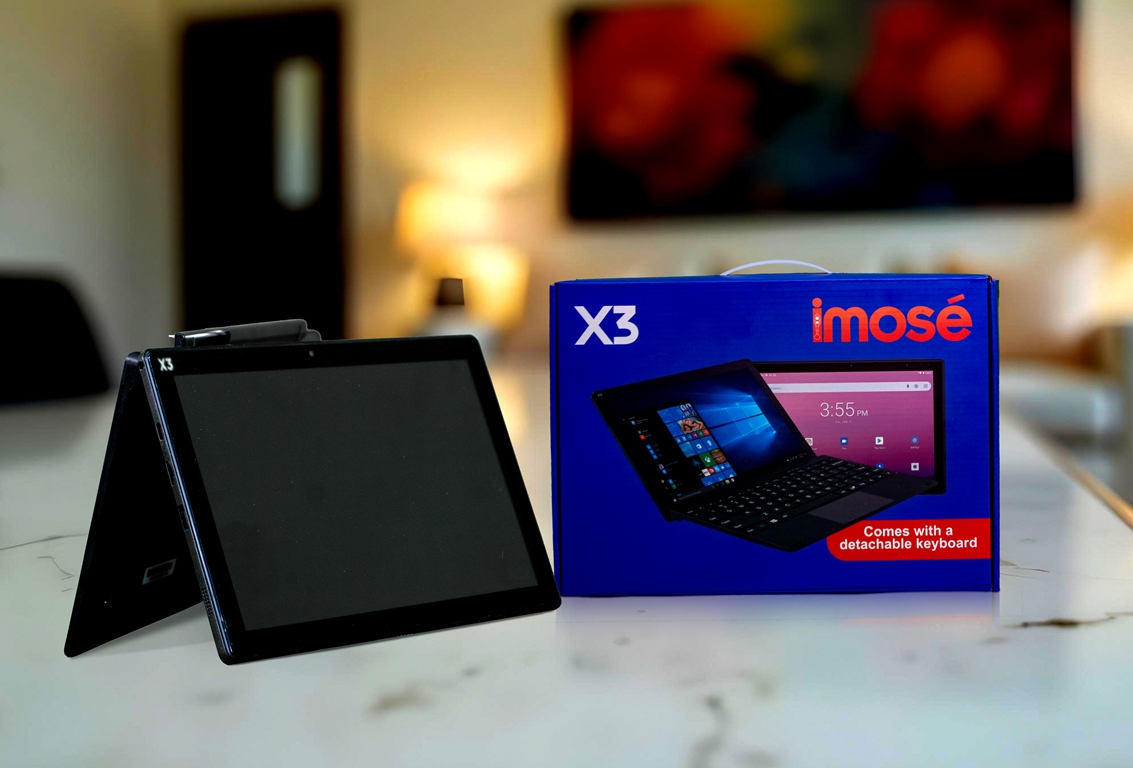
Imose Technologies X3 tablet
Imose Mobile is expected to launch before the end of 2026.
Imose: A familiar face in the Nigerian telecoms industry
Imosé Technologies is an indigenous hardware brand known for desktop phones, routers, WiFi, feature phones, and tablets assembly and production.
The company is a familiar face, powering SIM registration handhelds used by telco agents and the branded routers sold by major networks. This reveals how millions of Nigerians have been interacting with Imose technology daily.
In a conversation with Technext, Michael Nene, Head of Marketing at Imose Technologies, shared that transitioning into a full service provider isn’t a sudden pivot, but a natural evolution built on a decade of enterprise infrastructure supply.
Detailing Imose’s long-standing relationship with major telcos like MTN, Glo, and Airtel, he noted that
“If you buy a Glo router today, you will see on the back of the router that this router was actually manufactured by Imose. So we’ve been playing in the telco space for a very long time, but we’ve just been servicing the telcos that you know.”

Michael Nene
Michael said the company took its time before launching because there’s a need to get it right before market entry, noting that rushing into the market can result in irreversible mistakes that could lead to an inevitable exit.
Since its 2023 licence approval, he explained that Imose has taken a multi-year rollout approach, coupled with rigorous network testing, and pre-built partnerships with banks, fintechs and nationwide logistics networks.
Hardware plus SIM delivery
The transition to a full-fledged telecom business comes with what it described as a “Complete Solution” that blends hardware with SIM delivery. The company, through Imose Mobile, wants to launch its own SIM card (both physical and e-SIM).
Explaining the dynamics, Michael painted the initiative as removing friction for consumers.
“Why can’t we give a complete solution rather than produce a device and you now have to go look for a SIM card from a different telco to use our device?When you buy our router, you should be able to connect instantly. Before you can even leave the store, you turn it on, activate it on our app, and you’re good to go,” he explained.
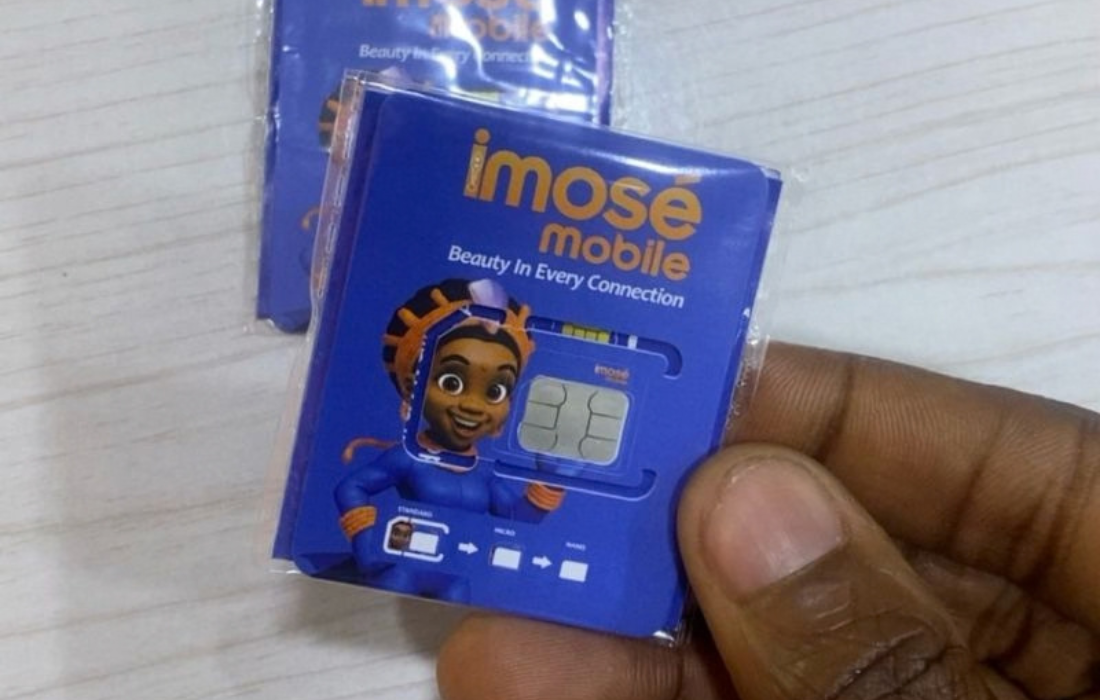
Imose Mobile SIM
About what it is offering differently, the operator is bringing an app-based SIM self-registration that eliminates agent queues, consumer features such as home delivery, digital payments, and bundled data deals.
As a virtual operator who can’t own spectrum, Imose will be riding on Airtel’s host network infrastructure.
Also Read: Inside the $15 million Imo Digital City assembling 1,000 smartphones daily.
Imose admits MVNO struggles
Nigerian virtual operators are faced with several bottlenecks that have shown that the NCC’s mass licence approval in 2023, in the bid to have more operators, has not led to the desired goal.
For instance, Vitel Wireless, the first virtual operator to launch in Nigeria, received a dedicated numbering series (0712) in January 2025, two years after obtaining an operating license. It then made its market entry in August 2025 with the rollout of 50,000 SIM cards and eSIMs.
The same story for Lebara, which launched after months of delays marred by preparation and partnership coordination. The big lesson is that virtual operators that need MNOs to survive cannot compete with such big players.
Telecom tower
In recognition of the market structure, Michael noted that building fresh telecom infrastructure is economically unviable in modern Nigeria. To this end, Imose Mobile is not trying to displace MTN or Airtel; rather, it is designed to service its existing customer base with subsidised and tailored call/data bundles.
“The main reason we are coming in is not to compete with them. You can’t compete with them; at the end of the day, they are the market leaders,” he noted.
However, he expressed that Imose Mobile is not just another SIM card on the street, but a pioneering indigenous model for integrated hardware and telecom services in West Africa.