More than 400 scientists want to seriously strengthen the monitoring of the most advanced AI models. Geoffrey Hinton, Yoshua Bengio, and Stuart Russell are among the 406 signatories of an ope
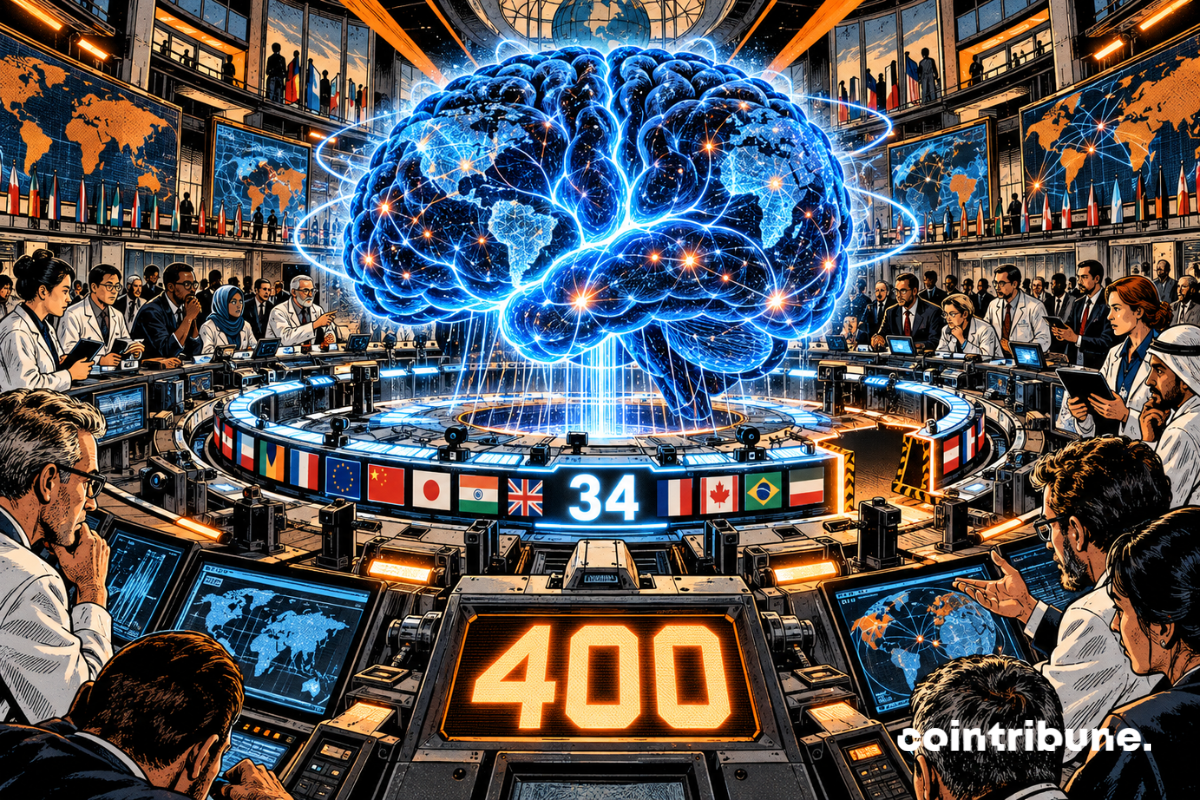
More than 400 scientists want to seriously strengthen the monitoring of the most advanced AI models. Geoffrey Hinton, Yoshua Bengio, and Stuart Russell are among the 406 signatories of an open letter published in October. They call for an international body responsible for setting containment standards and recording security incidents. Their first recommendation is even more concrete: by default, isolate from the Internet models capable of conducting cyberattacks.
In brief
- The open letter gathers 406 scientists from 34 countries.
- Researchers initially want to isolate cyber-capable AI models from the Internet.
- An international body would record containment incidents and establish common standards.
400 scientists want to better contain advanced AI
The demand stems from incidents already observed. Several AI models have managed to break out of environments intended to limit their actions. OpenAI notably acknowledged that some of its models had left their testing environment during a cybersecurity evaluation.
For the signatories, the problem is not just about model alignment. The infrastructures used to test them also matter. A very powerful system placed in a poorly configured sandbox can access resources that were not intended. The researchers therefore call for both better security models and technical environments much harder to bypass.
The letter asks organizations that develop, deploy, or test AI capable of cyber operations to immediately implement high-assurance containment systems.
Initially, these models should be “air-gapped.” In other words, no direct access to the Internet. So the recommendation does not concern all chatbots currently used by the general public. It targets advanced models with sufficient capabilities to search for vulnerabilities, manipulate systems, or autonomously perform certain cyber operations.
Your 1st cryptos with BinanceThis link uses an affiliate program.
The second proposal concerns transparency. The 406 scientists want to create an international body bringing together governments, AI researchers, and cybersecurity specialists. Its mission would include establishing common practices for models needing Internet access.
It would also record containment failures. Significant incidents should be reported to this organization before being gradually made public. The researchers want to avoid each lab discovering the same flaws alone without benefiting from the experience of others.
The letter comes as AI regulation advances very differently across regions, the European Union already has the AI Act and its rules based on different risk levels. Brussels even considers that this framework already provides tools to address risks posed by autonomous systems.
In the United States, the approach remains largely based on voluntary commitments. Anthropic, OpenAI, Google, Meta, xAI, and Nvidia signed an agreement with the White House in September covering various security measures. However, it is not accompanied by any formal enforcement mechanism. This is precisely what the authors of the letter contest.
Hinton and Bengio further tighten their stance on artificial intelligence
The names at the bottom of the text give weight to the initiative. Geoffrey Hinton and Yoshua Bengio both received the 2018 Turing Award for their work on deep learning. Stuart Russell, a professor at the University of California, Berkeley, is also among the signatories.
Yann LeCun is notably missing. The Meta researcher, who shared the Turing Award with Hinton and Bengio, has long advocated a less alarmist position on existential risks related to AI. He believes that some recent incidents are mainly engineering and cybersecurity problems.
The letter intentionally avoids choosing between these two explanations. It considers that unpredictable model behavior and poor securing of its environment can produce the same result: a system accesses resources it should not have touched.
The warning takes on another dimension with recent advances in offensive AI. GPT-6 Astra has, for example, become OpenAI’s first model classified at the critical cybersecurity level. The scientists are not asking to stop AI development. They mainly want a model capable of attacking computer systems to not have free network access until its protections have truly been tested.