In brief: TRM Labs reports, on the basis of its own analysis, a markedly heavier use of AI in crypto-related crime, above all in fraud. AI makes familiar tactics such as fake support, deepfak
In brief: TRM Labs reports, on the basis of its own analysis, a markedly heavier use of AI in crypto-related crime, above all in fraud. AI makes familiar tactics such as fake support, deepfakes and phishing more convincing and easier to scale, yet it is no proof that every crypto loss has risen by the same margin. Protection comes mainly from secure routines: never hand over a seed phrase, open links independently, and check urgent messages through a second channel.
AI crypto crime has moved out of its niche and onto the agenda of analysts and regulators. On August 21, 2026, The Block reported on the new “AI-in-Crime Adoption Index” from TRM Labs, which assesses the role of artificial intelligence in crypto-related crime in a systematic way. One caveat matters here: The Block summarises the TRM Labs analysis, but it supplies no independent global statistics on crypto fraud. According to TRM Labs, AI is increasingly used to run existing attacks faster, in more convincing language and with sharper targeting. More AI in cybercrime does not automatically mean that every crypto loss has grown to the same degree. This article sets out which forms of attack gain plausibility, where the data gaps sit and which protective measures still count.
What Is Behind the AI Crypto Crime Trend
AI crypto crime describes the use of artificial intelligence to prepare, personalise or automate criminal activity in the crypto space. In practice, AI generates or improves text, translations, images, voices, chat replies and variations of a lure. It does not necessarily replace known fraud models; more often it amplifies classic social engineering, in which attackers exploit trust, helpfulness, fear, time pressure or apparent authority so that victims hand over data, connect a wallet or sign a transaction themselves. According to TRM Labs, fraud is the most advanced category for the use of AI in criminal contexts within its own index.

Three AI Crypto Scams That Are Getting More Convincing
Fake Support
Contact usually starts with a comment, a direct message, a search ad or a fake profile. The supposed support agent then claims there is a security problem or that a “wallet verification” is required. AI can produce multilingual, professional-sounding dialogue and fast replies, which means a badly worded message no longer works as a reliable warning sign. The most important rule is unchanged: legitimate support never asks for a seed phrase, private key or password. As MetaMask sets out in its official support guidance, genuine support makes no unsolicited calls and never asks for the Secret Recovery Phrase. Anyone who hands over that data normally gives attackers full control of the wallet.
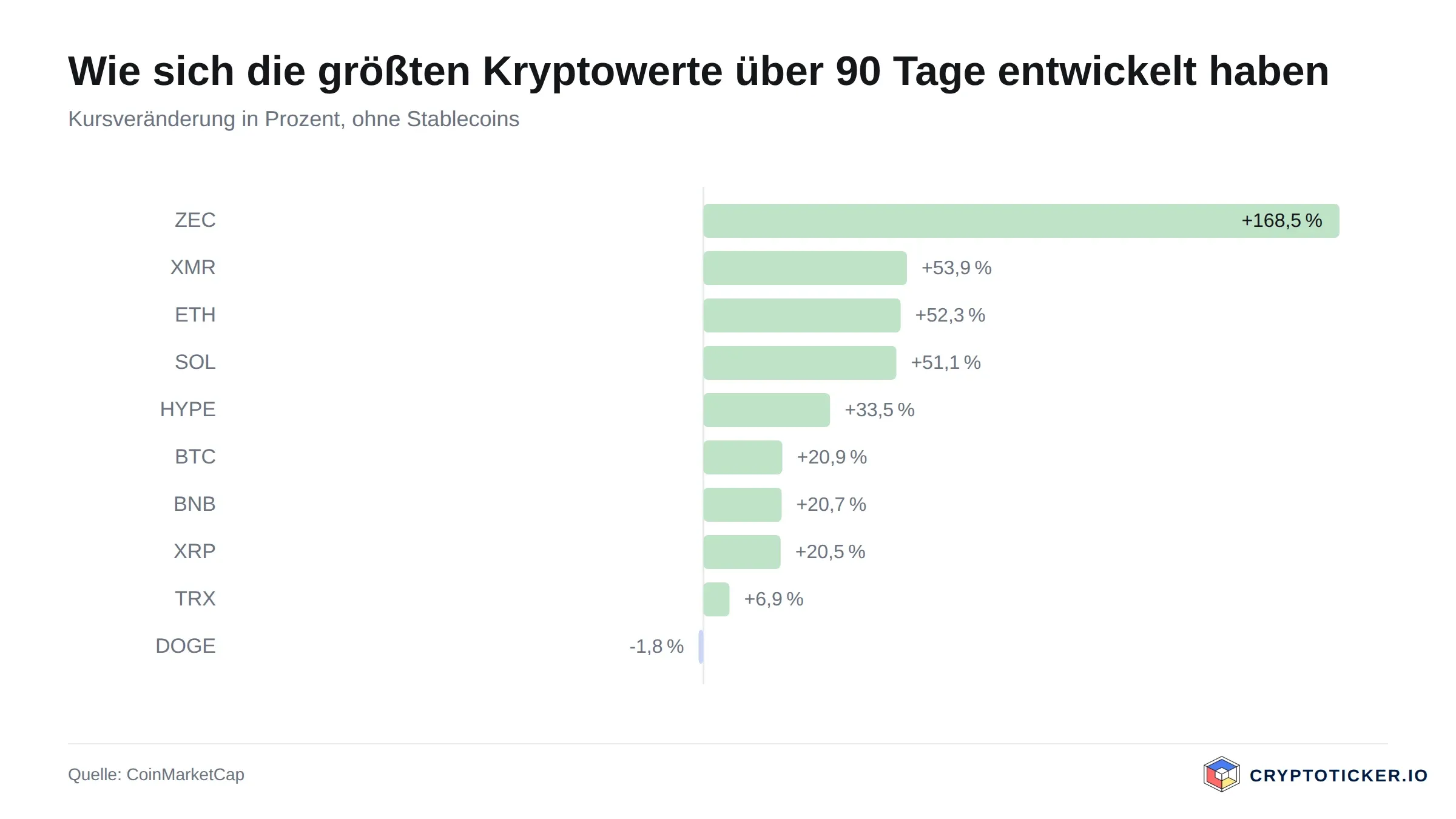
The largest crypto assets over 90 days, based on CoinMarketCap data
Voices, Videos and Apparent Authorities
Deepfakes are AI-generated or manipulated audio, image or video content that can imitate real people convincingly. In a crypto context that shows up as a faked video appeal from a founder, the cloned voice of an acquaintance reporting an alleged emergency, or a manipulated livestream with a giveaway and a wallet link. Not every odd-looking video is a deepfake; what matters is the source, an unusual call to action and the time pressure being built up.
Phishing tries to capture credentials and approvals through fake websites, login masks or wallet connections. AI can create many varied ads, posts and landing pages and tailor the language to a target group, which makes phishing more scalable without automatically making it more successful. Typical examples are paid search ads with fake download or support pages, lookalike domains, hijacked social media accounts and fake airdrops.
In brief: Fake support, deepfakes and phishing are not new offences, but AI lets them appear more professional and run at scale. What settles whether a message is genuine is the contact route you verify yourself, together with the specific action it demands.
Why the Data on AI Crypto Crime Needs Careful Reading
TRM Labs is a blockchain analytics firm whose assessment is a valuable industry signal, though not a final measurement of global crypto crime as a whole. “AI-assisted fraud” describes the method behind an attack or the support it received, whereas a “confirmed rise in losses” requires comparable, traceable data on cases, damages and time periods. The data gaps are real: many victims never report an incident, the use of AI often cannot be established in an individual case, and losses are sometimes discovered late or categorised inconsistently. That methodological caution matches an assessment of generative AI by the German federal cyber security agency BSI, which finds that generative models enable convincing, automated phishing messages and fake profiles. That confirms the methodological risk, not a global loss rate.
Wallet Security Routines That Slow Attacks Down
A handful of fixed habits reduce the risk regardless of how convincing an attack looks:
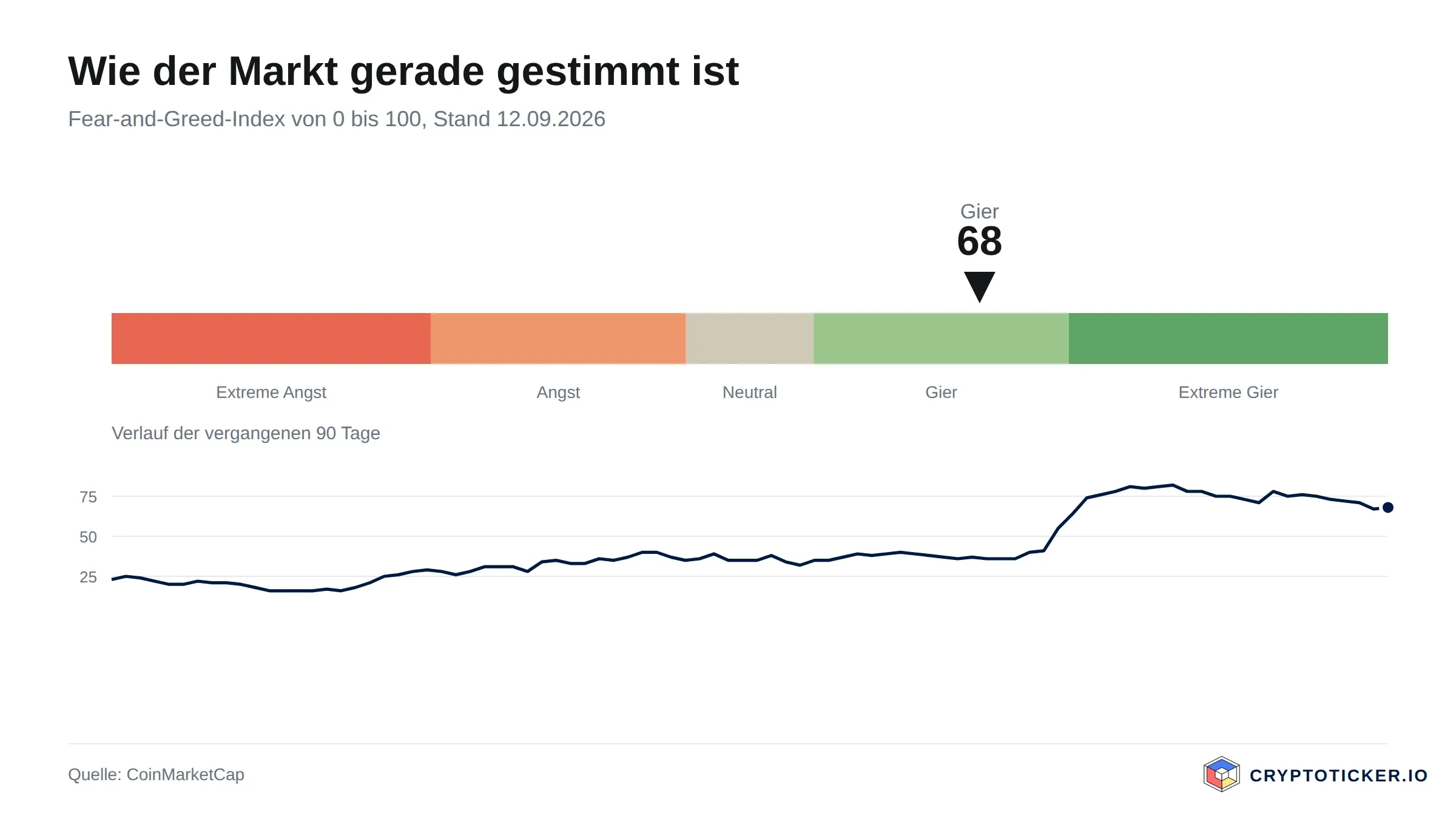
The Fear and Greed Index places market sentiment between extreme fear and extreme greed
- Never enter, upload or send a seed phrase, private key, password or recovery code to anyone claiming to be support.
- Open exchange and wallet sites from saved bookmarks or the official app, never through search ads, direct messages or comments.
- Before every wallet connection, check which website is being connected, and leave signatures you do not understand unconfirmed.
- With hardware wallets, check the recipient address, amount, network and permissions on the device display itself.
- Switch on two-factor authentication, where the BSI recommendation favours a security key or an authenticator app over SMS.
- With unusual calls, videos or urgent security warnings, open a second, known contact channel yourself instead of replying to the message.
- Treat time pressure as a warning sign: phrases such as “act now” or “your account will be locked” are typical fraud patterns.
For teams and companies one more rule applies: larger transactions should be secured with role-based permissions and a four-eyes principle.
In brief: Share no secret wallet credentials, verify support and urgent demands only through an official channel you have opened yourself, and inspect every connection and signature closely before confirming it.
AI Crypto Crime: Methods Change Faster Than Measurements
AI crypto crime is a real trend, and one that deserves a careful reading. TRM Labs supplies a relevant external assessment, according to which AI affects fraud, social engineering, deepfakes and automated campaigns in particular; on its own it is no evidence that all crypto losses have risen proportionally. For users, robust wallet security is what counts: safe contact routes, scepticism when time pressure appears and a careful check of every approval protect you even when an attack looks technically convincing.