PowerCompute AI Infrastructure is the new identity of a company that spent three decades originating consumer loans. PowerCompute, Inc. (LMFA) filed an 8-K with the SEC on July 29, disclosing
PowerCompute AI Infrastructure is the new identity of a company that spent three decades originating consumer loans.
PowerCompute, Inc. (LMFA) filed an 8-K with the SEC on July 29, disclosing a full strategic pivot away from its payday lending business toward AI data center services. The filing covers two reporting items, including 8.01, a material change in business, and 9.01, the accompanying exhibit.
PowerCompute is now competing directly with the fastest-growing segment in technology capital expenditure.
Key Takeaways
The neocloud segment grew from near-zero in 2022 to an estimated $10 billion annual market by mid-2026, according to industry observers A single rack of eight H100 GPUs costs roughly $250,000 to $300,000 to provision, before facility build-out PowerCompute has not disclosed any anchor customer agreement in the July 29 filing
PowerCompute AI Infrastructure Pivot, Explained In The 8-K
The SEC filing was submitted under CIK 0001640384, the long-standing EDGAR identifier for (LMFA) LM Funding America, the entity that became PowerCompute. Under the old model, the company originated short-term consumer credit, the kind of product subject to intense regulatory pressure from state attorneys general and the Consumer Financial Protection Bureau.
The new model is structurally different. AI Infrastructure means selling compute capacity, typically GPU-accelerated server time or co-located rack space, to enterprises building or running large language models and related workloads.
The 8-K does not disclose deal terms, signed customers, or committed revenue.
What it does is establish on the public record that the company intends to operate as an AI Infrastructure provider going forward. That distinction matters for investors because it shifts the company's regulatory exposure, cost structure, and competitive moat entirely.
From Loan Originator To Rack Operator: How The Transition Works
LM Funding America was incorporated to provide bridge financing to consumers and small businesses, often secured against future receivables.
That business model requires a balance sheet full of loan assets, interest income, and loss reserves. It does not require physical infrastructure, power contracts, or GPU procurement pipelines.
An AI Infrastructure operator needs all three.
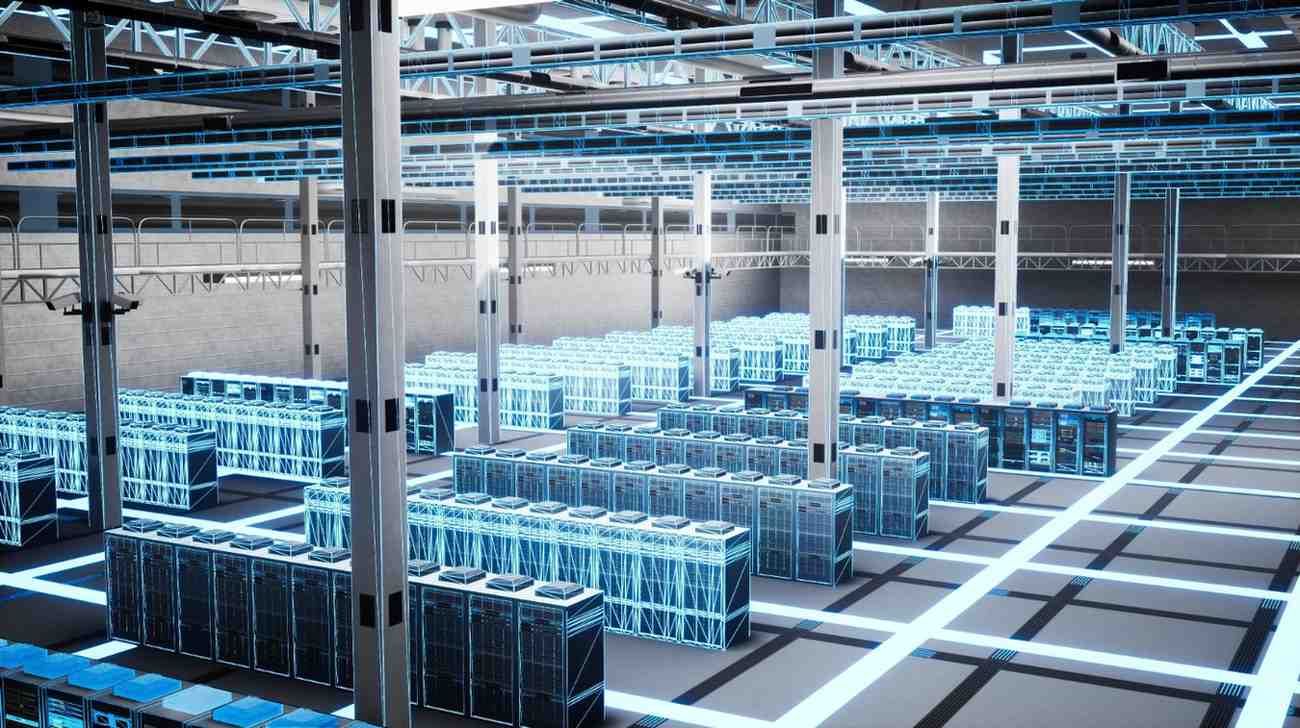
The core product is compute time, typically sold per GPU-hour or under longer-term capacity agreements. Operators lease or build facilities with dense power delivery, then fill them with accelerator hardware, predominantly NVIDIA H100 and H200 series cards, though AMD MI300X units are increasingly competitive.
Customers pay a premium for guaranteed uptime, low-latency interconnects, and proximity to fiber backbone. The capital intensity is significant. A single rack of eight H100 GPUs costs roughly $250,000 to $300,000 to provision, before facility build-out.
A 100-megawatt data center, a mid-sized facility by hyperscaler standards, can require $500 million to $1 billion in total capital. PowerCompute has not disclosed how it intends to finance that scale.
Also Read: Core Scientific's AMD Pact Reaches 2.5GW, Finding That Power Is the Next Question
The Broader Wave That PowerCompute Is Trying To Ride
PowerCompute AI Infrastructure ambitions land during a period of exceptional demand growth. Hyperscalers including Microsoft, Google, Meta (META), and Amazon have collectively committed more than $300 billion in AI Infrastructure capital expenditure across 2025 and 2026. That spending has created a secondary market: smaller operators that lease capacity to enterprises that cannot afford hyperscaler minimums or that require more flexible terms.
The neocloud segment, operators that buy GPU capacity wholesale and resell it to AI developers, grew from near-zero in 2022 to an estimated $10 billion annual market by mid-2026, according to industry observers. Companies including CoreWeave and Lambda Labs built early-mover positions. PowerCompute is entering well after those positions were established.
That timing gap is the central risk.
GPU supply from NVIDIA remains constrained, and the largest allocations go to customers with multi-year purchase histories or strategic relationships with the chipmaker. A new entrant without a prior procurement relationship faces spot-market pricing, which runs at a significant premium to contract rates.
Also Read: AIxCrypto Holdings' Shocking Year-Long Related-Party Deal Raises Red Flags
Why Small Operators Keep Making This Bet
The economics that attract companies like PowerCompute are straightforward on paper. GPU-hour pricing on spot markets runs between $2.50 and $4.50 per H100-hour depending on cluster size and contract length. A 1,000-GPU cluster running at 80% utilization generates roughly $17 million to $31 million in annual revenue.
Against that, power costs at $0.06 to $0.08 per kilowatt-hour and hardware depreciation over three years produce margins that can exceed 40% in favorable conditions.
Those favorable conditions require high utilization. Utilization below 60% turns the math negative quickly. The operators that have survived the current cycle are those with anchor customers, typically a single AI lab or large enterprise that takes 40% or more of capacity under a multi-year agreement. Without an anchor, a new operator is selling into a spot market where pricing is compressing as total GPU supply grows.
PowerCompute has not disclosed any anchor agreement in the July 29 filing.
The absence is not disqualifying but it is the key variable investors will watch in subsequent disclosures.
What Comes Next For PowerCompute
The 8-K is a trigger document, not a build document. Under SEC rules, a material change in business strategy requires public disclosure even before the strategy is fully operational.
The filing puts the market on notice. Follow-on disclosures would typically include asset purchase agreements for hardware, facility lease announcements, customer contracts above materiality thresholds, and updates to the company's quarterly filings that reflect the new revenue model.
PowerCompute will also need to address the residual consumer lending book.
If existing loan assets remain on the balance sheet, they carry ongoing loss provisions and regulatory obligations that consume management attention and capital. A clean pivot typically requires either running the old book to maturity or selling it at a discount.
The AI Infrastructure market rewards operators with power, hardware, and customers.
PowerCompute has publicly declared which market it is entering. The question its next filings must answer is whether it has secured any of the three things needed to compete in it.
A filing announcing intent and a business that can actually sell GPU hours to paying customers at sustained utilization are two very different things.
Read Next: Alloy Compute Splits AI Models Across GPUs And FPGAs For Faster Replies