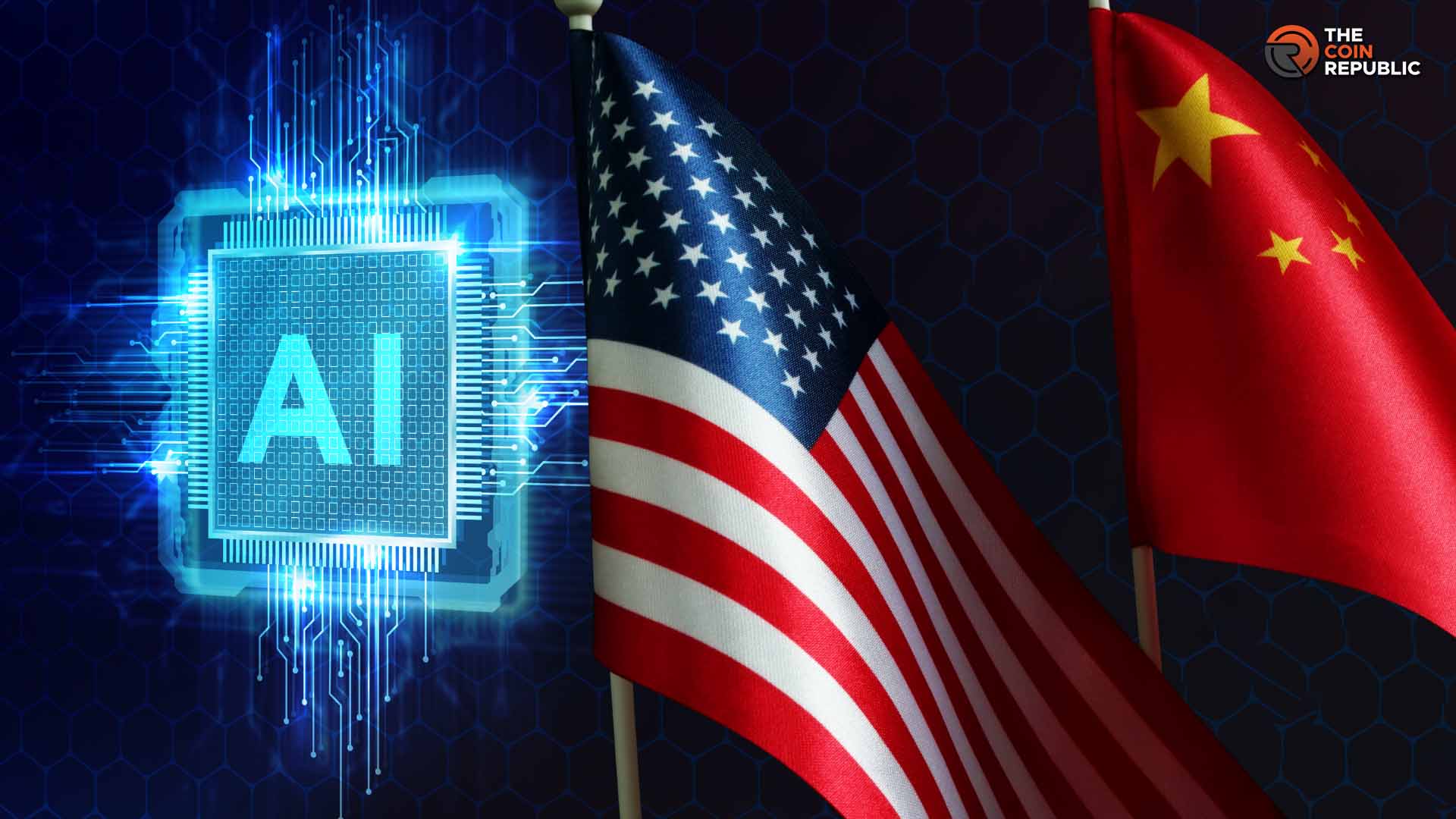
Key Insights: AI news centered on a new US-China emergency communication channel. Washington and Beijing also established a formal bilateral AI dialogue. The agreement left semiconductor cont
Key Insights:
- AI news centered on a new US-China emergency communication channel.
- Washington and Beijing also established a formal bilateral AI dialogue.
- The agreement left semiconductor controls and wider technology competition intact.
U.S. President Donald Trump and Chinese President Xi Jinping agreed to establish a direct artificial intelligence incident channel. The agreement emerged during talks in Washington. The Sept. 24 agreement added crisis communication to broader AI talks between both governments.
The latest AI news came as Washington and Beijing competed over chips, computing power and model development.
The White House said both governments also created a U.S.-China “Super Intelligence” Dialogue. The framework covered AI risks and benefits. China’s Foreign Ministry separately backed continued AI dialogue and joint efforts against misuse. The channel created a formal crisis tool without resolving wider disputes over technology policy and strategic competition.
A Sept. 25 White House fact sheet confirmed a bilateral communication channel for artificial intelligence incidents. The statement followed Trump’s meetings with Xi during the Chinese president’s state visit to Washington.
The White House also said both countries created the U.S.-China Super Intelligence Dialogue. Officials planned another exchange by November 2026. The administration used “super intelligence” to describe the technologies covered by the new framework.

US & China AI News | Source. X
China’s Foreign Ministry issued a separate readout after the Sept. 24 Trump-Xi meeting. The ministry said Xi supported continued dialogue on AI risks, benefits and misuse. It also said Trump called for stronger AI cooperation between both countries.
The Chinese readout said both countries had strong AI capabilities and room for cooperation. It also said AI should remain under human control. That language showed Beijing publicly supported continued engagement after earlier uncertainty over the channel’s exact form.
On Sept. 24, Foreign Ministry spokesperson Guo Jiakun declined to confirm the notification system directly. He instead referred reporters to China’s existing readout and relevant authorities.
AI Race Continues Despite New Crisis Communication Mechanism
The new channel did not remove the main technology disputes shaping the AI race. Washington still restricted access to advanced computing technology through export-control rules covering China.
The US Bureau of Industry and Security revised its semiconductor licensing policy in January 2026. The agency allowed case-by-case reviews for Nvidia H200, AMD MI325X, and comparable chips. Applicants still faced security, compliance, and testing requirements before exports could receive approval.
Those controls reflected the broader U.S. policy toward advanced AI computing. America’s AI Action Plan described advanced compute as economically and militarily important. It also called for stronger enforcement against diversion of controlled chips to restricted destinations.
China continued developing domestic AI capacity while supporting broader dialogue. Its Foreign Ministry said competition could coexist with cooperation. Beijing also called for joint efforts to prevent AI misuse and abuse.
US AI Policy Still Treats Compute as a Security Issue
The incident channel created a communications tool rather than a shared regulatory framework. Neither government announced common model standards, binding safety rules, or joint enforcement procedures with the agreement.

AI Race in Focus | Source: X
That distinction matters for companies exposed to the U.S. AI sector. Export controls can affect chip access, data-center deployment and advanced-model training costs. The bilateral channel instead addressed crisis communication when AI incidents carried possible security consequences.
For crypto markets, the direct effect remained limited. Still, AI and digital assets increasingly overlap through data centers, computing demand and capital spending. The White House AI plan also tied compute controls to national security enforcement. Restrictions can therefore affect wider technology sentiment without directly regulating cryptocurrencies.
The agreement also clarified that the dialogue survived the leaders’ meeting. China had previously avoided confirming detailed incident-channel arrangements in a Sept. 24 briefing. The White House statement then confirmed that both governments established the mechanism.
AI News Focus Shifts to the November Follow-Up
The next scheduled milestone is another U.S.-China AI exchange by November 2026. The White House did not publish technical operating rules for the incident channel.
Future talks could define which incidents trigger notification and which officials operate the line. They could also clarify response procedures, escalation thresholds and information-sharing limits. Those details would determine how the mechanism works during an actual emergency.
For now, the agreement separated crisis communication from the broader U.S.-China AI race. Competition continued across chips, compute, and model development. Both governments still created a direct mechanism for handling serious AI incidents.
The post AI News: US & China Launch AI Hotline as Tech Rivalry Deepens appeared first on The Coin Republic.