Markets6 min read
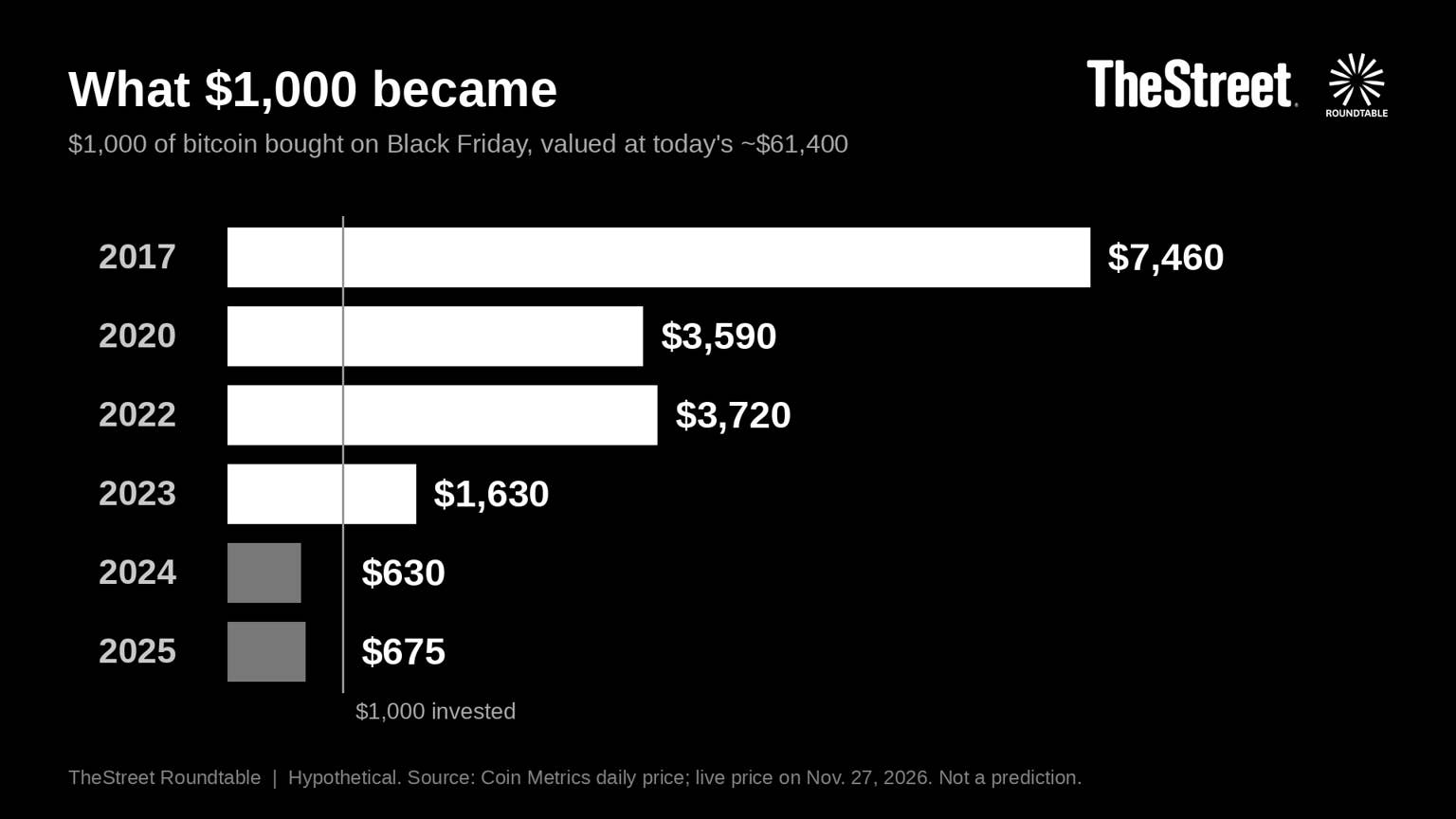
One asset is 51% off this Black Friday
On Black Friday 2017, one bitcoin cost $8,232. Three weeks later it hit $19,641. A year after that it traded at $3,185. Check the price on every Black Friday since and you see a bubble, a bus
You can also read this news on BH NEWS: AI Stocks Drive Global Rally as China Affirms Market Support Global markets continued their rally fueled by renewed interest in AI stocks and China’s r
You can also read this news on BH NEWS: AI Stocks Drive Global Rally as China Affirms Market Support
Global markets continued their rally fueled by renewed interest in AI stocks and China’s reaffirmation of its market support. As the week shortened by holidays in the U.S. came to a close, gold, silver, bitcoin, and platinum saw gains, while the dollar and U.S. Treasury bonds experienced a decline.
Asian markets advanced 1.8%, with mainland Chinese shares climbing 4% following the government’s reiteration of its support. In the U.S., Nasdaq 100 futures rose 2.8% and S&P 500 futures increased by 1.7%, marking their first gains in three sessions. European stock futures also benefited, gaining 0.7%. Meanwhile, U.S. markets prepared for a shortened trading session post-Thanksgiving.
This recovery follows a brief dip of the Nasdaq 100 into bear market territory on Wednesday, prompting fresh buying on Wall Street. Despite the market optimism,
the uncertainty surrounding returns on significant AI investments and future interest rate directions keeps investors on edge.
Gold surged up to 2.8%, reaching approximately $3,670 per ounce, supported by a weakening dollar. Silver and platinum prices also spiked, gaining 7.3% and 5.3%, respectively. The decline in the dollar, despite expectations of a potential FED rate hike, bolstered these metals.
Even though the dollar fell on a daily basis, its position over the monthly trend paints a different picture. Demand for a safe haven, propped up by earlier sell-offs in AI stocks and rising interest rates, positions the dollar for its longest monthly gain streak in two years.
Inflation in Tokyo hit its peak for the year, a situation that fortifies expectations for an interest rate hike from the Bank of Japan in December as it contends with keeping price increases around the 2% target.
Pablo Hernandez de Cos is set to become the next president of the European Central Bank. De Cos will steer the zone’s policies amidst inflation challenges and potential upheavals in bond markets.
European Union leaders failed to reach a consensus on a long-term budget plan during the summit in Brussels. Stalled negotiations led to an early conclusion as nations maintained their stances.
In New Zealand, official electoral results complicated the government’s second term, with the center-right coalition of three parties securing 65 seats in the 130-seat parliament, down from the 67 indicated on election night, thus hindering an outright majority.
The rebound in stock markets is primarily supported by China’s interventions and revived interest in technology stocks. However, persistent concerns about accelerating inflation in Japan and uncertainties about returns on AI investments remain unresolved. Despite the dollar’s recent dip, its sustained monthly gains highlight a divergence between short-term optimism and broader market trends.
Continue Reading: AI Stocks Drive Global Rally as China Affirms Market Support