TLDR Airbus shares rise 0.18% to €188.14 following the Valkyrie’s first European flight. Airbus and Kratos complete the U740 Valkyrie’s first flight in Northern Europe. The drone reaches Mach
TLDR
- Airbus shares rise 0.18% to €188.14 following the Valkyrie’s first European flight.
- Airbus and Kratos complete the U740 Valkyrie’s first flight in Northern Europe.
- The drone reaches Mach 0.8 and completes a runway-free, rocket-assisted takeoff.
- Airbus plans to test its MARS autonomous mission system in upcoming drone flights.
- The partners target a combat-ready Valkyrie for European armed forces by 2029.
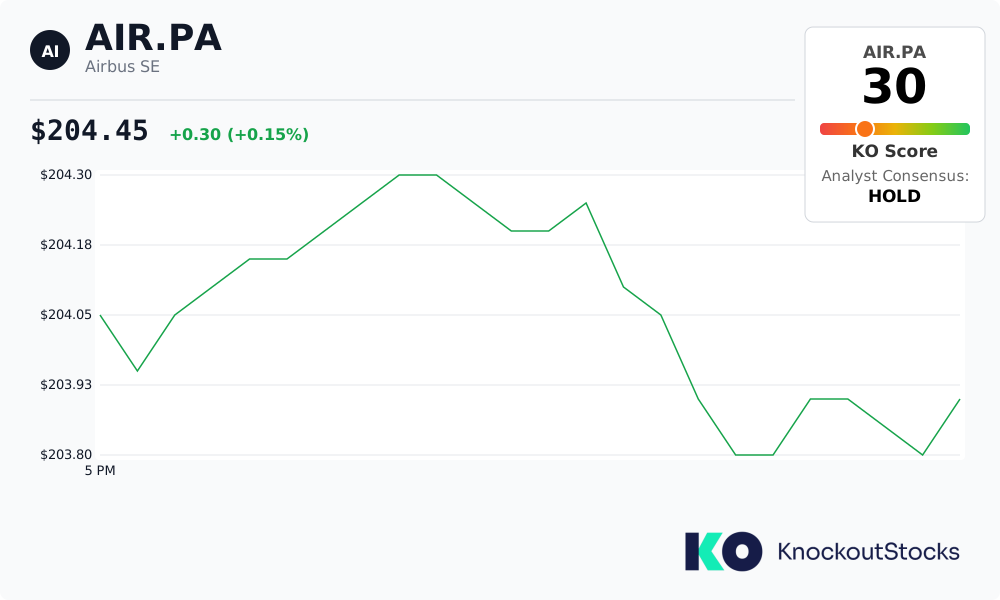
Airbus SE (AIR.PA) stock gained 0.18% to €188.14 on Monday, adding €0.34 despite intraday volatility and a midday decline. The increase followed progress in Airbus’ military aviation partnership with Kratos Defense & Security Solutions. Both companies completed the U740 Valkyrie’s first European flight, advancing plans for a combat-ready autonomous aircraft by 2029.
Airbus SE, AIR.PA
Airbus and Kratos Complete First European Valkyrie Flight
Airbus and Kratos conducted the test at a facility in Northern Europe, marking a milestone in their defense partnership. The aircraft completed a rocket-assisted takeoff without relying on conventional runway infrastructure. It also performed several maneuvers at different altitudes and reached speeds of Mach 0.8.
During the flight, the aircraft successfully handled mission adjustments and completed all planned test objectives. The results established a foundation for further trials involving more advanced autonomous flight systems. Airbus plans to integrate its Multi-platform Autonomous Reconfigurable and Secure mission system, known as MARS, into subsequent testing.
The companies aim to deliver an operational Collaborative Combat Aircraft for German and other European military forces by 2029. The program addresses growing demand for affordable aircraft that support conventional fighter operations. Airbus expects the platform to expand military capabilities without requiring additional crewed combat aircraft for every mission.
Airbus MARS System Supports Autonomous Combat Operations
Airbus developed MARS to provide European control over the Valkyrie’s software, mission applications, and operational data. The system uses artificial intelligence to manage autonomous missions and coordinate multiple aircraft during operations. However, its command structure keeps human operators responsible for critical decisions and compliance with engagement rules.
Airbus Defence and Space CEO Mike Schoellhorn identified affordable combat capacity as a priority for modern air forces. He explained that combining Kratos’ aircraft technology with European mission software supports military independence. The partnership also aims to improve the operational reach and protection of existing fighter aircraft.
Meanwhile, Kratos CEO Eric DeMarco highlighted the successful integration between both engineering teams during the initial flight. He attributed the test results to the aircraft’s established design and coordinated development work. Kratos contributes drone manufacturing experience, while Airbus supplies mission technology and broader aerospace expertise.
Valkyrie Specifications Strengthen European Defense Plans
The U740 Valkyrie measures 30 feet long and features a wingspan of 27 feet. Its maximum takeoff weight exceeds 6,000 pounds, while its operating range extends beyond 3,000 miles. The aircraft can also operate at altitudes reaching 45,000 feet during assigned missions.
Additionally, the Valkyrie carries an internal weapons compartment designed for air-to-air and air-to-ground munitions. Military operators can deploy the aircraft independently or coordinate its missions with crewed fighters. This configuration allows the drone to perform dangerous assignments while reducing exposure for human pilots.
Airbus also designed the system to support both conventional runway operations and alternative launch methods. These capabilities could improve deployment flexibility across European military facilities and contested operational environments. The completed flight advances the development schedule as Airbus and Kratos prepare additional tests before their 2029 target.
The post Airbus SE (AIR.PA) Stock: Gains as Valkyrie Drone Completes First Flight appeared first on Blockonomi.