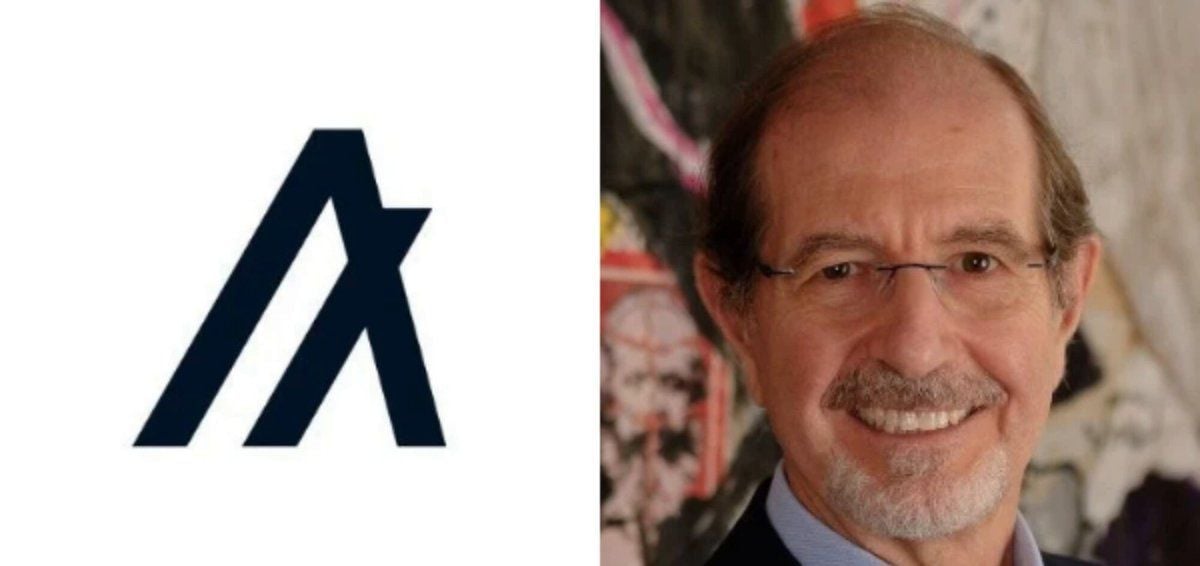
Most blockchain founders come from finance or software. Silvio Micali (@silviomicali) comes from a different place entirely: he helped lay the mathematical foundations of modern cryptography
Most blockchain founders come from finance or software. Silvio Micali (@silviomicali) comes from a different place entirely: he helped lay the mathematical foundations of modern cryptography itself.
A Turing Award Before a Blockchain
Micali is a professor at MIT and one of the most decorated figures in computer science. In 2012, he and Shafi Goldwasser (@ShafiGoldwasser) received the Turing Award for their work on cryptography.The Turing Award is the most prestigious prize in computer science.The citation recognised their work for "transformative contributions that laid the complexity-theoretic foundations for the science of cryptography."
Central to that recognition was a concept the two co-invented: zero-knowledge proofs. The idea defines a way to produce proofs that are convincing but reveal nothing beyond their validity. In practical terms, it lets one party prove that a statement is true without disclosing any of the underlying data. The technique is now a cornerstone of privacy-preserving technology across the industry.
Micali is also recognised for co-inventing verifiable random functions (VRFs), alongside zero-knowledge proofs, probabilistic encryption, and several other protocols now considered fundamentals of modern cryptography. A VRF produces a random number plus a cryptographic proof that anyone can verify, and that cannot be faked or manipulated after the fact.
How Those Inventions Power Algorand
In 2017, Micali founded Algorand. The network was built around the very tools he spent decades developing. Algorand pioneered the Pure Proof-of-Stake (PPoS) consensus mechanism. Unlike other proof-of-stake approaches where a user must lock up tokens, on Algorand the user maintains control of their $ALGO at all times, since the tokens remain in the user's wallet whilst securing the network.
The VRF takes a secret key and a value and produces a pseudorandom output, with a proof that anyone can use to verify the result. It functions like a lottery and is used to choose leaders to propose a block and committee members to vote on it. Critically, the selection is private: a node only reveals it has been chosen when it acts, making it nearly impossible for adversaries to target the upcoming proposer in advance.
What makes this Pure Proof of Stake is that users are chosen for committees based on the number of $ALGO in their accounts. Committees are made up of pseudorandomly selected accounts with voting power dependent on their online stake. Users with more tokens are likely to be selected more often.
By employing the VRF, only one single block can be proposed at any one time. No two blocks can be proposed simultaneously, meaning there should never be a fork of the Algorand blockchain. Once a block is added to the chain, consensus has already been achieved, allowing users to rely on it immediately. This also allows the network to achieve immediate transaction finality.
The result is a network whose design flows directly from its founder's academic career: decades of cryptographic research, distilled into a consensus mechanism.
Sources:ACM Turing Award: Silvio MicaliAlgorand: Pure Proof-of-Stake ExplainedAlgorand Developer Portal: Consensus Mechanism