TLDR Alibaba stock falls 4.30% as the company expands its computing infrastructure. Zhenwu V900 promises three times the performance of Alibaba’s previous processor. Alibaba Cloud plans to ex
TLDR
- Alibaba stock falls 4.30% as the company expands its computing infrastructure.
- Zhenwu V900 promises three times the performance of Alibaba’s previous processor.
- Alibaba Cloud plans to expand global data center capacity beyond 20 gigawatts.
- More than 650 customers already use current Zhenwu chips across key industries.
- Qwen 4 remains in training as Alibaba links models, chips and cloud expansion.
Alibaba Group Holding (BABA) shares traded at $111.31, down 4.30%, as the company expanded its artificial intelligence infrastructure strategy. The latest push combines a new processor, larger data centers, and a wider roadmap for cloud computing and enterprise services. Alibaba is building these systems together as competition intensifies across China and global technology markets this decade.
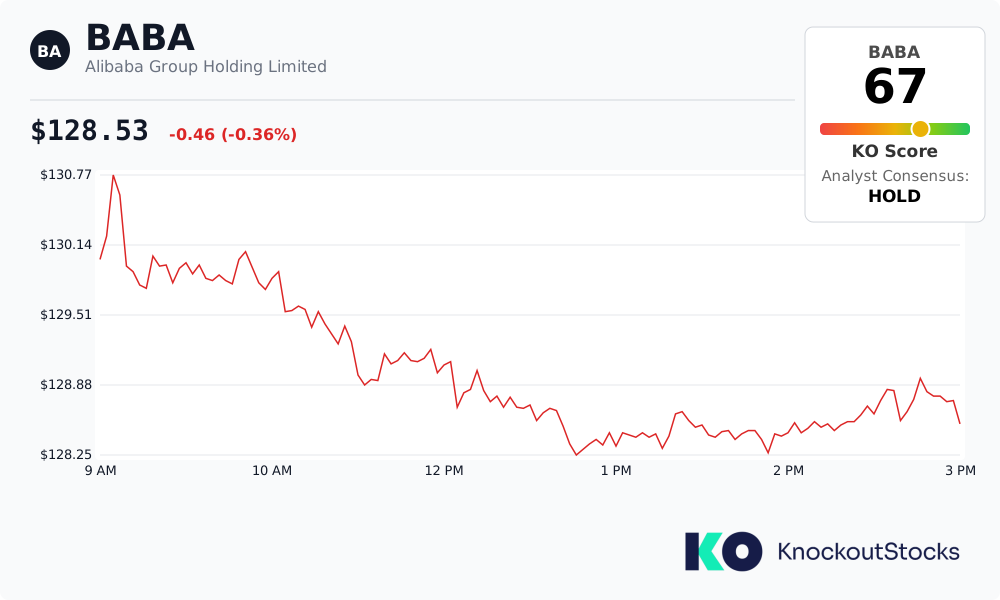
Alibaba Group Holding Limited, BABA
Alibaba Expands Its Chip Roadmap
Alibaba introduced the Zhenwu V900 at its Apsara Conference in Hangzhou, strengthening its push into advanced computing hardware this week. The company says the processor delivers three times the performance of the Zhenwu M890, which arrived earlier in May. That improvement gives Alibaba another internal chip option as demand grows globally for computing power across model training and inference.
The Zhenwu V900 will not enter mass production until the first quarter of 2027, according to Alibaba’s roadmap. Alibaba can still expand current deployments because existing Zhenwu processors already serve more than 650 customers across several industries. Those users span automobiles, finance, energy, and manufacturing, giving the company an installed base before the next chip arrives globally.
The chip strategy also reduces Alibaba Cloud’s reliance on outside suppliers for selected workloads and large infrastructure deployments. China continues developing domestic semiconductor alternatives as access to leading foreign processors faces regulatory and supply restrictions across key markets. Alibaba’s internal hardware development supports cloud expansion and gives the company wider control over its computing stack.
Alibaba Cloud Targets More Than 20 Gigawatts
Alibaba also plans to expand global data center capacity beyond 20 gigawatts by 2032 under its long-term infrastructure roadmap. The target shows the scale of infrastructure needed to support rising computing demand from businesses and developers worldwide. It also connects the company’s semiconductor work with the physical capacity required to operate larger models and cloud services.
Global technology companies are making similar infrastructure commitments as computing requirements increase across artificial intelligence applications and enterprise services. Nvidia has outlined work with Australian partners involving up to two gigawatts of infrastructure by 2027. Meta also announced a one-gigawatt Canadian data center in Alberta, highlighting the industry’s growing demand for power and computing capacity.
Alibaba’s expansion therefore places the company inside a broader race for computing capacity, energy access, and efficient hardware. Larger facilities could support more cloud customers while creating demand for Alibaba’s own processors and related services across markets. Building such capacity requires heavy spending, reliable power supplies, and sustained demand across several years of development.
Qwen Development Broadens Alibaba’s Strategy
Alibaba is also developing its next Qwen model while expanding the infrastructure designed to run future software and services. The company said Qwen 4 remains in training, while later Qwen 4.5 and Qwen 5 versions are already planned. That roadmap links model development directly with the company’s chips, cloud services, and long-term data center expansion plans.
Competition within China remains intense because Huawei and other technology groups are developing alternative computing systems and processor networks. Huawei recently introduced infrastructure designed to scale across very large processor clusters for demanding computing workloads. That pressure gives Alibaba another reason to improve hardware performance while increasing capacity across its cloud network and product portfolio.
The strategy gives Alibaba several potential growth channels instead of relying on one product or service for expansion. New chips can support cloud workloads, while larger data centers can increase capacity for enterprise customers worldwide. Stronger models can drive usage across the same infrastructure and strengthen demand for Alibaba Cloud services over time.
The post Alibaba (BABA) Stock: Advances as Cloud and AI Chip Strategy Expands appeared first on Blockonomi.