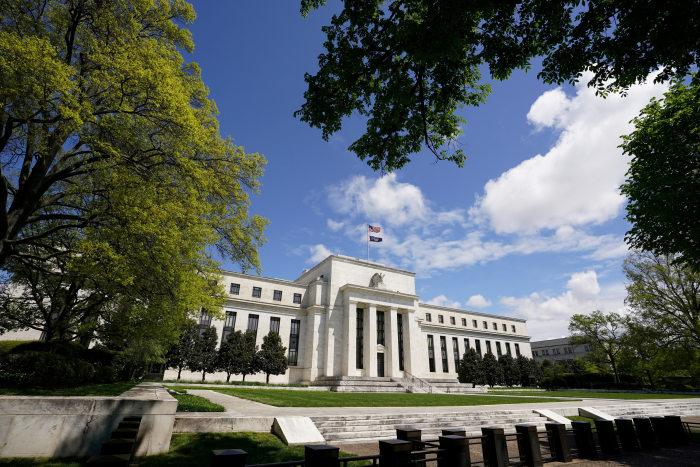
All Eyes on the Fed: Why Crypto Markets Face Their Biggest Macro Test of 2026
For months, investors focused on ETFs, AI, and Bitcoin price action. Yet one institution may have a greater influence on crypto than any blockchain, exchange, or token launch: the Federal Reserve.
A
AnonymousCryptoCompass newsroom
June 12, 2026
8 min read
ANALYSIS
CryptoCompass editorial visual for markets coverage.
All Eyes on the Fed: Why Crypto Markets Face Their Biggest Macro Test of 2026
The Most Important Meeting Crypto Investors Aren't Watching
As a result, inflation has become more difficult to forecast.
And uncertainty is something markets rarely enjoy.
The Bond Market Is Sending Signals
Treasury yields remain one of the most closely watched indicators for institutional investors evaluating risk assets. Many crypto investors focus on Bitcoin.
Professional investors often focus on bond yields.
Treasury markets influence:
Mortgage rates
Corporate borrowing costs
Risk-free returns
Portfolio allocation decisions
When yields rise, investors have alternatives.
When yields fall, capital often moves toward risk assets.
Understanding bond markets has become increasingly important for anyone investing in crypto.
ETFs Have Changed The Rules
Before ETFs, Bitcoin largely operated in its own ecosystem.
Today, that is no longer true.
ETF investors compare Bitcoin against:
Stocks
Bonds
Gold
Commodities
Private markets
Bitcoin has become part of the broader capital allocation framework.
That means Fed policy affects crypto more directly than ever before.
The Next Macro Test
Markets now face a critical question.
Can inflation continue cooling without damaging economic growth?
If the answer is yes, the Fed may gain flexibility.
If the answer is no, policymakers may face difficult trade-offs.
Either scenario has implications for Bitcoin.
This is why every inflation report, employment release, and Fed statement now commands enormous attention.
What Smart Money Is Watching
Institutional investors are closely monitoring:
CPI inflation
PPI inflation
Treasury yields
Oil prices
Employment data
Federal Reserve communications
These indicators provide clues about future liquidity conditions.
And liquidity remains one of the most important drivers of crypto markets.
Looking Ahead
The crypto market often appears driven by narratives.
Sometimes those narratives involve technology.
Sometimes they involve regulation.
Sometimes they involve adoption.
But beneath every narrative sits a larger force:
Liquidity.
And no institution has more influence over liquidity than the Federal Reserve.
For investors trying to understand the second half of 2026, there may be no more important story.
CryptoCompass View
Bitcoin may be decentralized.
Liquidity is not.
The Federal Reserve remains one of the most powerful forces shaping capital flows across global markets.
Investors who understand the Fed may better understand the future direction of crypto.
What to know: Binance XRP reserves dropped by 89 million tokens in one day. Negative funding rates reveal that traders increased bearish futures positions. Shrinking exchange supply contrasts
Bitcoin miners are once again in the spotlight as on-chain indicators suggest a capitulation phase, a dynamic that some traders and analysts view as a potential long-term entry point for BTC
What to Know SHIB defended critical support as oversold conditions attracted renewed buyers. Multiple resistance levels now stand between SHIB and recovery. Mercari and Kalshi developments ad