TLDR Amazon records a $42.4 billion free cash flow outflow, its largest deficit ever Amazon spends $77 billion on property and equipment during the third quarter AWS revenue jumps 39% to $46
TLDR
- Amazon records a $42.4 billion free cash flow outflow, its largest deficit ever
- Amazon spends $77 billion on property and equipment during the third quarter
- AWS revenue jumps 39% to $46 billion, marking its fastest growth in five years
- Amazon’s long-term debt climbs to $173 billion as its cash balance declines
- Amazon plans $220 billion in 2026 spending, with higher investment expected in 2027
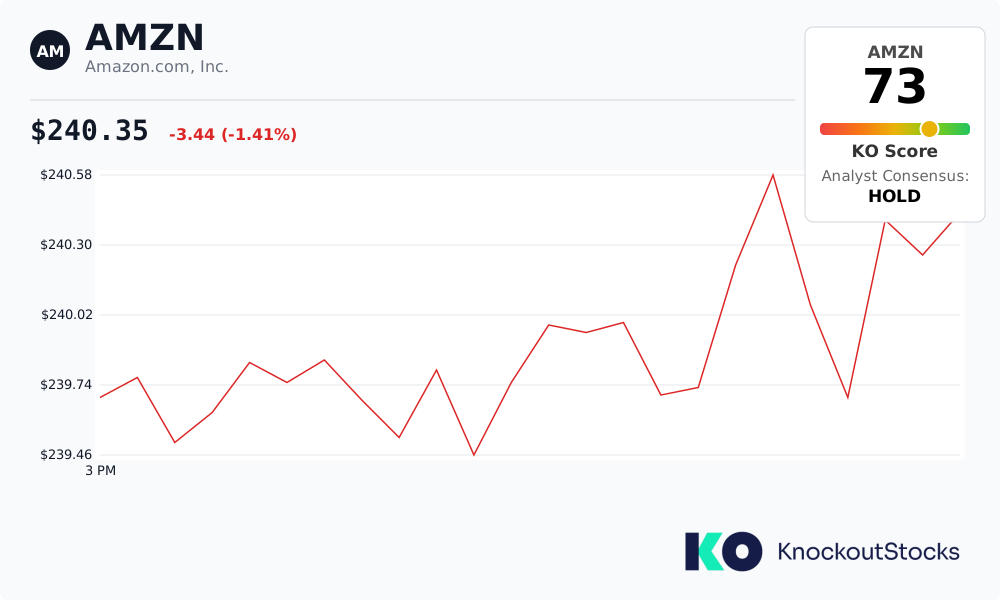
Amazon (AMZN) shares fell 2.22% to $238.37 as record investment in artificial intelligence increased pressure on cash flow. The company reported a $42.4 billion free cash flow outflow over the 12 months through September. Meanwhile, Amazon continued expanding its cloud infrastructure as AWS revenue accelerated and management maintained its aggressive spending plans.
Amazon.com, Inc., AMZN
Amazon Records Its Largest Free Cash Flow Outflow
Amazon’s latest quarterly results revealed a sharp deterioration in its free cash flow position. The company recorded a $42.4 billion outflow over the 12 months through September 2026. This marked its largest cash flow deficit since Amazon began reporting the current financial measure.
The latest figure nearly doubled the previous record outflow of $23.5 billion in June 2022. That earlier decline followed heavy investment in warehouse infrastructure and distribution capacity. However, Amazon’s cash flow position had weakened rapidly during the latest quarter.
The company recorded less than $8 billion in free cash flow outflow three months earlier. However, capital expenditure increased sharply as Amazon expanded its data centers and other infrastructure. Consequently, spending on property and equipment reached approximately $77 billion between July and September.
That amount exceeded the $35 billion recorded during the same period last year. Meanwhile, Amazon generated approximately $42 billion from its operations during the quarter. This left a cash flow gap of roughly $33 billion over three months.
AWS Growth Supports Amazon’s Heavy AI Investment
Despite the rising expenditure, Amazon’s cloud business delivered stronger revenue growth during the third quarter. Amazon Web Services generated approximately $46 billion in revenue, representing 39% annual growth. This marked AWS’s fastest growth rate in nearly five years.
Amazon reported an operating margin of nearly 14%, its highest level on record. The results highlighted the contribution of cloud computing to the company’s operating performance. AWS also continued attracting major artificial intelligence customers through its expanding computing infrastructure.
Anthropic’s computing commitments represented approximately one-fifth of AWS’s backlog as of June. This figure reflects the scale of demand from major AI developers using Amazon’s cloud services. Meanwhile, CEO Andy Jassy projected AWS growth above 40% in both 2027 and 2028.
However, Amazon plans to maintain its infrastructure expansion despite the substantial cash requirements. The company expects capital expenditure to reach approximately $220 billion in 2026. Most of that spending will support AWS, while management also expects higher expenditure in 2027.
Amazon has increasingly relied on borrowing to finance its expanding infrastructure requirements. Its long-term debt reached approximately $173 billion at the end of September. That represented a significant increase from approximately $66 billion at the end of 2025.
At the same time, the company’s cash balance declined to approximately $56 billion. Amazon held roughly $87 billion in cash at the end of 2025. Additionally, credit default swap costs on its five-year debt protection rose approximately 50% since early August.
Bloomberg data showed the increase in the cost of insuring Amazon’s debt against default. Calculations based on those prices indicated an implied five-year default probability of approximately 7%. That compared with roughly 5% previously, reflecting higher credit market concerns.
Amazon shares dropped approximately 4% on Thursday, reaching their lowest closing level since July 30. The decline followed broader weakness among major technology companies, including Alphabet. Amazon shares also extended losses after hours following quarterly revenue, earnings, and holiday-quarter profit outlook misses.
The latest stock decline followed growing pressure on technology companies with substantial AI infrastructure budgets. Nevertheless, Amazon maintained its planned investment schedule despite the record cash flow outflow. Its next financial performance will reflect how effectively AWS growth supports the company’s expanding infrastructure costs.
The post Amazon (AMZN) Stock: Falls as AI Spending Drives Record $42 Billion Cash Burn appeared first on Blockonomi.