Key Takeaways AMD’s Data Center segment generated $5.8 billion in Q1 2026, representing a 57% year-over-year increase Analyst consensus positions AMD as a Moderate Buy with 28 bullish recomme
Key Takeaways
- AMD’s Data Center segment generated $5.8 billion in Q1 2026, representing a 57% year-over-year increase
- Analyst consensus positions AMD as a Moderate Buy with 28 bullish recommendations
- Intel maintains a Hold rating as Wall Street remains cautious about its transformation strategy
- Intel’s foundry division demands substantial capital outlays with unclear profitability timelines
- AMD represents momentum-driven expansion; Intel offers speculative turnaround upside
Advanced Micro Devices has emerged as the more straightforward growth narrative in the chip industry, whereas Intel battles to restore investor confidence amid its ongoing corporate transformation.
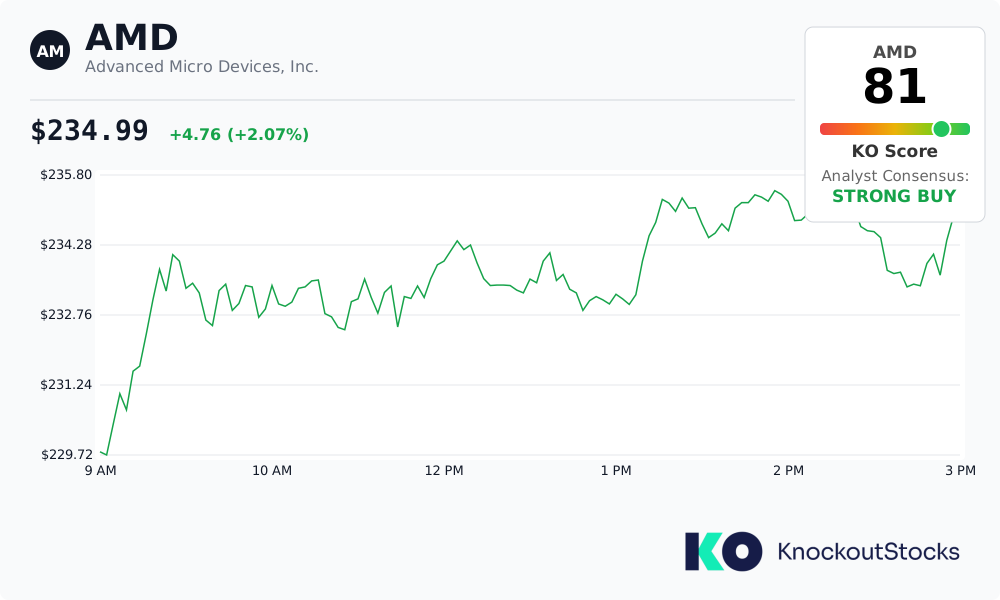 Advanced Micro Devices, Inc., AMD
AMD’s trajectory has been propelled by explosive server market performance. During the first quarter of 2026, the chipmaker delivered $5.8 billion in Data Center sales, marking a 57% surge compared to the prior-year period. The company’s EPYC server processor lineup maintained robust demand, while Instinct AI accelerator deployments continued their upward climb.
Hyperscale cloud operators and enterprises expanding AI computing capabilities have driven much of this demand. AMD doesn’t require complete market dominance over competitors like Nvidia or Intel to sustain growth. Capturing even a fraction of the rapidly expanding AI accelerator sector could generate substantial revenue streams, considering the premium pricing and massive scale of these markets.
AMD’s Diversified Revenue Portfolio
The company’s reach extends well beyond data centers into consumer computing, gaming platforms, and embedded applications. This diversification provides multiple revenue channels and reduces dependency on any single market segment.
However, vulnerabilities remain. Softening consumer electronics demand or escalating supply chain expenses could pressure certain business units. While AMD faces challenges, its operational track record has demonstrated consistency and solid execution.
Analyst sentiment confirms this confidence. AMD holds a Moderate Buy rating, supported by 28 Buy recommendations, 13 Hold positions, and only 1 Sell rating. The stock has experienced significant appreciation driven by AI infrastructure and server market momentum, suggesting current valuations incorporate substantial future growth expectations.
Any deceleration in Data Center performance could trigger considerable price corrections.
Intel retains considerable advantages: massive scale, world-class engineering capabilities, and decades-long relationships throughout PC and server ecosystems. The company is simultaneously working to establish Intel Foundry as a competitive contract manufacturing alternative for external chip designers.
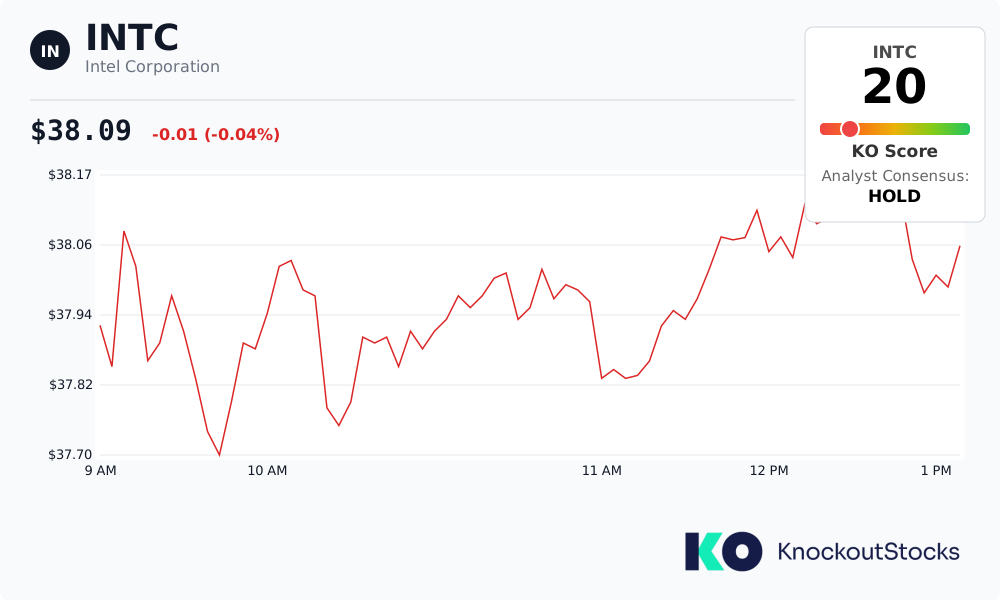 Intel Corp., INTC
First quarter 2026 financials revealed strengthening demand patterns and increased optimism surrounding Intel’s server roadmap and manufacturing strategy. Several analysts have adopted more favorable perspectives regarding the company’s prospects for reclaiming server market position and securing foundry partnerships.
Yet Intel fundamentally remains a restructuring narrative. The foundry initiative demands enormous capital investments. Tangible improvements in profit margins and free cash flow generation must materialize before the investment thesis gains clarity.
Intel’s analyst consensus stands at Hold. The company has garnered 15 Buy ratings but faces 28 Hold recommendations and 4 Sell calls. While sentiment has improved moderately, analysts haven’t fully endorsed the recovery trajectory.
Intel potentially offers greater percentage returns if transformation efforts succeed. However, this scenario carries substantially elevated risk compared to AMD’s established market position.
Current Investment Landscape
AMD presents the more compelling fundamental investment case today. Its server operations are expanding rapidly, AI market exposure continues broadening, and leadership has consistently executed on strategic objectives.
Intel possesses valuable assets and genuine turnaround possibilities. But investors await concrete evidence rather than relying on projected improvements.
Essentially, AMD functions as the established growth vehicle. Intel operates as the high-risk recovery opportunity.
The post AMD (AMD) vs Intel (INTC): Comparing Two Diverging Semiconductor Investment Strategies in 2026 appeared first on Blockonomi.