BTC/USD $68,420 +2.8%
ETH/USD $3,540 +1.4%
SOL/USD $142.80 -0.6%
BNB/USD $605.20 +0.9%
XRP/USD $0.62 -1.2%
DOGE/USD $0.18 +5.4%
BTC/USD $68,420 +2.8%
ETH/USD $3,540 +1.4%
SOL/USD $142.80 -0.6%
BNB/USD $605.20 +0.9%
XRP/USD $0.62 -1.2%
DOGE/USD $0.18 +5.4%
Policy

America Needs the Clarity Act...

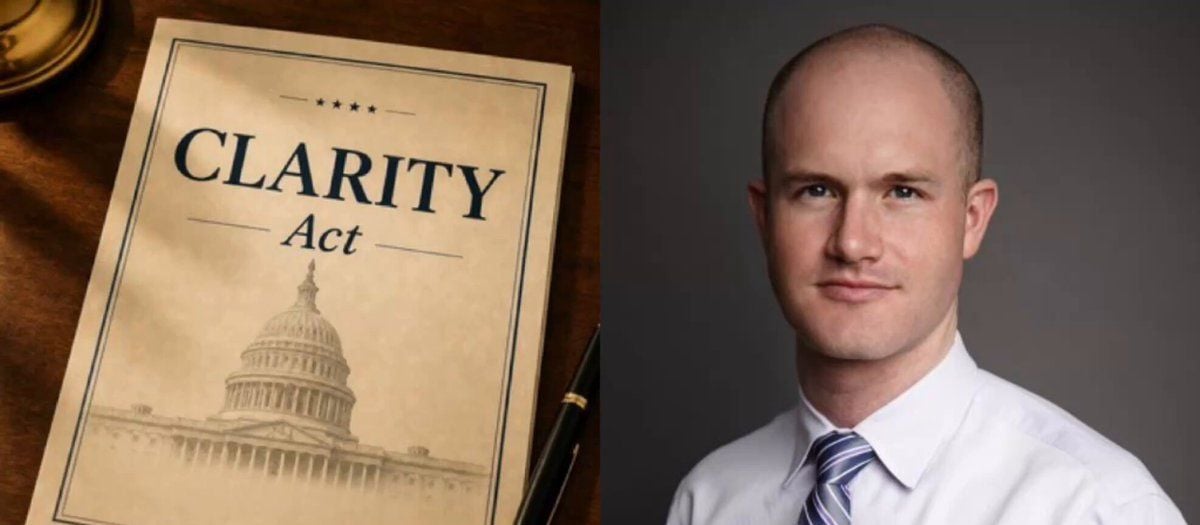
Armstrong Takes His Case to Capitol Hill @Coinbase CEO Brian Armstrong is stepping up his push for the Digital Asset Market Clarity Act, arguing that passing the legislation is no longer just

AnonymousCryptoCompass newsroom
August 4, 2026
3 min read
NEWS
America Needs the Clarity Act...
CryptoCompass editorial visual for policy coverage.

Armstrong Takes His Case to Capitol Hill

@Coinbase CEO Brian Armstrong is stepping up his push for the Digital Asset Market Clarity Act, arguing that passing the legislation is no longer just an industry priority but a matter of US national security. In a video posted to social media, Armstrong framed the issue bluntly: economic security is national security, and Washington's failure to resolve the regulatory standoff between the SEC and CFTC is putting America's competitive position at risk.

Armstrong intensified his campaign on August 3, urging senators to approve the bill this week, pointing out that one in four Americans now owns cryptocurrency and that lawmakers who back the CLARITY Act enjoy stronger voter support. He also cited polling showing 70% of Americans believe clear crypto rules should already be in place, regardless of whether they hold digital assets.

Armstrong described the CLARITY Act as the result of extensive bipartisan negotiations, arguing it would support American jobs, tax revenue, and innovation. More than 3 million advocates are being mobilised to track how senators vote on the bill.

What the CLARITY Act Would Actually Do

At its core, the legislation is designed to end a decade of regulatory ambiguity. The CLARITY Act splits regulatory jurisdiction along a commodity-versus-security line: the CFTC gets authority over digital assets classified as commodities, while the SEC retains oversight of anything that qualifies as a security.It replaces improvised enforcement with a written test for when a token is a commodity, when it is a security, and who polices the venues where it trades.

The Senate Banking Committee approved the bill on May 14 by a 15-9 vote, including all Republicans and two Democrats. The legislation has already passed the House and advanced through the Senate Banking Committee on a bipartisan vote. But the path to a full Senate floor vote remains narrow. Several Senate Democrats announced opposition in July after a merged draft omitted ethics provisions they had demanded, complicating the final push. With the Senate heading into recess, this window is close to the last realistic opportunity for the CLARITY Act to become law in 2026.

For Armstrong and Coinbase, the stakes are clear. Without a statutory framework, the SEC retains broad discretion to argue that digital assets are securities, leaving companies to navigate enforcement actions rather than clear rules. Armstrong's position is that the US cannot afford to keep pushing the issue offshore.

Sources:Bitcoin.com: Coinbase CEO Presses Senate to Pass CLARITY Act This WeekCrypto Briefing: Washington Moves Toward Clearer Rulebook for Digital AssetsThe Crypto Times: Brian Armstrong Says Clarity Act Is at the One-Yard Line