BitcoinWorld An Interview with Bitfia Labs In an exclusive interview with BitcoinWorld, we got the chance to speak with Mr. Major Jain, Founder & CEO Bitfia Labs Every great fintech innovatio
BitcoinWorld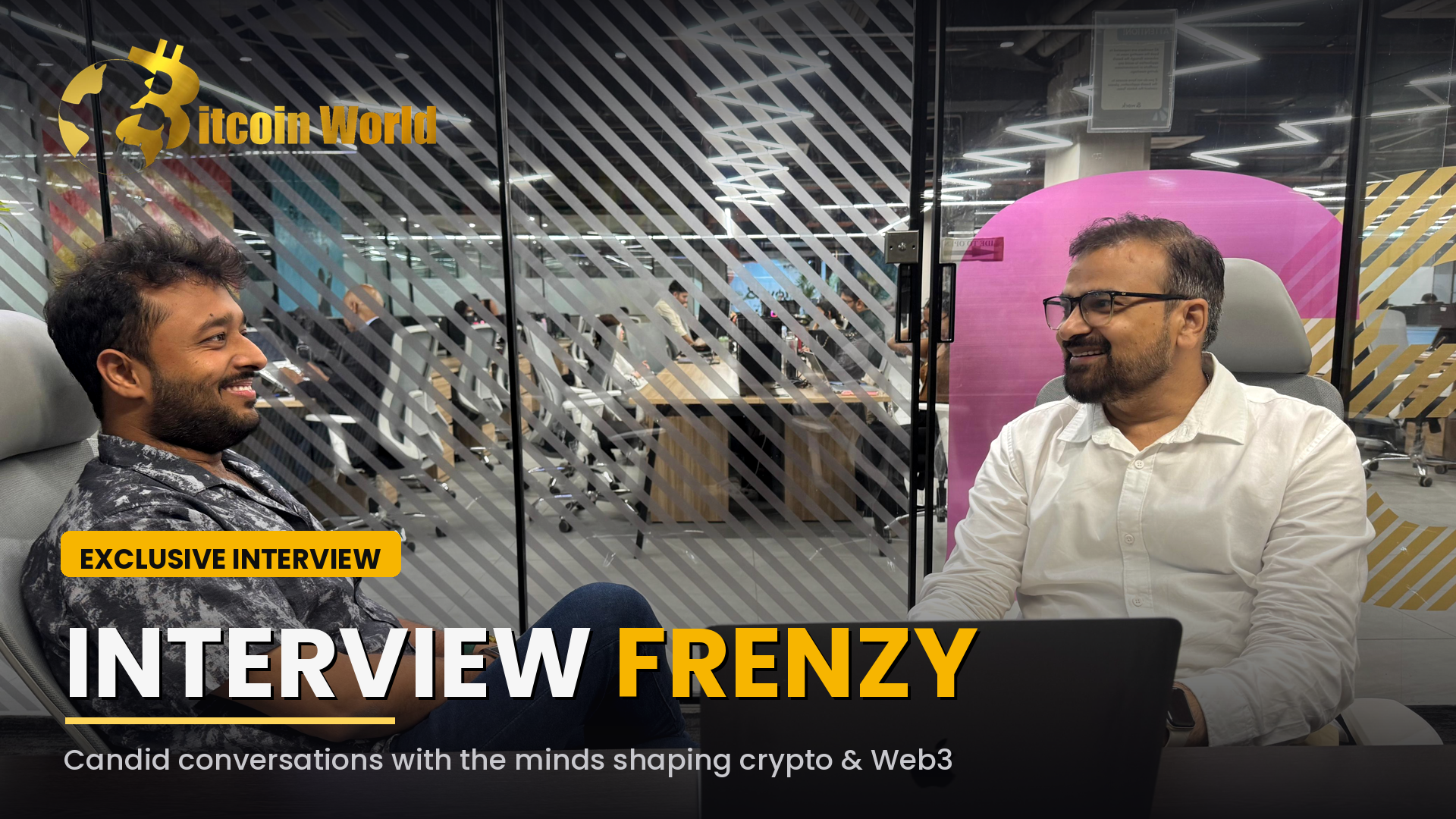 An Interview with Bitfia Labs
In an exclusive interview with BitcoinWorld, we got the chance to speak with Mr. Major Jain, Founder & CEO Bitfia Labs
- Every great fintech innovation starts with a friction point. What was the specific “aha!” moment or industry gap that led you to found Bitfia Labs and build the iPint ecosystem?
In 2021, we saw a clear gap in the crypto ecosystem: while trading and DeFi were gaining traction, the real utility layer of digital assets was still underdeveloped. Payments stood out as the most promising use case, especially the ability to move value securely, without chargebacks, with faster settlement, and across more than 170 countries.
That insight led us to build iPint, a decentralized payment platform designed for merchants and cross-border commerce. From the beginning, our focus has been on combining security, ease of use, and compliance. iPint is now evolving into a compliant cross-border payment orchestration platform powered by stablecoins, capable of handling high volumes across multiple payment corridors.
- Traditional cross-border business payments are notorious for archaic delays (T+2 settlement) and heavy fees. How exactly does iPint break down these geographic and financial borders for modern commerce?
iPint uses USD stablecoin rails to move money in minutes rather than days, which is a major shift from traditional SWIFT-based transfers. In many cases, that means significantly lower fees and near-instant settlement compared with the typical 3–5 day process and 3–5% cost burden seen in legacy systems.
What makes iPint different is its orchestration layer. We connect a network of stablecoin on-ramps, off-ramps, banks, and financial institutions, and route each transaction through the most efficient path available. We are initially launching from Australia and are in the process of obtaining additional licenses to expand further.
- Congratulations on Bitfia Labs being recognized in the prestigious Forbes DGEMS 2025 “Select 200” list! How does this validation impact your team’s momentum and your position in the global fintech landscape?
Being included in the Forbes DGEMS 2025 Select 200 is an important validation of the path we are on. It reinforces our belief that a strong focus on compliance, security, and user experience can create real value for customers in the global fintech space.
The recognition also provides access to a valuable network of entrepreneurs, partners, and potential collaborators across geographies. For our team, it is both a milestone and a motivator — a sign that Bitfia and iPint are being noticed for their technology, customer trust, and service quality.
- Your retail infrastructure (iPint Retail) is already live, helping everyday merchants and e-commerce platforms accept crypto without facing price volatility. For a merchant reading this, how simple is it to shift from traditional credit cards to your system, and how do you protect them from crypto market swings?
For merchants, the transition is straightforward. They can integrate through a simple API or get started immediately using our plugins, without needing to manage custody, security, or technical complexity. The process is designed to be familiar and low-friction.
To protect merchants from volatility, settlements can happen in stablecoin or in local currency, so they are not exposed to crypto price swings. The system also removes chargeback risk, which is a major advantage over card-based payments. That said, merchants should always check the local regulatory environment before enabling such payment flows.
- You are currently developing iPint Enterprise to tackle large-scale B2B corporate treasury and settlement. Can you explain, in simple terms, how your T+0 settlement engine will change the game for multinational corporations moving capital globally?
iPint Enterprise is designed as a stablecoin-based payment rail built on top of our orchestration platform. It enables large-value cross-border transfers to move compliantly, quickly, and at much lower cost than traditional systems.
For multinational corporations, exporters, importers, and financial institutions, the biggest benefit is T+0 settlement — money can move almost immediately instead of sitting in transit for days. That improves liquidity, reduces costs, and makes treasury operations far more efficient. In simple terms, capital stops being trapped in the payment chain.
- You emphasize “T+0 Finality” and “24/7 global rails” across your infrastructure. In the real world, what does instantaneous, round-the-clock clearing mean for a business’s daily cash flow compared to legacy banking?
It means businesses are no longer constrained by banking hours, weekends, or geographic time zones. Payments can be sent and received at any time, and the recipient can have confidence that the funds will arrive almost instantly.
That changes cash-flow management in a meaningful way. Companies can recycle capital faster, settle obligations sooner, and operate with much greater flexibility. Stablecoin-based rails are becoming an important part of that shift, especially for businesses that need speed and predictability in global operations.
- In the crypto and blockchain space, regulation is everything. Bitfia is explicitly “compliance-first.” How do you balance the decentralized, cutting-edge nature of blockchain with strict global financial rules?
We believe innovation and compliance must move together. That is why we follow strict KYC, AML, and CFT standards, and expect the same from our partners. In markets where regulation is still evolving, we either wait for the framework to mature, work through licensed partners, or pursue the necessary approvals ourselves.
At the same time, we use decentralized technology for its strengths — security, speed, and efficiency. But the underlying principle remains simple: we always identify and verify the people and entities we work with. That is what allows us to build responsibly in a highly regulated industry.
- We understand that an Australian financial license is currently in progress as part of your aggressive APAC expansion. Why is Australia a key strategic corridor for Bitfia, and what will this license unlock for your users?
Australia is an important starting point because of the strong remittance flows between Australia and South Asia, as well as the broader opportunity for business payments. We understand this corridor well, and it gives us a practical base from which to scale.
A license in Australia will help us serve users with greater regulatory clarity and operational credibility. It also positions us to expand in both directions — east and west — as we build out a wider APAC payment network.
- Beyond the enterprise rollout and regulatory milestones, what does success look like for iPint by the end of 2026/2027? What is the ultimate grand vision for the company?
Our long-term vision is to become a meaningful infrastructure player in the cross-border payments market. We see stablecoin-based payment rails as a key layer in a market that is already worth trillions of dollars.
By 2026/2027, success for us means scale, strong transaction volumes, and marquee customers using the platform in a real, repeatable way. More broadly, we want Bitfia and iPint to be recognized as trusted enablers of faster, cheaper, and more compliant global payments.
- If our readers at BitcoinWorld take just one major takeaway away about the future of global payments, what should it be?
The biggest takeaway is that global payments are entering a new era — one that is faster, smoother, and more cost-efficient. USD stablecoins are becoming an important infrastructure layer for that shift.
At Bitfia, we believe stablecoins are not just a crypto asset class; they are becoming part of the core architecture of modern payments. Our goal is to help build that future through iPint.
Stay tuned for more thought-provoking content and engaging interviews on Bitcoinworld.co.in, World of Cryptocurrency, Blockchain, Artificial Intelligence & Forex News
This post An Interview with Bitfia Labs first appeared on BitcoinWorld.