What Did the SpaceX Listing Teach Us About Bitcoin and IPOs? Two record listings. One falling coin. A tidy story followed: investors sold crypto to fund the new shares. The Anthropic IPO and
What Did the SpaceX Listing Teach Us About Bitcoin and IPOs?
Two record listings. One falling coin. A tidy story followed: investors sold crypto to fund the new shares. The Anthropic IPO and Bitcoin link are easy to draw on a chart, but a chart cannot show where money went. So does the data back it up?
The data does not prove that mega-IPOs drained crypto. ETF money did leave, but stocks, rate fears, and leverage moved too, and the price did not recover cleanly after the SpaceX listing.
Shared risk-off fits better than a direct drain, though a small liquidity pull cannot be ruled out.
Why Is the Anthropic IPO and Bitcoin Linked? Getting Attention?
Because the timing looks neat. Anthropic is priced at $83 a share on 18 November 2026, selling 980 million shares, per itspricing release. That is about $81.3 billion gross.
SpaceX is priced at $135 on 11 June 2026, selling 555.6 million shares, or about $75.0 billion before the underwriters' option, per itspricing announcement.
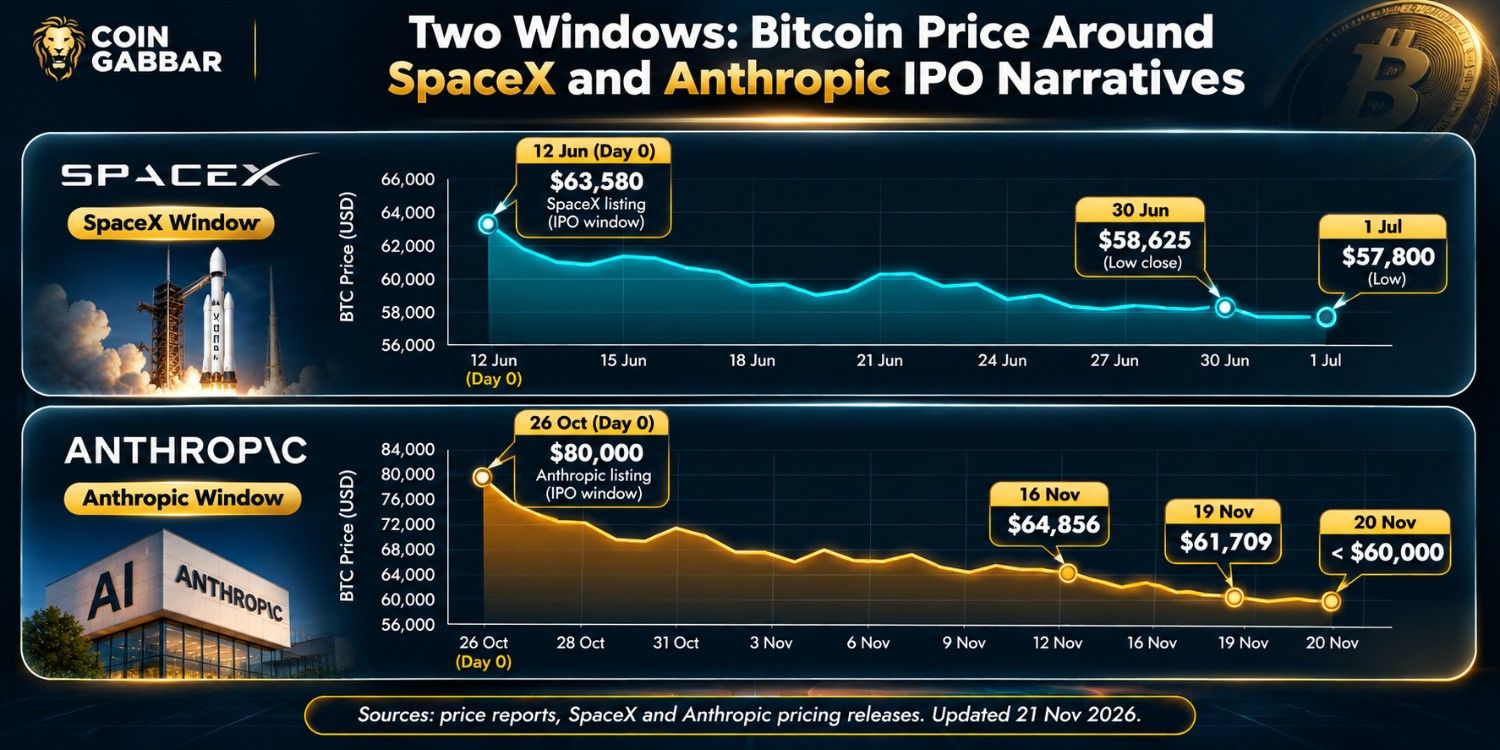
Bitcoin was near $80,000 on 26 October and $64,856 on 16 November, a fall of about 19%. On listing day it touched $61,709, its lowest since 2 July. A 20 November market report put the 30-day fall at about 23% before Anthropic and about 22% before SpaceX.
What Is the Capital Rotation Theory in Plain Terms?
Investors sell liquid assets, such as coins or crypto funds, to raise cash for IPO shares. If that were true, crypto should see selling before the listing and steadier flows after. Bitcoin ETF flows guide shows how those funds work.
A price fall alone cannot show who sold or where the money went. Two other readings compete.

Shared pressure means crypto and tech stocks fall together for the same reasons. Narrative selling means traders sell early because they expect others to. Crypto venues also listed pre-IPO futures on Anthropic, one report says, so traders could bet on it without selling coins.
What Happened to Bitcoin Around the SpaceX Listing?
It bounced, then sank. The price had slid toward $59,000 as Middle East tension rose. It rose back above $63,000 after the US president said planned strikes on Iran were cancelled on 11 June. It closed at $63,580 on listing day, 12 June.
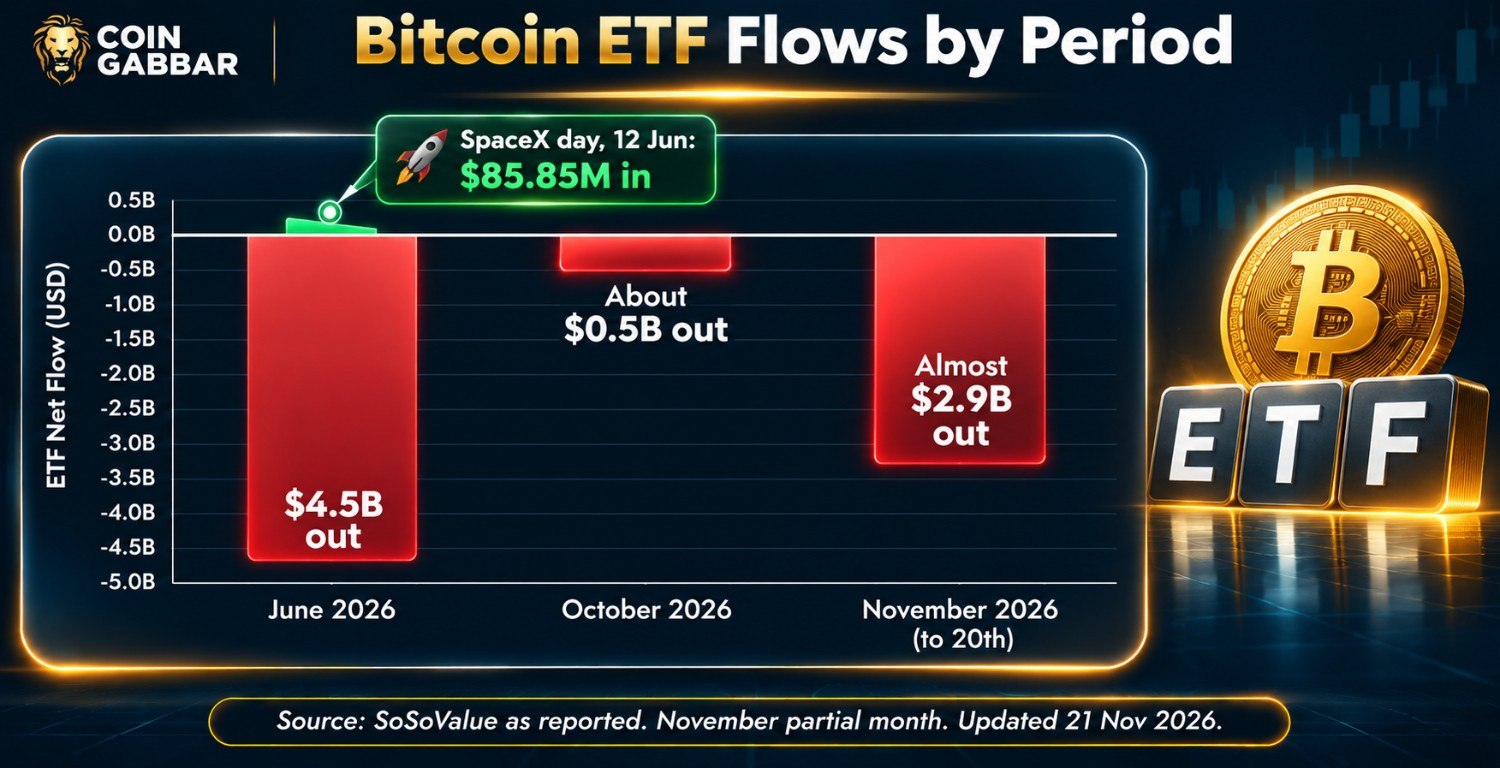
Spot ETFs took in $85.85 million that day, their best in about four weeks. In the five sessions from 5 to 11 June, they had lost about $727 million.
Relief did not last. One price series shows a low close of $58,625 on 30 June and a 2026 low of $57,800 on 1 July. A simple drain theory would predict easing after the listing.
Did Bitcoin Fall Again Before the Anthropic Listing?
Yes, and by more. A market report dated 18 November says the price fell 23% in the 50 days before Anthropic's debut, against 19% before SpaceX. It slipped below $60,000 on 20 November.
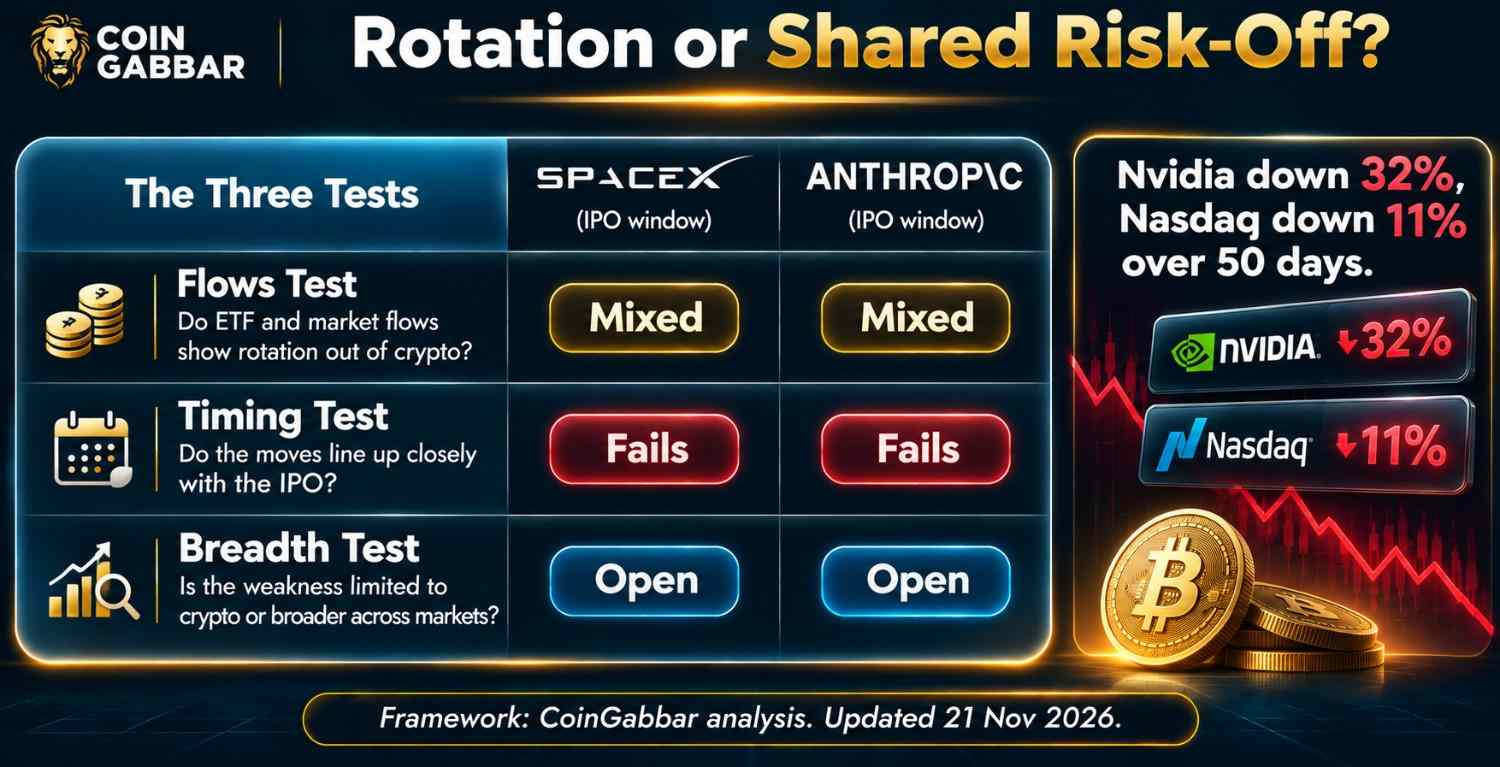
The backdrop differed. Before SpaceX, AI stocks rallied. Before Anthropic, Nvidia fell 32% and the Nasdaq 11% over 50 days. Its 30-day correlation with Nvidia rose from 0.20 to 0.56.
Settlement came on 20 November, so any rebound is too early to judge.
Did Bitcoin ETF Investors Pull Money Out in Both Windows?
In both, but the sizes differ. June 2026 was the worst month on record for US spot Bitcoin ETFs, with $4.5 billion out, per SoSoValue data. October was about $500 million. November reached almost $2.9 billion by 20 November, with $306 million out on 18 November alone.
Outflows show that ETF holders sold. They do not show those holders bought IPO shares. A Federal ReserveFEDS note found institutions held about 20% of crypto fund shares at the end of 2024, so ETF data covers only part of the market.
Stablecoin supply also shrank 4.2% over 90 days in one report. Ourstablecoin explained guide covers why that matters.
Were Rate Fears and Falling Tech Stocks the Real Cause?
They fit the timing well. A 25 basis point US rate rise was described as almost certain for December. Hot inflation data on 10 November pushed the price to $72,787. OurFed and crypto guide covers that link.
Leverage mattered too. Nearly $2 billion of leveraged crypto bets were liquidated over one mid-November weekend, and forced selling took it to about $62,000. Seeopen interest in crypto for how that works.
Those moves need no IPO to explain them.
Which Three Tests Can Show Capital Rotation Here?
CoinGabbar uses three tests. Flows: did outflows start before pricing and stop after? Timing: did the price recover once the listing was done? Breadth: did other risk assets fall too?
SpaceX passes none cleanly: flows turned positive on listing day, the price then hit lower lows, and AI stocks were rising. Anthropic fails breadth since Nvidia and the Nasdaq fell, and its timing test is still open.
This framework is our own analysis. It is not from the cited sources.
Which Terms Should You Know Before Reading the Data?
Capital rotation means money moving out of one asset into another.
A spot ETF is a fund that holds the real coin, and flows are the net money entering or leaving it. A basis point is one hundredth of a percent.
Liquidation is the forced closing of a leveraged bet when losses grow too large.
Expert Opinion: Is the Anthropic IPO and Bitcoin Drain Real?
CoinGabbar analysis suggests the evidence fits shared risk-off pressure better than a direct drain, though a small liquidity pull cannot be ruled out.
This view rests on the two pricing releases, the ETF flow reports, the Federal Reserve note and the price and stock data for both windows.
The weak link is data. No source here shows who sold coins and then bought IPO shares.