BitcoinWorld Asia FX: South Korean Won Outperforms on Reform Optimism as Dollar Steadies and Middle East Tensions Escalate The South Korean won emerged as the top performer among Asian curren
BitcoinWorld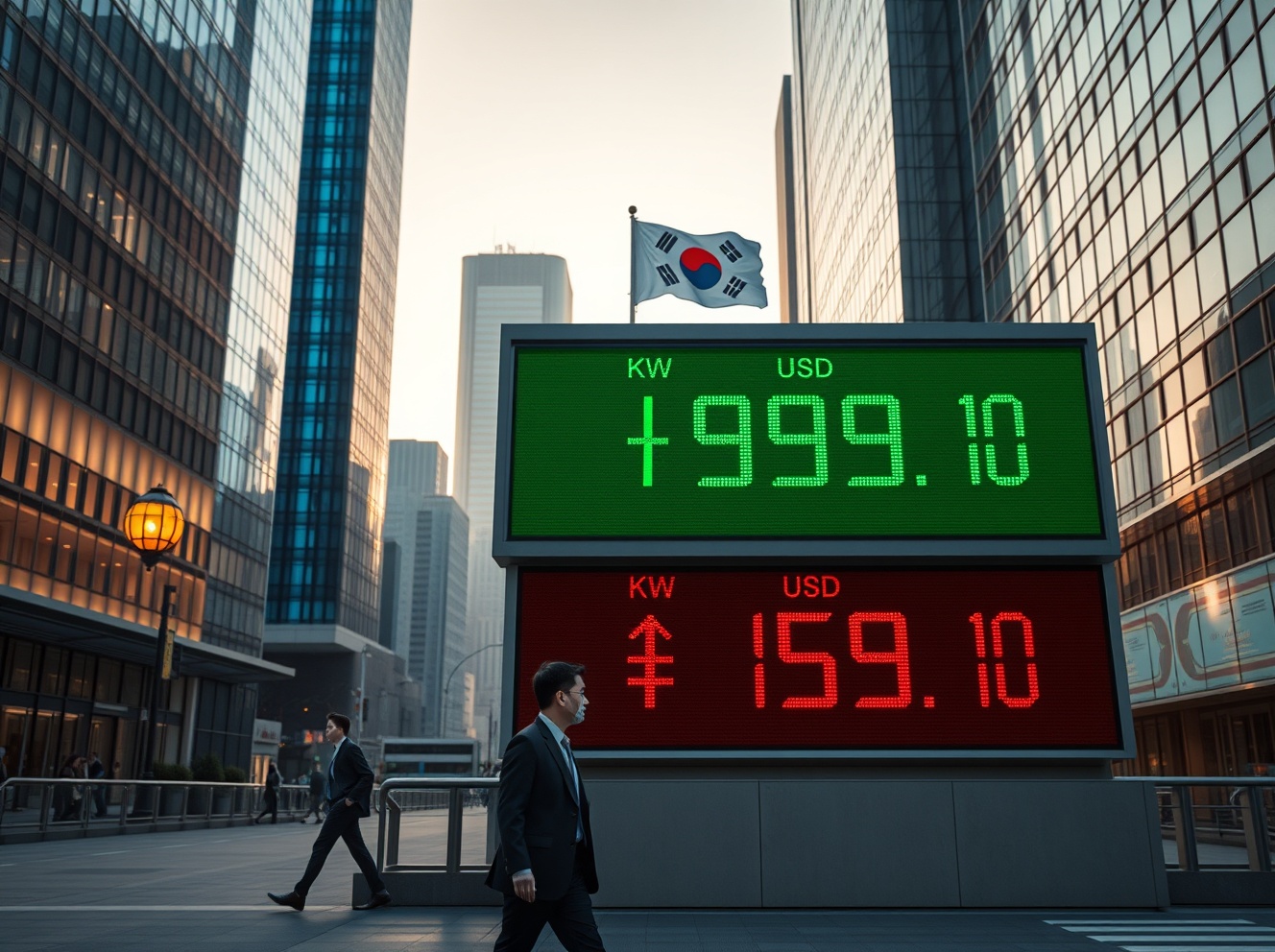 Asia FX: South Korean Won Outperforms on Reform Optimism as Dollar Steadies and Middle East Tensions Escalate
The South Korean won emerged as the top performer among Asian currencies on Wednesday, buoyed by investor optimism over the government’s latest corporate reform initiatives, even as the US dollar steadied and geopolitical tensions in the Middle East intensified, keeping broader markets on edge.
The won strengthened against the greenback after Seoul unveiled a new set of measures aimed at improving corporate governance and shareholder returns, a move analysts say could attract foreign capital inflows. The reforms, part of the broader ‘Corporate Value-Up’ program, target chaebol-led conglomerates and are seen as a step toward aligning South Korean markets with global standards. The currency’s gains stood out in a region where most peers traded within narrow ranges, reflecting the dollar’s steadying after recent volatility.
Dollar Steadies as Fed Signals Persist
The US dollar index held firm near recent levels as markets continued to digest cautious signals from the Federal Reserve. While rate cut expectations remain alive, the Fed’s emphasis on data dependency has prevented a sharp selloff in the dollar. This steadiness has capped gains for many Asian currencies, as traders weigh the implications of still-elevated US interest rates on capital flows to emerging markets. The dollar’s resilience also reflects safe-haven demand amid rising geopolitical risks.
Middle East Tensions Fuel Risk-Off Sentiment
Escalating hostilities in the Middle East added a layer of caution to trading across Asia. Reports of increased military activity and diplomatic breakdowns have pushed oil prices higher, raising concerns about inflationary pressures and supply disruptions. For Asian economies heavily reliant on energy imports, the spike in crude costs poses a fresh headwind, potentially complicating central banks’ policy paths. The risk-off mood has limited aggressive bets on regional currencies, with investors favoring the dollar and gold as hedges.
Regional Currency Roundup
Elsewhere in Asia, the Japanese yen remained under pressure as the Bank of Japan maintained its ultra-loose policy stance, while the Chinese yuan traded flat after the People’s Bank of China set a stable midpoint fixing. The Singapore dollar and Thai baht saw modest declines, weighed by the broader risk aversion. The Indian rupee held near its record lows, with the Reserve Bank of India likely intervening to prevent excessive volatility. The won’s outperformance highlights how domestic policy catalysts can override broader macro headwinds, at least in the short term.
What This Means for Investors
For market participants, the divergence in Asian currency performance underscores the importance of country-specific factors. While the dollar’s steadiness and geopolitical risks create a challenging environment, reforms in South Korea offer a targeted opportunity. However, the sustainability of the won’s gains will depend on concrete implementation of the reform agenda and the trajectory of Middle East tensions. Investors should monitor oil price movements and any escalation in the conflict, as these could quickly shift the risk calculus for the region.
Conclusion
The South Korean won’s rally on reform optimism provided a bright spot in an otherwise cautious Asian FX session, as the dollar steadied and Middle East tensions escalated. The interplay between domestic policy catalysts and external risks will continue to shape currency movements in the region, with the won’s near-term outlook tied to reform execution and global risk appetite.
FAQs
Q1: Why did the South Korean won outperform other Asian currencies?The won strengthened on investor optimism over South Korea’s new corporate reform measures, which aim to improve governance and shareholder returns, potentially attracting foreign capital.
Q2: How are Middle East tensions affecting Asian currencies?Escalating tensions have boosted safe-haven demand for the US dollar and gold, while pushing oil prices higher. This creates headwinds for Asian currencies, especially in energy-importing economies, by raising inflation and import cost concerns.
Q3: What is the outlook for the US dollar against Asian currencies?The dollar is expected to remain steady in the near term, supported by the Fed’s cautious stance and safe-haven demand. However, any clear signal of rate cuts or de-escalation in Middle East conflicts could weaken the dollar, allowing Asian currencies to recover.
This post Asia FX: South Korean Won Outperforms on Reform Optimism as Dollar Steadies and Middle East Tensions Escalate first appeared on BitcoinWorld.