BitcoinWorld AUD/USD Holds Near 0.7170 After Softer Australian GDP Data The Australian dollar extended its decline against the US dollar on Wednesday, hovering near the 0.7170 level and the 2
BitcoinWorld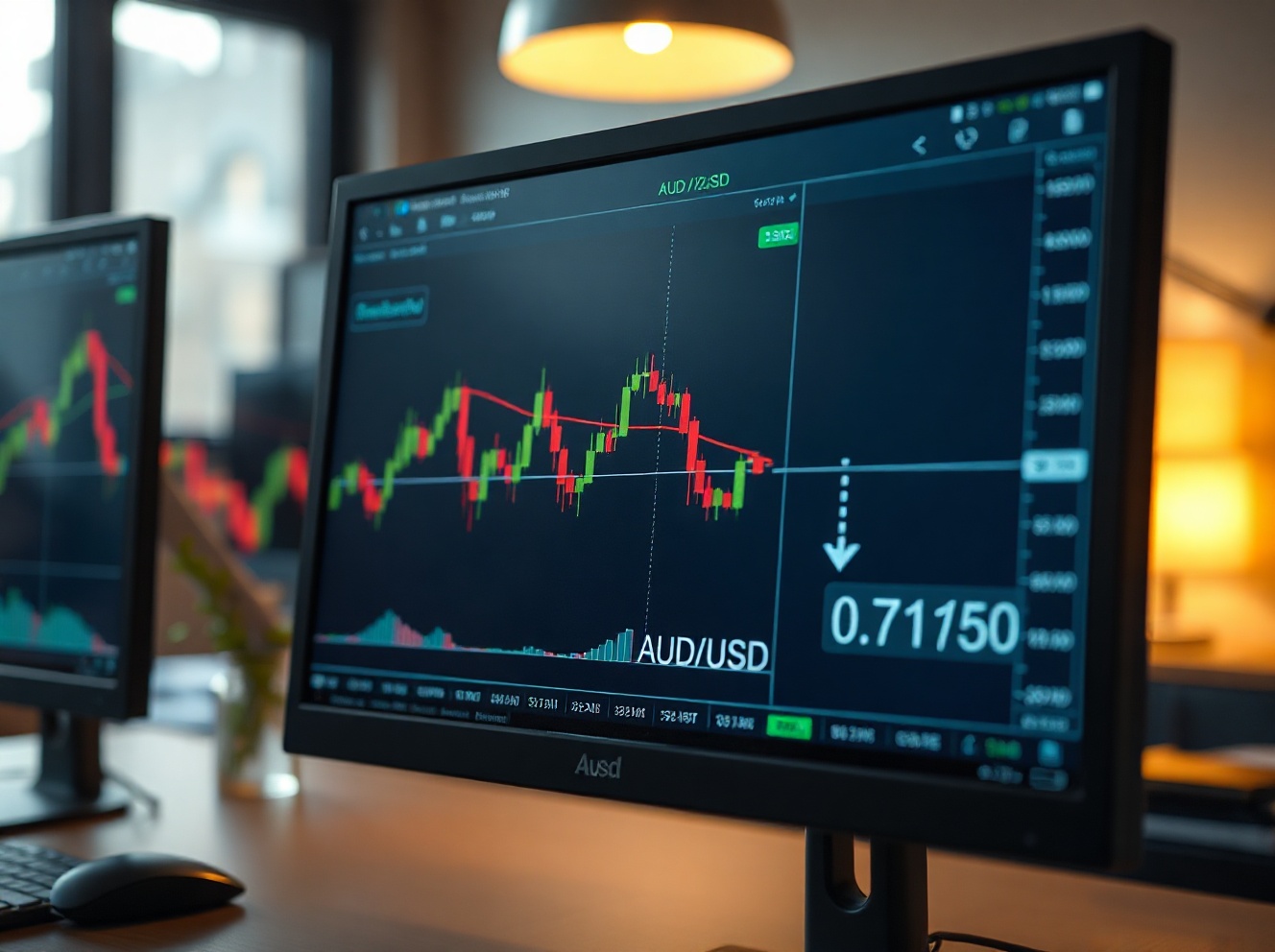 AUD/USD Holds Near 0.7170 After Softer Australian GDP Data
The Australian dollar extended its decline against the US dollar on Wednesday, hovering near the 0.7170 level and the 23.6% Fibonacci retracement, after the release of weaker-than-expected Australian gross domestic product (GDP) data. The currency pair remains under pressure as markets reassess the Reserve Bank of Australia’s (RBA) policy trajectory amid slowing economic growth.
Australian GDP Miss Adds to Selling Pressure
Australia’s economy grew at a softer pace in the fourth quarter, with GDP rising 0.6% quarter-on-quarter, below the 0.8% forecast. The annual rate also missed expectations, coming in at 2.1% versus the 2.4% consensus. The data reinforces the view that the RBA may need to hold interest rates steady for longer, reducing the yield advantage that had previously supported the Aussie.
Following the release, the AUD/USD pair broke below the 0.7200 psychological barrier and tested support at 0.7170, a level that coincides with the 23.6% Fibonacci retracement of the October-to-February rally. A sustained break below this zone could open the door for further downside toward the 0.7100 handle.
Technical Outlook: Key Levels to Watch
From a technical perspective, the pair is trading below both the 50-day and 200-day simple moving averages (SMAs), confirming a bearish bias in the near term. The 23.6% Fibonacci level at 0.7170 is acting as immediate support, with the next major support cluster near 0.7140–0.7120, where the 100-day SMA converges with the 38.2% Fibonacci retracement.
On the upside, resistance is seen at 0.7220 (previous support turned resistance) and the 0.7260 region, where the 50-day SMA sits. A recovery above 0.7260 would be needed to shift the short-term outlook back to neutral.
Market Implications for Traders
The softer GDP print reinforces the narrative that Australia’s economy is losing momentum, which may cap any aggressive RBA tightening. For AUD/USD traders, this means the pair is likely to remain sensitive to US dollar dynamics and global risk sentiment. Any further deterioration in risk appetite—driven by geopolitical tensions or weaker commodity prices—could accelerate the decline.
The 23.6% Fibonacci level is a widely watched technical marker. A close below it on a daily basis would signal that the corrective bounce from the October lows has exhausted, potentially opening a deeper retracement toward the 0.7000 psychological level.
Conclusion
The AUD/USD pair is under pressure following disappointing Australian GDP data, trading near the 0.7170 support zone. The combination of a weaker domestic growth outlook and a broadly steady US dollar keeps the pair vulnerable. Traders should monitor the 0.7170–0.7140 support band closely; a break below could trigger further selling, while a bounce above 0.7220 would suggest temporary stabilization.
FAQs
Q1: Why did the AUD/USD fall after the GDP release?The GDP data came in below expectations, signaling slower economic growth. This reduces the likelihood of aggressive RBA rate hikes, which diminishes the Aussie’s yield appeal and pressures the currency lower.
Q2: What is the significance of the 23.6% Fibonacci retracement level?The 23.6% Fibonacci level is a common technical retracement used by traders to identify potential support or resistance. In this case, it aligns with the 0.7170 area, making it a key level to watch for a potential bounce or breakdown.
Q3: What are the next key support and resistance levels for AUD/USD?Immediate support is at 0.7170 (23.6% Fibo), followed by 0.7140–0.7120 (100-day SMA and 38.2% Fibo). On the upside, resistance is at 0.7220 and 0.7260 (50-day SMA).
This post AUD/USD Holds Near 0.7170 After Softer Australian GDP Data first appeared on BitcoinWorld.