Balaji Srinivasan’s Network School says it has taken over Farcaster and is relaunching it as the Network State Protocol—an effort that, according to multiple Farcaster users, has already trig
Balaji Srinivasan’s Network School says it has taken over Farcaster and is relaunching it as the Network State Protocol—an effort that, according to multiple Farcaster users, has already triggered account restrictions and an appeals process tied to new moderation rules.
On Thursday, Network School announced the acquisition of Farcaster from Neynar. The same day, users reported on X that accounts were restricted to “read-only,” suggesting prior posts were evaluated under the platform’s incoming code of conduct. The reaction highlights a recurring tension in decentralized social: how to reconcile open participation with tighter enforcement when rule changes apply retroactively.
Key takeaways
- Network School acquired Farcaster from Neynar and rebranded it as the Network State Protocol. The change comes with a structured moderation framework.
- Multiple users said their Farcaster accounts were set to “read-only” as a result of earlier posts that allegedly violated the new rules.
- The platform’s new “social smart contract” model allows users to opt into rule enforcement; those who opt out reportedly keep read-write access via keys while retaining their history.
- Moderation is described as both automated and human-supported, with an AI component and an appeals process.
- Network School frames enforcement as part of a “law and order” goal and links “pro-social” incentives to civil engagement and contributions.
Acquisition, rebrand, and reports of “read-only” access
Network School’s announcement that it has acquired Farcaster from Neynar positions the platform for a second major ownership transition within the year. In December 2025, Farcaster co-founder Dan Romero said the app reached 250,000 monthly active users.
Alongside the ownership and branding update, several users claimed their access was curtailed. Posts on X alleged accounts were moved into a “read-only” mode, reportedly tied to prior activity. While the specific accounts and decisions were not independently enumerated in the announcement itself, the backlash reflected concern about decentralized social platforms imposing penalties—especially when rules are applied to content posted before the new regime.
Criticism surfaced from members of the broader Farcaster ecosystem as well. Kunal Gandhi, a former India ecosystem lead at Eigen Labs, said he knows many of the people affected and argued that deleting or limiting accounts for past posts contradicts decentralized social’s underlying ethos.
From “decentralized democracy” to retroactive moderation
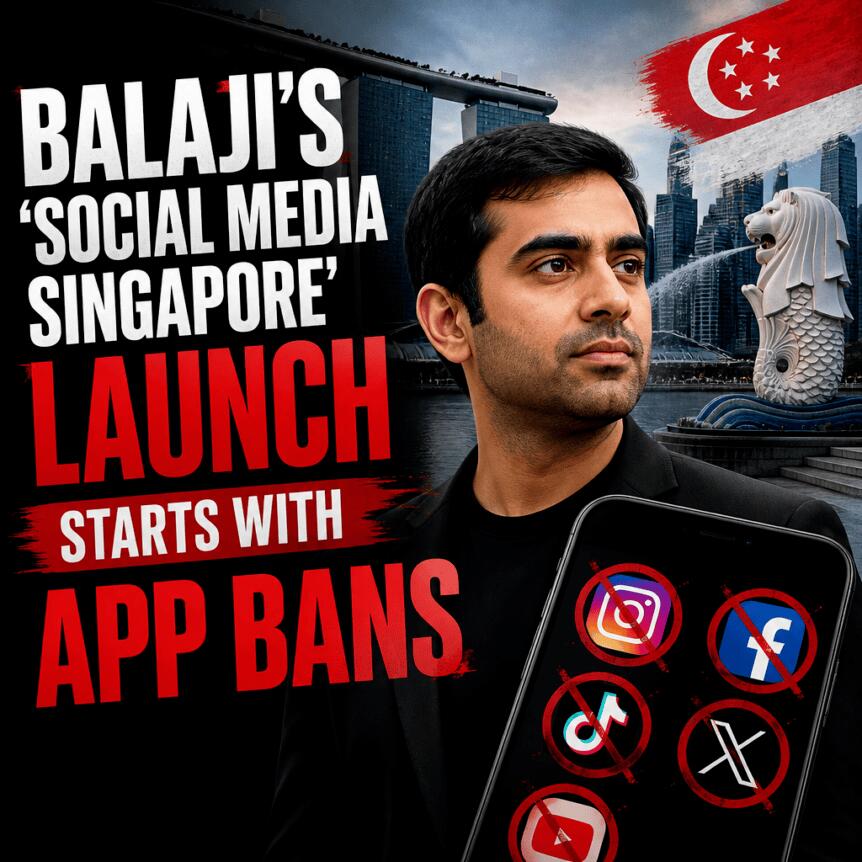
In a Farcaster post shared Thursday, Balaji Srinivasan characterized the restrictions as part of a plan to transform the reference client into “the Singapore of social media”—a community with a shared code of conduct designed to reward constructive interaction and reduce harassment or attacks.
Srinivasan said “law and order” means restoring an offline norm: people do not typically run up to strangers and begin cursing or attacking them. He compared the idea to crime-reduction strategies based on targeting repeat offenders, arguing that moderation should focus on the small fraction of repeat rule-breakers rather than silencing broad swaths of users.
“Much like how President Bukele jailed a small fraction of repeat offenders to essentially eliminate crime in El Salvador, we’ve moderated out the small fraction of repeat offenders that have been muted or blocked by many accounts to stop random attacks within this Farcaster reference client.”
Srinivasan also stated that the moderation process would involve both humans and AI, using an appeals pathway for those who believe a restriction is unwarranted. Importantly, the described rules are not limited to new content—Network School’s framework applies to prior posts as well, which is central to why some users felt blindsided.
The Network State Protocol’s rules: “social smart contract” enforcement
Network School’s vision for the Network State Protocol centers on a “social smart contract.” Users can opt into a mechanism that authorizes the core team to set app rules. The associated “Network Code” reportedly classifies violations into categories such as digital felonies, misdemeanors, and infractions, with penalties ranging from warnings and suspensions to bans.
Beyond enforcement, the Network Code also promises rewards for “pro-social behavior”—including teaching others, sharing projects, and disagreeing civilly. However, Network School did not specify in the announcement what those rewards would be, leaving an open question for users deciding whether to participate.
For implementation, Network School said an open-weight AI model would apply the rules, with some manual judgment involved. It also said it eventually wants to warn users of potential violations before they post—an approach that could reduce surprise restrictions, though the current reports indicate at least some enforcement is already occurring immediately.
Crucially for decentralized access, Network School said the underlying Farcaster protocol remains open. Users who do not accept the social contract are said to retain read-only access to the main app while keeping their keys, funds, followers, and post history. The idea is that people can take their identity and content elsewhere by switching to another client. Srinivasan framed the ability to join, leave, or build competing clients as “decentralized democracy.”
Broader context: Network School’s regulatory history and the “network state” ambition
Network School’s Farcaster acquisition arrives after months of regulatory upheaval involving Srinivasan’s “Forest City” business efforts. According to earlier reporting from Cointelegraph, Malaysian authorities revoked Network School’s business license and ordered it to cease operations, citing alleged licensing and premises-use violations. Srinivasan later said there was an agreement to establish a campus in Kazakhstan.
Within its Farcaster rebrand, Network School also described ambitions that go beyond online social. The organization suggested online community could take physical form through meetups and pop-up events, ultimately developing toward “startup cities” and “network states.” The connection is more aspirational than operational in the announcement, but it explains the emphasis on building governance-like structures for community behavior.
For Farcaster users and developers, the next watch item is how quickly the appeals process and opt-in/out mechanics address “read-only” reports, and whether Network School’s moderation framework becomes more predictable for the community. Equally important will be whether the promised pre-post warnings and “pro-social” incentives materialize in practice—or remain largely conceptual.
This article was originally published as Balaji’s ‘Social Media Singapore’ Launch Starts With App Bans on Crypto Breaking News – your trusted source for crypto news, Bitcoin news, and blockchain updates.