The UK government has proposed expanding the Bank of England’s remit to explicitly include support for innovation in digital payments, with stablecoin-based payment systems in scope. The Trea
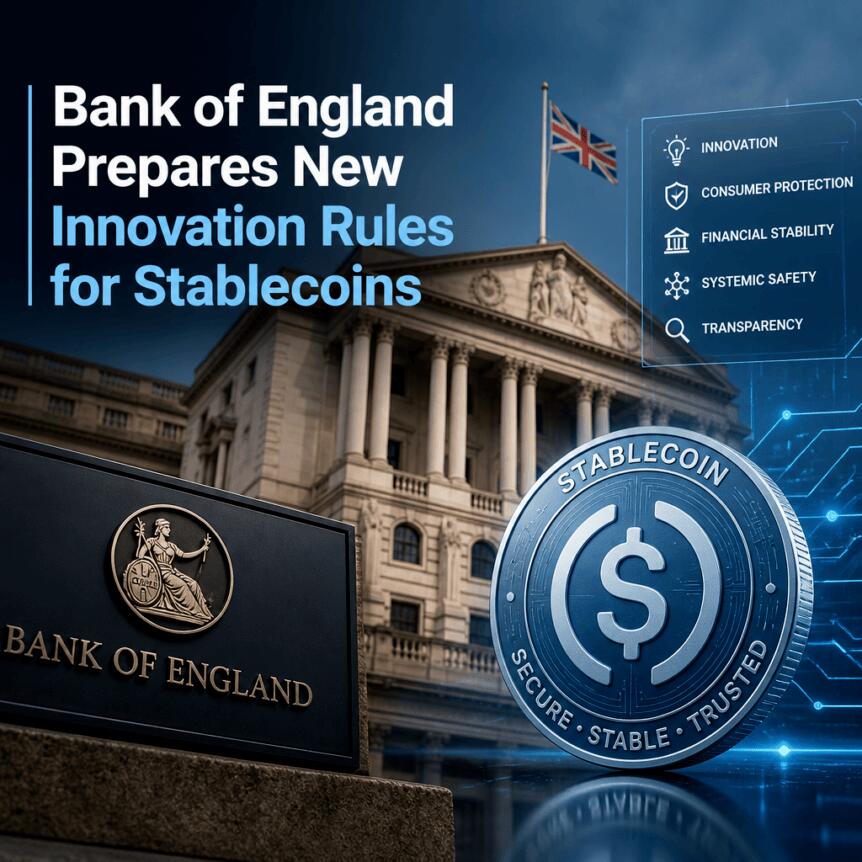
The UK government has proposed expanding the Bank of England’s remit to explicitly include support for innovation in digital payments, with stablecoin-based payment systems in scope. The Treasury said the Bank would receive a secondary objective focused on improving payment innovation—while keeping financial stability as its top priority.
Announcing the change this week, HM Treasury said the central bank’s new innovation goal would cover payment systems that settle using digital settlement assets, including stablecoins. The government also signaled that the measure will be pursued through legislative amendments, with further scrutiny expected in the House of Lords in early September.
Key takeaways
- The Bank of England would gain a secondary mandate to support innovation in payment systems using digital settlement assets such as stablecoins.
- Financial stability remains the primary objective; the innovation goal is intended to “support,” not override, stability considerations.
- The Bank would report annually to Parliament on its progress toward the payments innovation objective, potentially increasing public scrutiny.
- The proposal is expected to be implemented through amendments to the Financial Services and Markets Bill, with House of Lords debate scheduled for Sept. 7 and 9.
- Industry focus remains on how the Bank operationalizes stablecoin requirements—particularly reserve and backing rules for systemic issuers.
How the Bank of England’s mandate would change
HM Treasury said the Bank of England’s new responsibility would extend an approach the central bank already uses for regulating central counterparties (CCPs) and central securities depositories (CSDs), which play key roles in how financial assets are cleared, held, and settled.
Under the proposal, the Bank would provide an annual report to Parliament detailing its progress toward the innovation objective for payments and emerging forms of digital money. Officials framed the change around the potential of newer technologies—including tokenisation and distributed ledger technology (DLT)—to reshape aspects of financial markets.
City Minister Lucy Rigby said developments in digital payments technology, including tokenisation and DLT, have the potential to transform financial markets globally.
The Treasury expects to deliver the objective via amendments to the Financial Services and Markets Bill. That bill is scheduled for further debate in the House of Lords on Sept. 7 and 9, placing the timing of any final implementation squarely in the coming legislative window.
Industry concerns center on implementation details
While the innovation objective would be secondary to financial stability, its practical impact could depend on how the Bank structures its annual reporting and enforcement priorities. Maksym Sakharov, co-founder and CEO of on-chain banking infrastructure provider WeFi, told Cointelegraph that the mandate’s wording matters less than how the Bank chooses to execute it.
Sakharov emphasized that the objective is designed not to “override nothing,” but the annual publication requirement could still intensify public and market attention on how stablecoin rules are evolving—especially those finalized by the central bank in June.
One element highlighted by Sakharov concerns systemic stablecoin issuers’ reserve composition. He pointed to requirements stating that at least 30% of backing assets must be held in non-interest-bearing deposits at the Bank of England. In his view, “the reserve split is the first thing to fix,” because it may influence whether a stablecoin issuer can sustain its business model.
His comment underlines a broader issue: innovation mandates may encourage experimentation, but firms’ real-world viability often hinges on balance-sheet mechanics and compliance costs—particularly where reserve rules and custody arrangements are involved.
As readers look for clues about what comes next, the key question is how the Bank will translate an innovation goal into measurable outcomes without loosening or changing the core stability framework. Annual parliamentary reporting will likely become one of the primary channels through which that tension is expressed.
UK stablecoin momentum builds alongside policy and pilots
The BoE innovation mandate is the latest development in a UK push to work through stablecoin use cases—from regulation to experimentation—while aligning with international counterparts. The announcement follows several steps that indicate stablecoins are increasingly being treated as a mainstream component of digital payments planning rather than a peripheral technology.
In August, participants in the Bank of England’s Digital Pound Lab began testing whether a stablecoin could interoperate with a simulated digital British pound for cross-border trade payments. The experimental platform, HM Treasury and related BoE materials indicate, does not involve real customers or funds; its purpose is to evaluate mechanics and interoperability rather than to launch a live commercial product.
Earlier, in mid-July, the UK and US published a joint statement on stablecoins. The governments said they “intend to enable the use of stablecoins in cross-border finance” and called for greater alignment of regulatory frameworks. The direction of travel is therefore not only domestic: it also aims to coordinate approaches so stablecoin-related payments can operate across jurisdictions with fewer friction points.
More broadly, the UK has also adjusted its stablecoin framework over time. Cointelegraph previously reported that the Bank of England dropped earlier plans to cap individual stablecoin holdings at 20,000 British pounds and business holdings at 10 million pounds. Instead, the approach shifted toward a temporary issuance cap of 40 billion British pounds (about $52.9 billion) for each systemic stablecoin.
That move signals that regulators are searching for a structure that both allows usage and limits systemic risk—an approach that will likely shape how the new innovation mandate is interpreted. If innovation is the goal, then limits on issuance, reserve backing, and eligibility for systemic designation become the practical tools used to manage risk.
What to watch as legislators and the BoE move forward
The next phase will largely be determined by how amendments to the Financial Services and Markets Bill are drafted and whether they preserve the clear hierarchy placing financial stability above payment innovation. Investors and builders should also watch for the first annual reporting cycle: it could reveal what the Bank of England considers “innovation progress” in stablecoin-related payments, and how far the regulator will go in encouraging experimentation while maintaining its stability standards.
This article was originally published as Bank of England Prepares New Innovation Rules for Stablecoins on Crypto Breaking News – your trusted source for crypto news, Bitcoin news, and blockchain updates.