Nigeria’s federal government launched its 3,700 rural telecom tower project last week, unveiling an infrastructure roadmap to deploy 1,989 new towers across 436 local government areas (LGAs).
Nigeria’s federal government launched its 3,700 rural telecom tower project last week, unveiling an infrastructure roadmap to deploy 1,989 new towers across 436 local government areas (LGAs). Marked as a project to bridge the digital divide and bring 20 million Nigerians from rural communities online, the initiative has witnessed the pilot deployment.
On Saturday, October 17, 2026, the Minister of Communications, Innovation and Digital Economy, Dr Bosun Tijani, under the Nigeria Universal Communication Access Project (NUCAP), commissioned its first site in Umuorie village, Bende Local Government Area, Abia State.

Nigeria’s Minister of Communication, Innovation and Digital Economy, Bosun Tijani
While the site rollouts will expand across more states in the coming weeks and months, the project marks another attempt to help Nigerians in rural areas leverage digital financial services, online education, and use emergency response channels.
However, deploying telecom towers to rural communities has always been a matter of heavy consideration for industry players. For operators, it’s about business and profitability targets. In fact, building infrastructure in these communities often comes with economic considerations, benefits and population size.
And this is where public funds, such as the 3,700 telecom towers initiative and Project BRIDGE, come in.
Also read: These 5 FG projects are set to roll out in October; here’s how they’ll affect the $1tn digital economy.
Beyond the 3,700 tower project, here are two others
Before the current drive under the NUCAP, Nigeria had embarked on similar grand projects to fix its rural dead zones. Most notably, the $82 million National Rural Telephony Project (NRTP) launched in 2001, and MTN Nigeria’s massive 3,000-site rural expansion drive kicked off in 2020.
Revisiting the successes and failures of these projects explores the question of whether Nigeria is finally building a sustainable digital bridge for rural Nigeria or repeating another cycle of high ambitions and unfinished promises.
National Rural Telephony Project (NRTP) – 2001
The project came to light under President Olusegun Obasanjo administration to bridge the digital divide. The initiative aimed to cover 218 local government areas in Phase 1 and provide over 636,256 Code Division Multiple Access (CDMA) lines across all 774 local government areas and the FCT, Abuja.
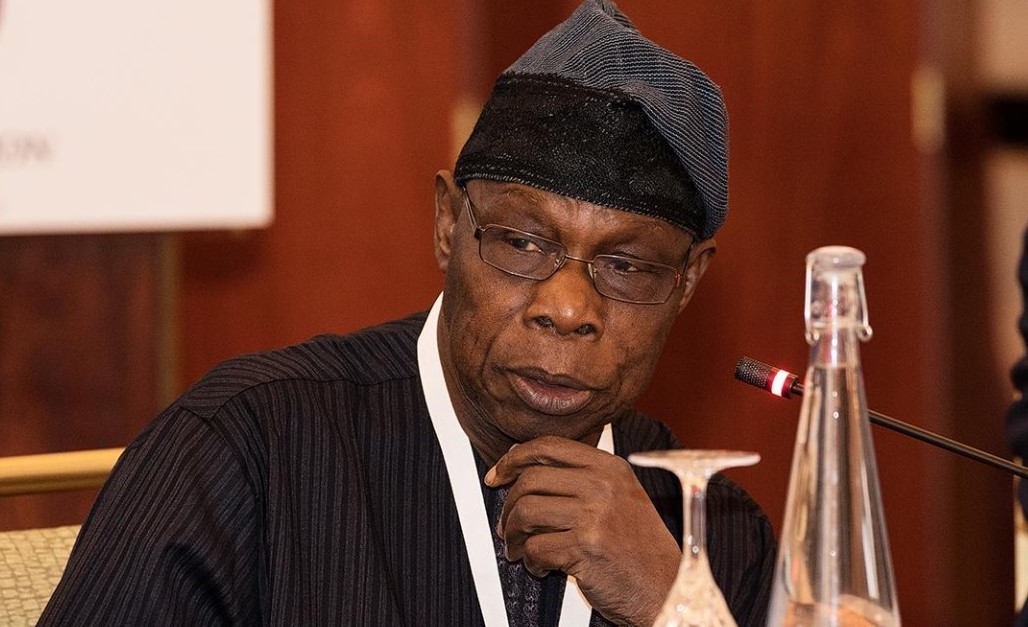
Former President of Nigeria, Olusegun Obasanjo
It was pivotal to Nigeria’s aim to revamp its telecom industry as it shifted from a state-run monopoly to a liberalised mobile market, which brought in MTN Nigeria and Econet Wireless (now Airtel).
The National Rural Telephony Project (NRTP) received financial backing of a $200 million Chinese EXIM Bank loan plus a 15% local counterpart funding commitment from the Nigerian government, estimated at ₦5 billion. Chinese firms, including ZTE Corporation, Huawei, and Alcatel Shanghai Bell, were contracted to build the infrastructure, but only managed to construct local telephone exchanges rather than complete active networks.
However, the project didn’t go beyond the planning and execution stage. It suffered from poor design, a lack of proper oversight and the simultaneous liberalisation and collapse of the state-owned NITEL.
While the implementation of the project was expected to kick off in 2006, the facilitators blamed some telecoms giants for stalling the NRTP as they didn’t want it to succeed. The claimed telcos fear that the project would take over the whole country, forcing down their call tariffs at a time when they aim to increase their earnings.

The project reopened in December 2008 after the then Minister of Information and Communication, late Prof. Dora Akinyili, made the financial bid available to the public, with five companies emerging as the preferred bidders. In 2012, former Minister of Communication, Omobola Johnson, announced that the project would be better implemented by the private sector because the government did not want to deal with telecoms firms.
However, the efforts failed to revive the project, leaving billions wasted.
The failures left rural communities missing out on network connectivity, though mobile and internet coverage eventually expanded through private telecom providers but still remained limited.
MTN’s rural telephony – 2020
MTN Nigeria’s rural telephony program is an ongoing initiative to bridge the digital divide by extending mobile voice and data services to underserved rural communities across the country. Initiated in 2020, it targets over 20 million Nigerians living in areas with little or no network coverage and identifies over 3,000 remote locations nationwide for phased rollout.
In collaboration with Huawei to deploy cost-effective, solar-backed rural infrastructure, MTN has already installed hundreds of live rural telecom towers, including early phases reaching communities like Kurba, Agbiyi Umuede, Tobolo, Opaha, Tudun Faila, Oguru Uzo Uwani, and Sarkin Kaya Rini and plans for continuous annual expansions.
The number of communities selected for the first phase includes 91 in Abuja, Asaba 21, Ibadan 17, Enugu 37, Kano 92, Lagos 13, and Port Harcourt 46.
Meanwhile, the project is witnessing two leading challenges.
One. The project involves a huge investment, which does not readily guarantee a return on Investment.
Two. There were claims of infrastructure theft incidents and lengthy times to restore service after network outages. Some towers reportedly stayed down for days because of community issues, and there were cases where security guards were killed when robbers came for the equipment.
Also read: Rural connectivity: Expert reveals why many Nigerian communities won’t see new telecom towers anytime soon.
What the 3,700 tower project can learn
For the latest rural telecom project to be successful, a security plan must be a priority. Engagement with local traditional leaders and community stakeholders must be initiated to build a sense of community ownership that makes locals a guardian angel of the infrastructure.
There’s a need for well-aligned execution timelines, essential to prevent the project from becoming another abandoned government initiative.
While it’s yet to be mentioned in shared plans, the federal government needs to initiate clear agreements with mobile network operators to activate active radio equipment as soon as sites are erected.