In July 2023, Alejandra Corbella took on one of the harder jobs in tech marketing. As one of Worldcoin’s first orb operators in California, she spent her days in Bay Area co-working spaces ne
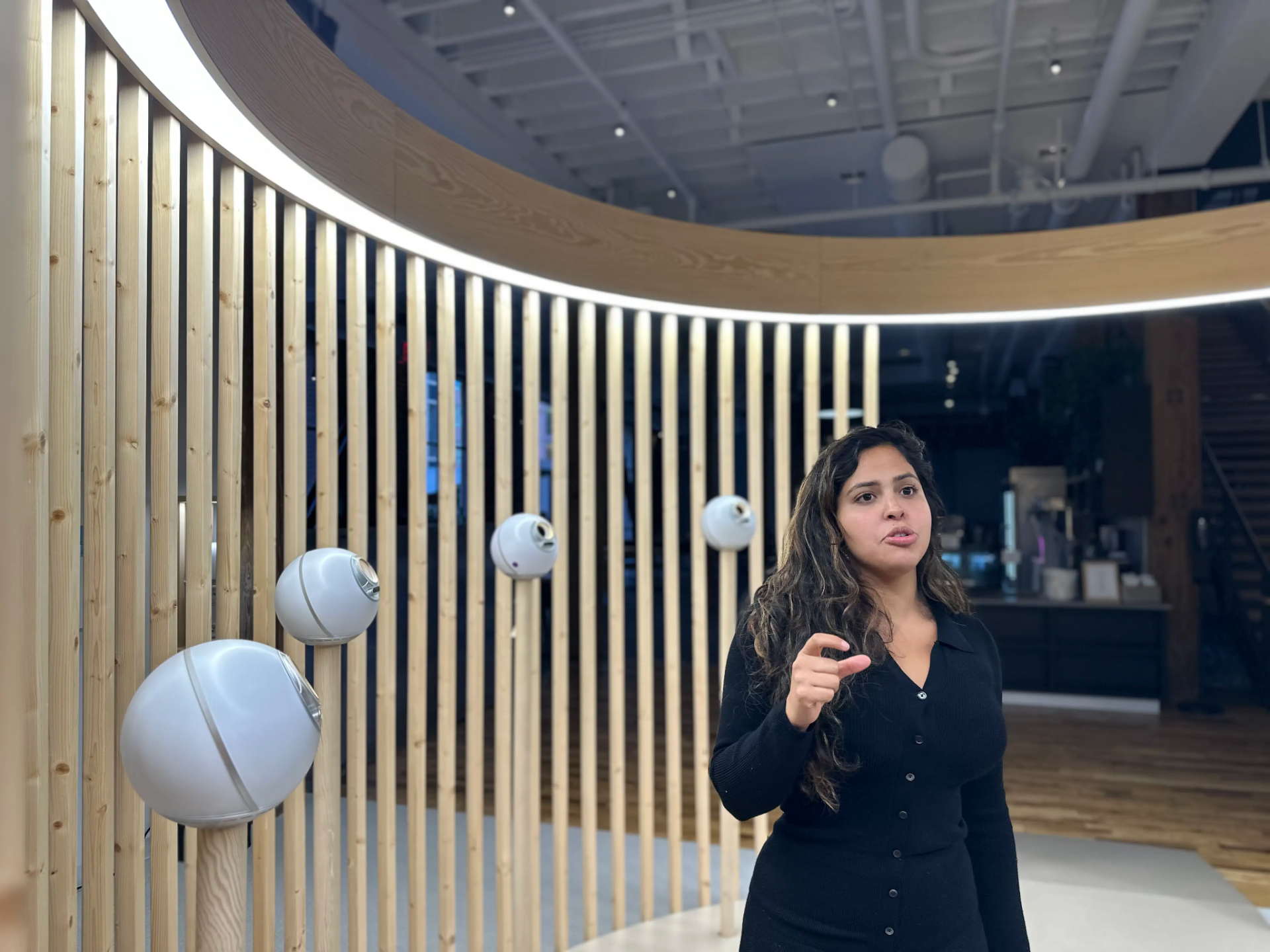
In July 2023, Alejandra Corbella took on one of the harder jobs in tech marketing. As one of Worldcoin’s first orb operators in California, she spent her days in Bay Area co-working spaces next to a chrome sphere, inviting strangers to let it scan their eyes.
Worldcoin, the project co-founded by Sam Altman and now known as World, had launched globally that month with an idea that sounded like science fiction: as AI makes bots harder to spot, people will need a way to prove online that they are human.
Her audience was the most privacy-conscious crowd in tech, and the project was already under scrutiny. Within weeks, Kenya suspended its operations over data concerns, and regulators in other countries, including Indonesia, later followed.
Corbella had plenty of questions at first. “Not gonna lie, I think at the beginning I thought , ‘this is very Black Mirror-ish,'” she says. But she was also optimistic about what the technology could do to help real people prove humanity in their everyday online interactions. “It was a great feeling to know that I was really early into something that could be really big.”
She went on to deliver 100 verifications in San Francisco. Two years later, Tools for Humanity, the company that builds World, hired her to lead its in-person community expansion across five U.S. cities. Along the way, the marketing and community strategist, who has produced more than 200 events for crypto and AI companies, settled on a view many crypto teams still resist: people don’t adopt technology because they understand it. They adopt it because it does something for them.
Winning over early fans and hostile critics in the Bay Area
The first weeks were easy. Worldcoin ran verification hours at several San Francisco locations, mostly co-working spaces such as Shack15. The people who showed up were “the first ones to line up for, you know, are usually the same ones as the Meta glasses or the iPhone,” Corbella says. “These are kind of like the people that you don’t have to convince.”
Some were devoted Sam Altman fans. Others, she says, flew in from Asia just to get verified.

Then the strategy changed. Corbella secured co-working spaces to host the orbs and managed several Bay Area locations on her own, including Hacker Dojo in the South Bay. Users booked appointments through the app, and she walked them through how the technology worked. “I’m not pitching,” she says.
In her first week there, a large man walked up and started shouting that she was “stealing people’s data” and that the orb was “a scam.” She remembers being terrified. She told him she wasn’t forcing anyone to verify and offered to send him resources, and the co-working space stepped in to talk to him. After he went home and read about the technology and the cryptography behind it, he apologized. “He never got verified, which is fine,” she says.
How World ID proves you are human without revealing who you are
Corbella’s explanation of the orb is simple. She calls World ID a “human passport”: proof that you are a person and not a bot, whether you are buying concert tickets or using a dating app. The orb photographs the iris and face and turns them into a unique code.
According to World, the images are sent to the user’s phone and then permanently deleted from its systems, and zero-knowledge proofs let people prove they are unique humans without revealing who they are. “Think of it like a hash,” Corbella says. “You can prove that you’re human without having to provide any information about yourself.”
Those use cases are no longer hypothetical. In April 2026, World said it was taking its Tinder integration to the U.S. and other markets and launched a tool for verified concert ticketing. In July, it said more than 18 million people had been verified by an orb.
In San Francisco, the technical crowd could follow the cryptography. “If you understand how it works, you know that the data is private,” she says.
Many went home to read World’s open-source documentation and came back later, some of them two years after their first visit. Privacy was the most common question, followed by a more practical one: “But why would I do it? What do I get?” Some people, she adds, simply don’t trust anyone. “Very privacy focused, and I can respect that.”
Different U.S. cities, different kinds of skepticism
World officially launched in the U.S. in April 2025, opening orb locations in six cities. Corbella’s role at Tools for Humanity, which began that July, covered San Francisco, Los Angeles, Austin, Atlanta and Miami.
Over ten months she ran more than 40 activations at World’s flagship locations, including university programs and private events, and owned them end to end, from budget and vendors to production. She also worked closely with World’s marketing team on the “No Bot Shop” event series, where people could win prizes at the flagships for proving they were human.
Each city pushed back in its own way, she says. San Francisco’s tech workers asked sharp questions about privacy and came around once they understood the cryptography. In Los Angeles, some people wondered whether World was a cult. In Atlanta and Miami, the skepticism came from everyday consumers rather than technologists.
Over time, she noticed a contradiction. “Most people don’t even think about all the data they’re sharing with Apple the moment they get an iPhone,” she says, “but all of a sudden they have a problem with a device like the orb.”
Why user benefits matter more than technical jargon
The lesson Corbella took from the orb applies well beyond it. Crypto teams are full of smart, technical people, she says, but “you don’t onboard the masses by explaining what ZK (zero knowledge) is, because people ask why should I care? How do I benefit?”
Her checklist starts with the user: “Can people make money? Can people learn something new? Can they start a new career with it? Can they meet people?”
She measures events the same way. Attendance matters less to her than what happens afterward, which means working closely with sales and business development teams. “Out of 100 people that came to the event, how many of these people did we bring as customers, or did we onboard to the community? Did they get verified?”
Before World, she led North America community strategy for the Sui Foundation, running more than 80 activations across seven metro areas. They included full-day “Road to Overflow” summits for developers in New York and San Francisco, which she estimates brought more than 80 additional people into Sui’s Overflow hackathon.
Corbella expects AI to repeat crypto’s hype cycle
“Sometimes the boring products are really what make the adoption,” Corbella says. Crypto took years to learn that lesson, and she thinks AI will have to learn it too. She expects the AI boom to follow crypto’s cycle of “hype, hype, hype, and then downfall,” and says “so many apps are going to die.”
Corbella now works in ecosystem development at 0G Labs, a company building AI infrastructure on blockchain, where she curates founder and AI events. Working across both industries, she sees lessons running the other way too. “I feel like so much of crypto was just hype,” she says. “I feel like AI immediately creates so much value for people, where I think crypto didn’t as much.”
That has been her approach since the orb: explain what the technology does for people and take the hard questions seriously. Sometimes that changes a mind. At an event in New York in 2025, a developer told her he would have refused to sign up for World a year earlier but was now ready. His reason: people hand Apple their face and fingerprints without a second thought. “It’s about choices that you make,” he told her.
He got verified, joined the World accelerator and now runs a mini app inside World App. “He messaged me the other day that I was like an influence to that,” Corbella says. “So I feel very happy to hear that.”