NFT analytics is not one category anymore. In 2026, some tools are best for traders chasing flow, some are better for collection research, and some matter because they turn NFT ownership data
NFT analytics is not one category anymore. In 2026, some tools are best for traders chasing flow, some are better for collection research, and some matter because they turn NFT ownership data into infrastructure that products and dashboards can build on.
That is why the best NFT analytics tools in 2026 are not just the ones with the nicest charts. The best ones help you answer a decision quickly: what is moving, who is buying, what is losing momentum, and whether the signal is strong enough to act on. If you are building a full research stack, this page should naturally connect to your guide on NFT tracking tools, your coverage of NFT marketplaces, and your breakdown of NFT APIs.
Reviewed by NFTEnex Editorial TeamLast reviewed: 2026-07-13Review type: No-budget editorial comparisonEditorial policy: NFTEnex Editorial Policy
Why you can trust this guide
This guide is based on live public product surfaces and official references reviewed on 2026-07-13. We directly checked the public positioning, visible workflow framing, and documentation shown in this article. We do not present unverified logged-in behavior, live checkout results, or completed onchain actions as first-hand use unless they were actually completed and documented.
Methodology
We compared each option using live public product surfaces, official documentation, and visible workflow cues captured at review time. In this version, the ranking prioritizes clarity, workflow posture, and fit for different user types over private dashboard claims we could not verify directly.
Limitations
This is a no-budget editorial review, not a fully funded end-to-end product test. Where a conclusion would require a live transaction, paid plan, logged-in dashboard, or wallet-funded workflow, we treat that as a limitation and avoid overstating direct experience.
DappRadar is still one of the cleanest starting points for broad market visibility. NFTGo is stronger when you want collection-specific market behavior. Nansen is more useful when wallet intelligence matters. Zerion makes more sense when your workflow is cross-asset and NFT behavior is only one part of it. bitsCrunch is relevant because it leans into NFT data infrastructure and intelligence rather than simple front-end dashboards. Trait Sniper remains useful for narrower trader workflows. Blur-native tools matter if your workflow is still centered around speed-sensitive trading. OpenSea analytics is useful because the biggest marketplace still shapes discovery behavior even when advanced users supplement it elsewhere.
Quick picks:
- Best all-purpose starting point: DappRadar
- Best for collection-level market research: NFTGo
- Best for wallet intelligence: Nansen
- Best for cross-portfolio users: Zerion
- Best for infrastructure-minded teams: bitsCrunch
- Best for niche rarity and speed workflows: Trait Sniper
For this article, we did not want to rely only on list pages and vendor positioning, so we reviewed the live public product surfaces of DappRadar, Zerion, and Alchemy's NFT analytics directory on 2026-07-10.
That direct review does not replace a premium account test, a wallet-linked workflow test, or a full collection-tracking exercise inside every platform. But it does show something important very quickly: some products are clearly built to orient users at the market level, some are better at portfolio context, and some are really ecosystem maps for builders rather than end-user dashboards.
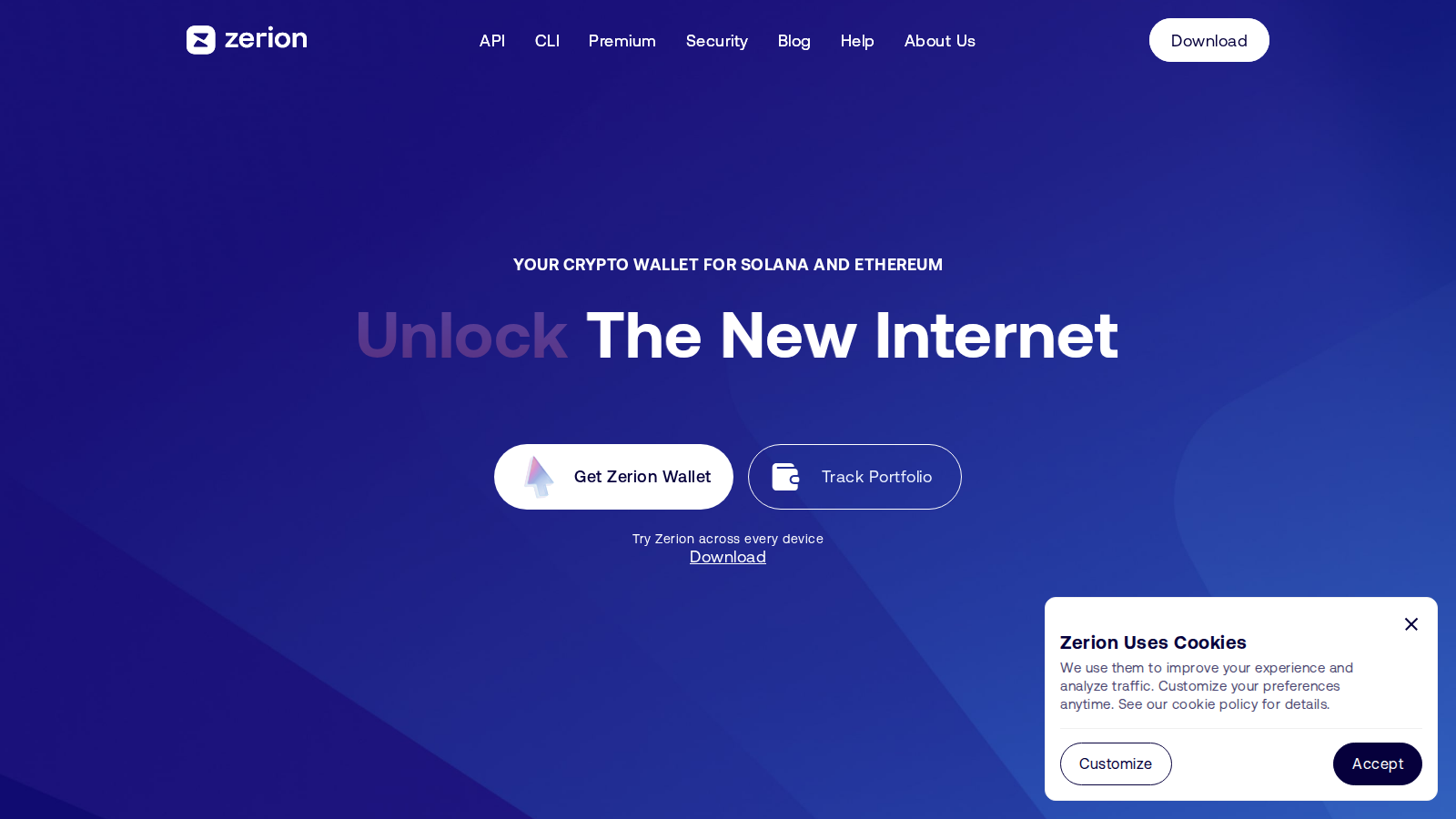
Zerion homepage captured during our July 2026 review of NFT analytics and portfolio tools.
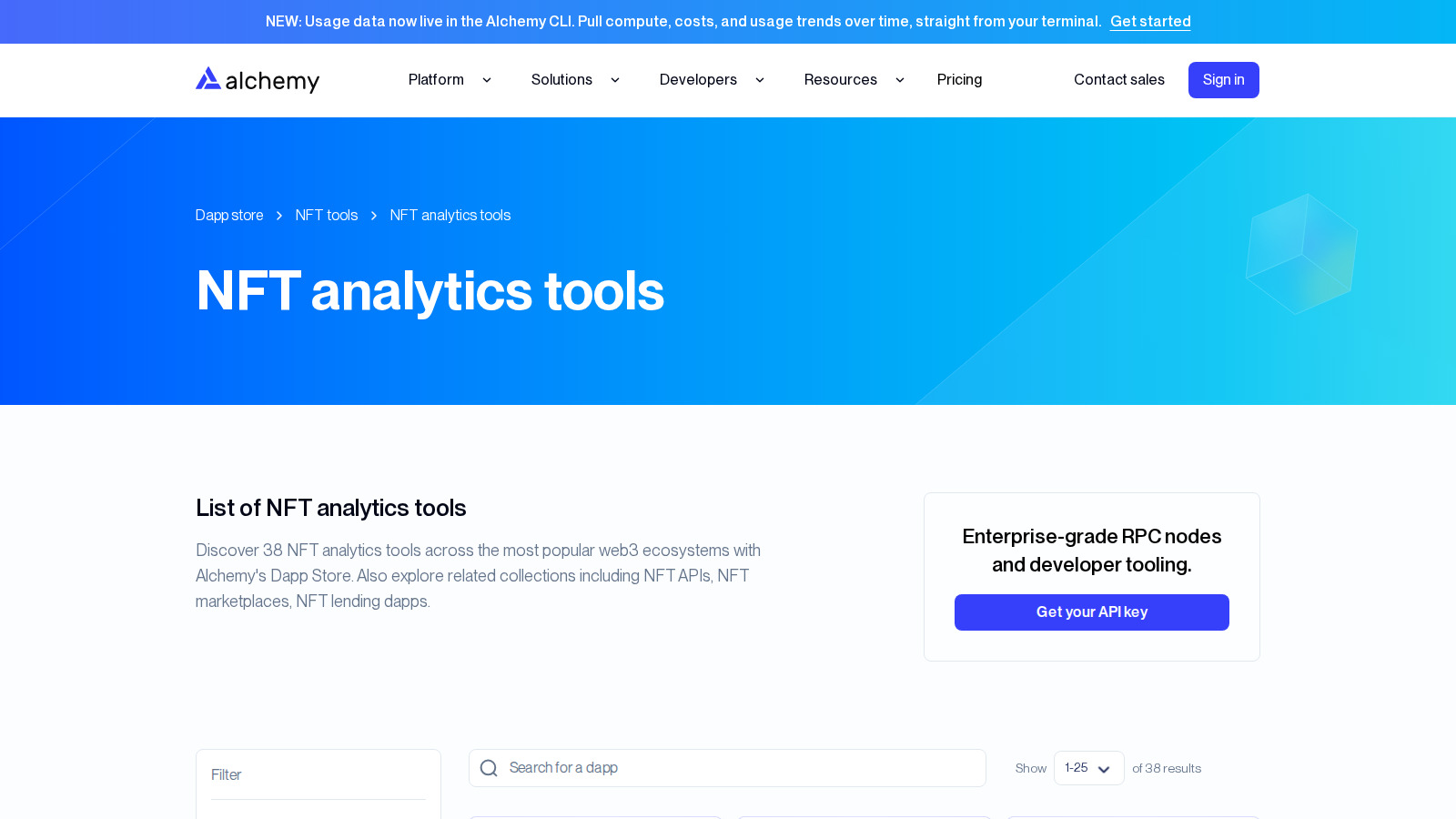
Alchemy ecosystem page captured during our July 2026 review of NFT analytics tooling.
What stood out immediately was not who had the flashiest charts. It was product posture. DappRadar looked like a broad market intelligence layer. Zerion looked like a portfolio-first environment where NFTs are one part of a wider ownership picture. Alchemy's analytics page made the ecosystem itself look more fragmented than many top-list articles admit, which is useful because it reminds readers that "NFT analytics" is not one job.
The screenshots above show why that matters. Even before a logged-in workflow test, the public surfaces already signal whether a product is built for orientation, portfolio context, or builder discovery.
An analytics tool is useful if it helps you reduce bad decisions, not if it simply gives you more panels.
The features that matter most now are:
- collection-level volume and trend visibility
- wallet and smart-money pattern tracking
- rarity and trait context
- floor-price and liquidity signals
- cross-chain coverage
- exportability or API access for builders
A tool that only shows floor prices without wallet context is weaker than it looks. A tool that only shows whale wallets without collection health is also weaker than it looks. The best stacks combine flow, rarity, and market context.
Our direct editorial read after reviewing the live product flows
After opening these public surfaces side by side, the clearest difference was not simply depth. It was who each product seems to think its default user is.
DappRadar looked easiest to use as a starting screen for a newsroom, a general researcher, or a casual operator who needs orientation fast. Zerion looked stronger for users who think in terms of wallets and portfolios rather than isolated collections. Alchemy's live ecosystem page made the builder angle much clearer than a generic "best analytics tools" article usually does, because it shows how many sub-tools sit around the analytics layer instead of inside one monolithic product.
That is why this ranking leans away from a simplistic winner-takes-all framing. The better question is whether you need orientation, deep collection analysis, wallet intelligence, or infrastructure.
If you are a trader, you probably care about speed, wallet tracking, and liquidity behavior. That pushes Nansen, Trait Sniper, Blur-native tooling, and NFTGo higher.
If you are a researcher or newsroom, you need context more than speed. DappRadar, NFTGo, OpenSea analytics, and Zerion are more useful because they help explain trends instead of merely surfacing them.
If you are a builder, the question changes again. You care about structured data, reliable endpoints, and integration paths. That is where bitsCrunch, Zerion, and API-adjacent stacks become more valuable than a flashy front-end alone.
DappRadar
DappRadar is still one of the best starting layers because it gives a broad, understandable view of marketplaces, collections, and game-linked NFT activity. It is especially useful when you need quick orientation before deciding where deeper research should go.
From the live public surface we reviewed, DappRadar felt like the cleanest "start here" option in this list. That is a real strength for editorial teams and casual researchers. It also means advanced users may outgrow it faster once they need wallet-level conviction signals.
Best for:
- broad market mapping
- newsroom and editorial workflows
- fast cross-category comparison
Tradeoff:
- advanced wallet intelligence usually requires a deeper specialist tool
NFTGo
NFTGo is stronger when the question is not "what is the NFT market doing?" but "what is this collection, segment, or cohort doing?" It is useful for collection discovery, market behavior, and second-layer research after broad market filtering.
We were able to reach the live public site, but not a clean content view that we would treat as screenshot-ready evidence, so this part of the ranking leans more heavily on current market positioning and product reputation than on a presentable visual review. That is still enough for a directional conclusion, but not enough for a final hands-on verdict.
Best for:
- collection-level research
- discovering momentum shifts
- trend and cohort analysis
Tradeoff:
- users who only need a quick headline view may find it heavier than necessary
Nansen
Nansen matters because wallet behavior still drives interpretation. If smart-money clusters, rotation patterns, or large-holder activity are central to your workflow, Nansen is usually more actionable than simpler dashboard tools.
This is also the clearest example of a tool that can be extremely useful and still be the wrong default recommendation for casual readers. If your workflow does not depend on wallet intelligence, Nansen can feel like too much instrument panel and not enough straightforward orientation.
Best for:
- wallet intelligence
- fund and whale tracking
- higher-conviction trade research
Tradeoff:
- it can be too specialized for casual users who mostly need market overviews
Zerion
Zerion is useful because NFT ownership rarely lives alone. For many users, NFTs, tokens, wallets, and onchain behavior form one portfolio story. Zerion fits that broader visibility model well.
From the public product surface we reviewed, Zerion felt less like a niche NFT analytics dashboard and more like a multi-asset ownership environment. That is a strength if your real workflow is portfolio-led. It is a weakness if you want a dedicated NFT market workstation first and everything else second.
Best for:
- multi-asset portfolio tracking
- users who want NFT analytics without switching context constantly
- teams considering API-linked workflow expansion
Tradeoff:
- not always the most NFT-native research environment for specialized traders
bitsCrunch
bitsCrunch is more interesting to builders and data-heavy teams because its value proposition is closer to NFT intelligence infrastructure than a simple ranking site. That makes it relevant to products, not just readers.
Best for:
- teams building on NFT data
- analytics products and dashboards
- structured intelligence use cases
Tradeoff:
- less immediately intuitive for casual readers than a pure front-end tool
Trait Sniper
Trait Sniper remains relevant where rarity speed and collection-specific edge still matter. It is not the most comprehensive analytics environment, but it does not need to be.
Best for:
- rarity-focused traders
- fast collection workflows
- narrower execution-oriented use cases
Tradeoff:
- weak as a stand-alone market research stack
If your workflow still depends on active marketplace execution speed, Blur-adjacent data and interfaces remain relevant. They matter less as broad editorial tools and more as specialized market activity surfaces.
Best for:
- active NFT traders
- fast moving bid and liquidity environments
Tradeoff:
- not ideal as an explanatory or beginner-facing analytics environment
OpenSea analytics
OpenSea analytics remains useful because marketplace discovery still matters. Even if power users prefer deeper tools, OpenSea's visibility into listings, item context, and marketplace behavior still influences how collections are perceived.
Best for:
- marketplace-native research
- beginner and intermediate users
- creator and collection teams watching primary distribution behavior
Tradeoff:
- not enough on its own for advanced wallet or cross-platform intelligence
The biggest weakness in NFT analytics is that dashboards can still turn thin liquidity into fake confidence. A sudden floor move, a burst of social attention, or a handful of visible wallets can look like conviction when it is really short-lived rotation.
The second weakness is chain fragmentation. Some tools still handle one ecosystem much better than another. That means readers should be skeptical of universal rankings unless the coverage model is clearly explained.
The third weakness is over-reliance on visible market signals. Analytics can show what happened, but it does not automatically explain why it happened.
The right stack for casual users, pro traders, and newsrooms
Casual users should start with DappRadar plus OpenSea analytics.
More active researchers should add NFTGo.
Wallet-intelligence users should move toward Nansen.
Cross-portfolio users should keep Zerion in the stack.
Builders should think beyond dashboards and evaluate bitsCrunch and API-driven workflows alongside front-end tools.
In other words, the best NFT analytics tool in 2026 is not a single product. It is the smallest stack that gives you a reliable answer without drowning you in noise.
Disclaimer: This article is for research and editorial comparison purposes only. It does not constitute financial, investment, legal, or tax advice. NFT tools, marketplaces, fees, chain support, and live availability can change quickly, so verify current conditions on the official platform before making any decision involving funds, assets, or private keys.
Read original article on nftenex.com