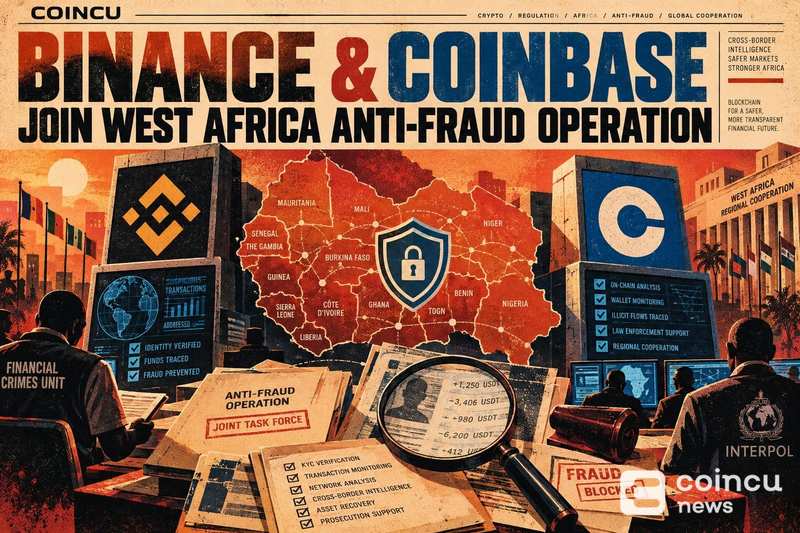
Binance, Coinbase and other crypto companies have participated in anti-fraud operations targeting financial crime in West Africa, identifying approximately $11 million in funds described as p
Binance, Coinbase and other crypto companies have participated in anti-fraud operations targeting financial crime in West Africa, identifying approximately $11 million in funds described as potentially freezeable, according to reports of the operation. The figure represents assets flagged for possible enforcement action rather than funds already seized or returned to victims.
What the operation identified, and what remains unconfirmed
The reported coordination brought together major centralized exchanges alongside additional crypto firms in a joint effort to locate and flag suspicious assets linked to fraud activity in the West African region. The $11 million figure, as reported, characterizes funds that have been identified as eligible for freezing, a legal and platform-level step that precedes any formal seizure or victim restitution. For related coverage, see How to Spot Trading in Binance: Detailed Guide For Beginners To Join In Easily.
Key operational details, including the specific agencies involved, the number of suspects or accounts targeted, and whether any freeze orders have been formally executed, have not been confirmed by authoritative primary sources as of publication. Readers should treat the $11 million as a reported figure attached to a conditional enforcement status, not a completed confiscation. For related coverage, see Tokenized Coinbase Shares in Base DeFi Top $260M.
Why exchange cooperation matters in cross-border fraud cases
When fraud schemes route proceeds through multiple platforms, no single exchange holds a complete picture of the asset trail. Cooperation between Binance, Coinbase and other crypto companies allows compliance teams to cross-reference wallet activity, identify clusters of suspicious addresses, and jointly present findings to law enforcement, compressing the timeline between identification and potential action. For related coverage, see Binance bStocks AUM Tops $888M as Collateral Access Expands.
Identifying funds as freezeable is a distinct step from freezing them. A platform or court must issue a specific instruction before assets are locked, and that instruction depends on jurisdiction, legal process, and the strength of evidence assembled. The practical value of the $11 million identification lies in giving authorities a defined target pool, while the limits of platform-level enforcement remain a structural challenge when suspects move funds across chains or into self-custody.
What "freezeable" does and does not confirm
The term "freezeable" describes a determination that identified funds are technically and legally accessible to a platform or court for the purpose of locking, not that the lock has occurred. Funds can be classified as freezeable while remaining liquid if the issuing authority has not yet acted. Follow-on steps, including court orders, platform compliance decisions, and cross-border legal cooperation, determine whether identified assets are ultimately frozen, forfeited, or returned.
The distinction carries weight for any fraud victims anticipating recovery: identification is a prerequisite, not an outcome. Reporting that conflates "freezeable" with "frozen" or "recovered" overstates what the operation has so far produced.
Regional context and platform safety guidance
West Africa has been the source of documented fraud schemes that exploit digital payment rails, including crypto platforms. Coordinated industry responses, where exchanges share intelligence and flag accounts to authorities, represent one layer of a broader enforcement toolkit that also includes U.S. Department of Justice actions targeting overseas fraud networks. Platform users who suspect fraud should report it directly through their exchange's compliance or security channels, and separately file reports with national financial crime authorities in their jurisdiction.
General indicators of fraud-linked crypto activity include unsolicited investment offers promising guaranteed returns, requests to send funds to newly created wallets outside of normal platform flows, and pressure to complete transfers before identity verification is complete. None of these indicators are specific to the West Africa operation as reported.
FAQ
Which crypto companies participated in the West Africa anti-fraud operation?
Binance and Coinbase are named in reports of the operation. Additional participants are described as other crypto companies; their identities have not been confirmed in primary sourcing available at publication.
What does $11 million in freezeable funds mean?
It means that approximately $11 million in assets has been identified as potentially subject to a freeze, meaning platforms or authorities could lock those funds if the appropriate legal or compliance orders are issued. The figure does not confirm that the assets have already been frozen or removed from circulation.
Have the identified funds already been frozen or returned to victims?
This has not been confirmed. The reported characterization of the funds as "freezeable" indicates they have been identified for possible action. Whether freeze orders have been executed, and whether any victim restitution process has begun, are details that have not been established by primary sources reviewed for this article. Coinbase has previously supported institutional asset custody processes, as seen in activity such as BlackRock's use of Coinbase Prime for large transfers, though that context is separate from enforcement cooperation.
Additional source references: source document 1.
Disclaimer: This article is for informational purposes only and does not constitute financial or investment advice. Cryptocurrency and digital asset markets carry significant risk. Always do your own research before making decisions.
The post Binance, Coinbase Join West Africa Anti-Fraud Operation | Coincu was initially published on Coincu.