On October 29, 2026, global cryptocurrency exchange Binance suffered a major security breach, with approximately $6.3 billion in digital assets stolen from its hot wallets. Notably, Binance s
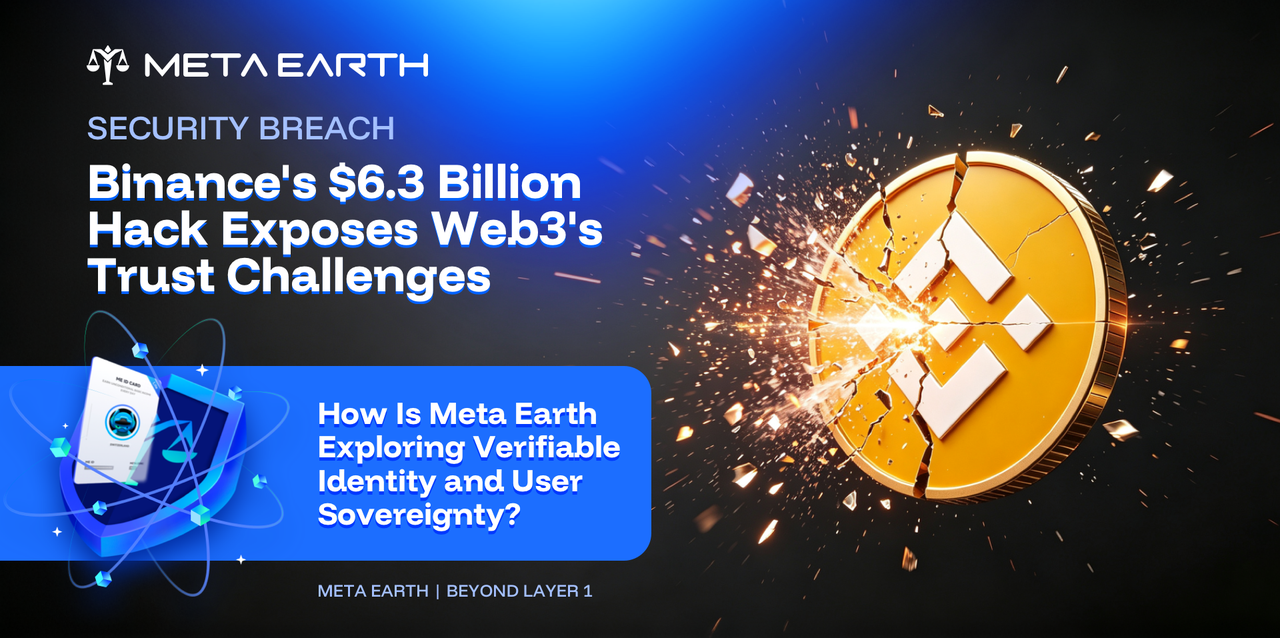
On October 29, 2026, global cryptocurrency exchange Binance suffered a major security breach, with approximately $6.3 billion in digital assets stolen from its hot wallets. Notably, Binance stated during its preliminary investigation that it had found no evidence of wallet private keys being compromised, suggesting that the attack may have involved unauthorized access to internal systems. On October 31, the FBI attributed the theft to North Korean-linked hackers.
Following the incident, Binance launched asset-tracing and compensation efforts. By November 2, the exchange announced that it had replenished approximately 95% of the affected assets and introduced Zero-Knowledge Proof (ZKP) verification to help users independently verify the reserves backing certain assets.
The incident highlights a fundamental challenge facing the Web3 industry: Blockchain networks can verify whether a transaction follows protocol rules, but a valid cryptographic signature alone cannot establish whether the asset’s rightful owner actually authorized it.
As more users and assets enter Web3, establishing verifiable identities, strengthening transaction authorization, and giving users greater control over their digital assets are becoming increasingly important priorities for blockchain infrastructure.
In blockchain systems, private keys are essential credentials for controlling on-chain assets. Under normal circumstances, transactions must carry valid cryptographic signatures before a blockchain network will accept and execute them.
However, a cryptocurrency exchange’s security infrastructure is far more complex than an individual wallet. Hot wallets typically operate alongside backend services, access management systems, and transaction-signing infrastructure to support large volumes of daily trading and withdrawals.
According to Binance’s preliminary disclosures, the incident may have involved a compromised device belonging to a DevOps engineer. The attackers may then have gained access to connected service environments and submitted unauthorized withdrawal transactions. The precise attack path remains subject to confirmation through a complete investigation.
This means that even when private keys are not directly stolen, attackers may still be able to compromise connected systems or abuse operational privileges to trigger transactions that the rightful asset owners never authorized.
From the blockchain’s perspective, a transaction that satisfies signature and protocol requirements can be executed normally. From an asset security perspective, however, this does not automatically prove that the transaction reflects legitimate authorization.
The real security challenge, therefore, goes beyond protecting private keys. It also involves ensuring that every asset operation is supported by trustworthy identity verification and appropriate authorization.
The Binance incident reveals an often-overlooked distinction: Verifying a transaction’s cryptographic signature is not the same as verifying whether the person or system initiating it has legitimate authority to do so.
Building a more comprehensive Web3 security framework requires understanding three separate concepts:
Authentication: Establishing who is accessing a system or initiating an operation.
Authorization: Determining whether that identity has permission to perform a specific transaction.
Transaction Signing: Using cryptographic mechanisms to demonstrate that a transaction carries a valid signature from the relevant key.
These three processes are closely related, but they are not interchangeable. For example, a system may accept a transaction with a valid signature even when the signing request originated from a compromised service, making the resulting asset transfer unauthorized.
Web3 security must therefore evolve beyond protecting individual keys toward a multilayered approach that includes identity verification, access controls, transaction policies, and risk monitoring.
Technologies such as Multi-Signature, Multi-Party Computation (MPC), and role-based access controls can help reduce single points of failure in different environments.
At the same time, identity technologies such as Decentralized Identity (DID) and Verifiable Credential (VC) offer new approaches to establishing verifiable digital identities and managing user credentials.
Identity verification alone, however, cannot replace transaction security controls. A reliable system requires identity, authorization, and signing mechanisms to work together rather than relying on any single technology to address every security risk.
Beyond preventing unauthorized transactions, the Binance incident raises another important question: When digital assets are at risk, how can users verify what an exchange actually holds?
Following the incident, Binance not only pledged to cover the losses but also updated its Proof of Reserves (PoR), using ZKP to enable users to independently verify whether specified assets were backed by reserves of at least 1:1.
This approach reflects a fundamental principle of Web3: Trust should not depend entirely on what a platform claims. Wherever possible, it should be supported by independently verifiable information and mechanisms.
However, Proof of Reserves primarily provides evidence about asset reserves within a defined scope and at a particular point in time. It cannot, by itself, guarantee that an exchange’s internal systems are protected against attacks, nor can it replace comprehensive financial audits and security management.
Trustworthy asset management in Web3 therefore requires attention to at least three dimensions:
whether transaction records can be verified
whether asset operations are properly authorized
whether a platform’s reported asset holdings can be independently examined
Bringing these capabilities together can help reduce users’ excessive dependence on any single institution or centralized management process.
Press enter or click to view image in full size

The Binance incident offers another reminder that digital asset security is not simply a matter of wallets or private keys. It also involves trustworthy identities, user sovereignty, and the verifiability of the underlying infrastructure.
To address these long-term needs, Meta Earth is exploring three interconnected approaches through ME ID Protocol, ME Pass, and ME Network.
1. ME ID Protocol: Building a Foundation for Verifiable Digital Identity
ME ID Protocol combines technologies such as DID, Proof of Personhood (PoP), KYC, and VC to explore a digital identity framework built around user control and verifiability.
Through verifiable identities and digital credentials, Web3 applications can confirm a user’s identity or eligibility where appropriate, providing a foundation for access management and trusted interactions.
2. ME Pass: Supporting User Control Over Digital Identity and Assets
ME Pass integrates wallet functionality, ME ID management, and access to the broader Web3 ecosystem, allowing users to manage their digital identities and wallet assets.
Compared with models that rely entirely on centralized custodians, Self-Custody gives users the option to manage their own wallet keys and authorize transactions directly, reducing dependence on a single custody provider.
3. ME Network: Providing Verifiable Blockchain Infrastructure
ME Network adopts a Modular Blockchain architecture that separates core responsibilities into Execution, Settlement, and Data Availability & Consensus layers. This design provides an architectural foundation for transaction processing, network consensus, and on-chain state verification.
Verifiable identity, user control, and verifiable blockchain infrastructure represent three important directions in Meta Earth’s exploration of a more trustworthy Web3 ecosystem. These technologies are not direct solutions to the specific Binance incident. Instead, they reflect a longer-term approach to addressing digital asset security and trust.
The $6.3 billion Binance hack demonstrates that Web3 security cannot rely on cryptographic signatures alone, nor can users place all their trust in the internal management of centralized platforms.
As digital asset adoption expands, the industry must move beyond isolated transaction security measures toward infrastructure that combines verifiable identity, effective authorization, user control, and independent verification.
The next stage of Web3 competition will not be defined simply by who can process more transactions or connect more assets. It will also depend on who can build trust mechanisms that allow users to understand, verify, and exercise meaningful control over their digital rights.
This is the direction Meta Earth continues to explore through the complementary design of ME ID Protocol, ME Pass, and ME Network: building a foundation for a more trustworthy, open, and user-centered Web3 ecosystem.
Stay tuned to our official community and social media channels for the latest Meta Earth updates:
Website|X|Telegram|Discord| Instagram| YouTube|TikTok| LinkedIn
ME, My Way!
Meta Earth