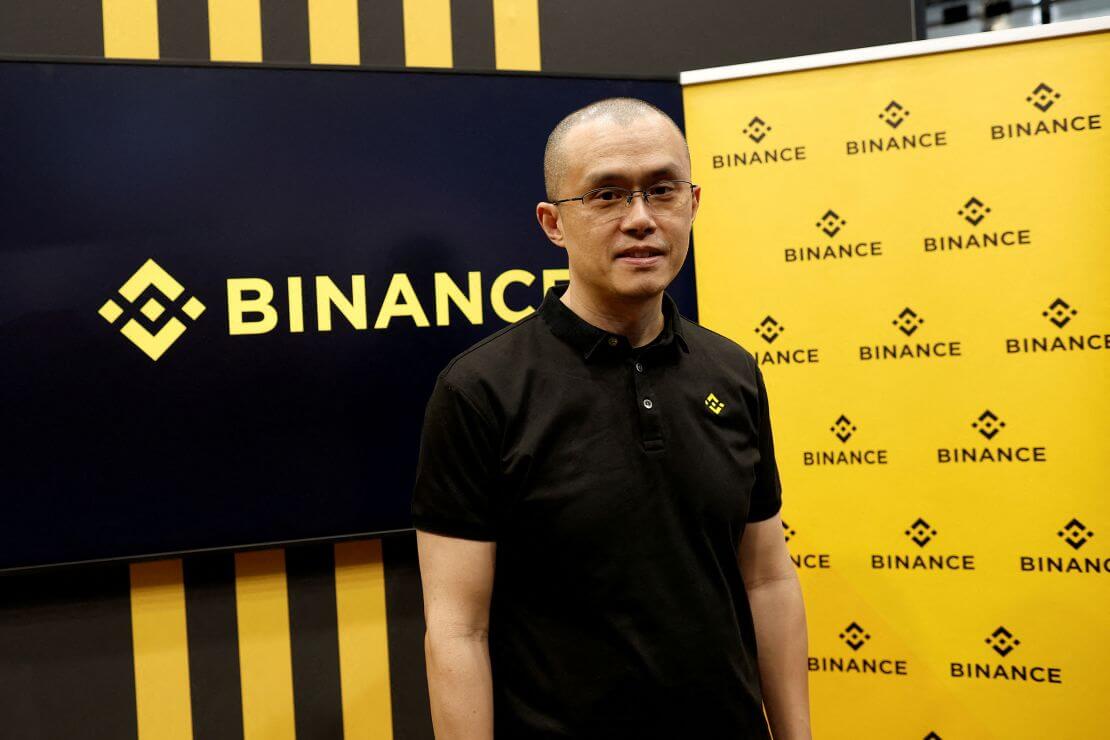
Key Takeaways CZ calls the current downturn a normal four-year cycle, with the floor rising each time. The cycle low held near $60K, up from $16K during the FTX crash four years ago. He treat
Key Takeaways
- CZ calls the current downturn a normal four-year cycle, with the floor rising each time.
- The cycle low held near $60K, up from $16K during the FTX crash four years ago.
- He treats prior all-time highs as the next cycle’s support, citing buyer behavior.
- He sees the US regulatory reversal as the biggest structural change this cycle.
- No major leverage blow-ups this cycle, which he credits to better risk management.
- He predicts AI agents will use blockchain for payments within months, not years.
- His biggest concern is not crypto regulation but AI regulation.
- He proposes locking Satoshi-era coins out of a future quantum-resistant upgrade.
A Normal Cycle, With a Rising Floor
Forget the daily candles for a second. CZ is fixated on the floor, not the ceiling. “I think the four-year cycle is actually pretty accurate,” he told Thorn in the interview. “You retraced about 50%. We’ve seen, like, 80% retracements in previous cycles.” In other words, by his math this drop is mild.
Here is the part he keeps coming back to. The last cycle bottomed near $16,000 during the FTX implosion. This time the low has held around $60,000. That is roughly a 5x jump in the floor price in four years, and for CZ it tells the whole story: every cycle ends higher than the last. He is not planning an exit, in his words, there isn’t one.
Old Highs Turn Into New Floors
The logic behind that confidence is mostly about human behavior. CZ’s view is that a prior all-time high tends to become the next cycle’s support, and the reason is psychological as much as technical. Picture the people who bought at $60,000 on the way up. When price climbs back to $60,000, they don’t panic-sell, they buy more. “In technical analysis, the previous highest always becomes the next low support,” he said. He won’t call a bottom outright, but by that same reasoning, he – as two Wall Street Banks – treats $60,000 as a strong line in the sand.

So Why Does This Cycle Feel Different?
For starters, the US is finally playing ball. Four years ago Washington was effectively at war with crypto, suing firms and pushing developers offshore. Now it’s the opposite. “Today you have the world’s most powerful country supporting crypto,” CZ said. “The US stance has changed 180 degrees.” And where the US leads on regulation, he argues, other countries follow.
The other two shifts reinforce it. Institutional money is actually here this time, BlackRock, a stack of ETFs, real participation at a scale that didn’t exist before. And the builders are back. The old hostility shoved everything toward meme coins; now CZ sees developers returning to make real products, stablecoins, real-world assets, tokenized everything. “There’s more stablecoins being issued in every country,” he said.
No Bodies in the System This Time
One thing that stands out about this drop: nothing major has blown up. After the 2022 wave of bankruptcies, that silence is notable, and CZ chalks it up to the industry simply getting better at handling leverage. “During the last six months, there hasn’t been anybody saying they’re going bankrupt,” he said. He sees no oversized leveraged products that scare him right now, a few looping strategies in yield-bearing stablecoins, but nothing big enough to matter. Knock on wood, as he put it.
Crypto Was Never Really Separate
CZ bristles a little at the idea of crypto and traditional finance “converging,” because to him they were never apart. “Crypto is just a new technology, a new tool that makes financial transactions faster, cheaper, more transparent,” he said. His comparison: the internet didn’t stay a separate “internet industry,” it just became the plumbing for everything. Where he takes that next is bold, he thinks foreign-exchange price discovery itself will move on-chain, every country will float its own stablecoin, and those will trade 24/7 on transparent rails.
The Evolving Trading Landscape: Hyperliquid and Perps
On Hyperliquid, CZ is genuinely impressed but doesn’t dodge the awkward part. He calls the product a real invention, one that proved a niche nobody else had, and notes founder Jeff came out of an early BNB Chain incubation season. “The Hyperliquid invention is actually awesome,” he said. The catch: Hyperliquid serves users Binance can’t, because it runs no KYC and claims decentralization. CZ’s line on that is pointed, “I would never do what they do, given what I’ve experienced in my life,” but he won’t tell them how to run their shop.
He’s just as relaxed about CME and other licensed players bringing crypto perpetual futures onshore in the US. More liquidity, in his book, is good for everyone, and those institutional clients were never his users anyway. His take is almost counterintuitive: “The better liquidity is actually the best protection for consumers. When there’s good liquidity, you see much less crashes and much less liquidations.” Arbitrageurs will stitch the offshore and onshore markets together.
Quantum Computing: A Test of Maturity, Not a Doomsday
The quantum-will-break-Bitcoin fear doesn’t rattle him, and he reframes it as a coordination challenge rather than a cryptography one. “There are already quantum-resistant encryption algorithms. All we need to do is change the encryption algorithm,” he said. The hard part isn’t the fix, it’s getting a decentralized network with no boss to agree on it, which makes this as much a test of the industry’s maturity as a technical hurdle.
His boldest idea is about Satoshi’s dormant coins. Instead of freezing, seizing, or ignoring them, give holders a six-to-twelve-month window to move their coins before a quantum-resistant upgrade. Whatever hasn’t moved gets locked out of the new protocol. His reasoning is cold but logical: leave those coins sitting there and “we’re basically giving to somebody who’s going to hack it”, the first person to crack quantum wins the bounty.
The RWA Call He Got Wrong
Credit where due, CZ owns a miss. A year or two back he doubted anyone would really trade tokenized real-world assets. The speed of adoption flipped him. “The speed it’s taking off actually caught me by surprise,” he said. He now reads it as proof the demand was always there, people just never had the rails to reach those assets.
The AI Tailwind Nobody’s Pricing In
This is where CZ gets most animated. He thinks AI will push crypto adoption, and not in some distant future, in months. The reason is mechanical: AI agents need to spend money, and they can’t use the rails we do. “The AI can’t swap your Visa card. Whereas with blockchain, it’s API-driven. It’s much easier for AI to use,” he said. To him, that’s a structural tailwind most people haven’t clocked yet.
But flip the coin and you find his biggest worry in the whole conversation, and it isn’t crypto. It’s AI regulation. Crypto oversight is easy by comparison, it’s money, KYC, AML. AI is a different beast entirely. “Crypto, no matter what it does, doesn’t have the power to extinguish our civilization. But AI has the power to extinguish,” he said. His warning on heavy-handed rules cuts both ways, though: “We can regulate the industry by killing it. That’s not regulating. That’s just killing.”
The One Thing That Hasn’t Changed
Strip away the topics and you get the belief CZ has carried since founding Binance in 2017. Coin prices bounce around; the industry doesn’t shrink. “Crypto is not going away. Crypto is going to be a big industry. That belief has now only got much, much, much stronger,” he said. That’s the lens behind everything else he says, treat the volatility as noise, watch the direction.
This article is for informational purposes only and does not constitute financial advice. Consult a professional before making investment decisions.The post Binance’s Founder Explains Why This Bitcoin Cycle Is Different appeared first on Coindoo.