Introduction Terra Luna Classic has spent years fighting for survival. Since the catastrophic collapse of the original Terra ecosystem in 2022, the project has transformed from a top-tier blo
Introduction
Terra Luna Classic has spent years fighting for survival.
Since the catastrophic collapse of the original Terra ecosystem in 2022, the project has transformed from a top-tier blockchain into one of crypto's most controversial community-driven recovery experiments. Through governance proposals, validator coordination, token burns, and technical upgrades, the Terra Classic community has attempted to rebuild an ecosystem that many believed was already dead.
Now, in July 2026, a new development has reignited debate across the LUNC community.
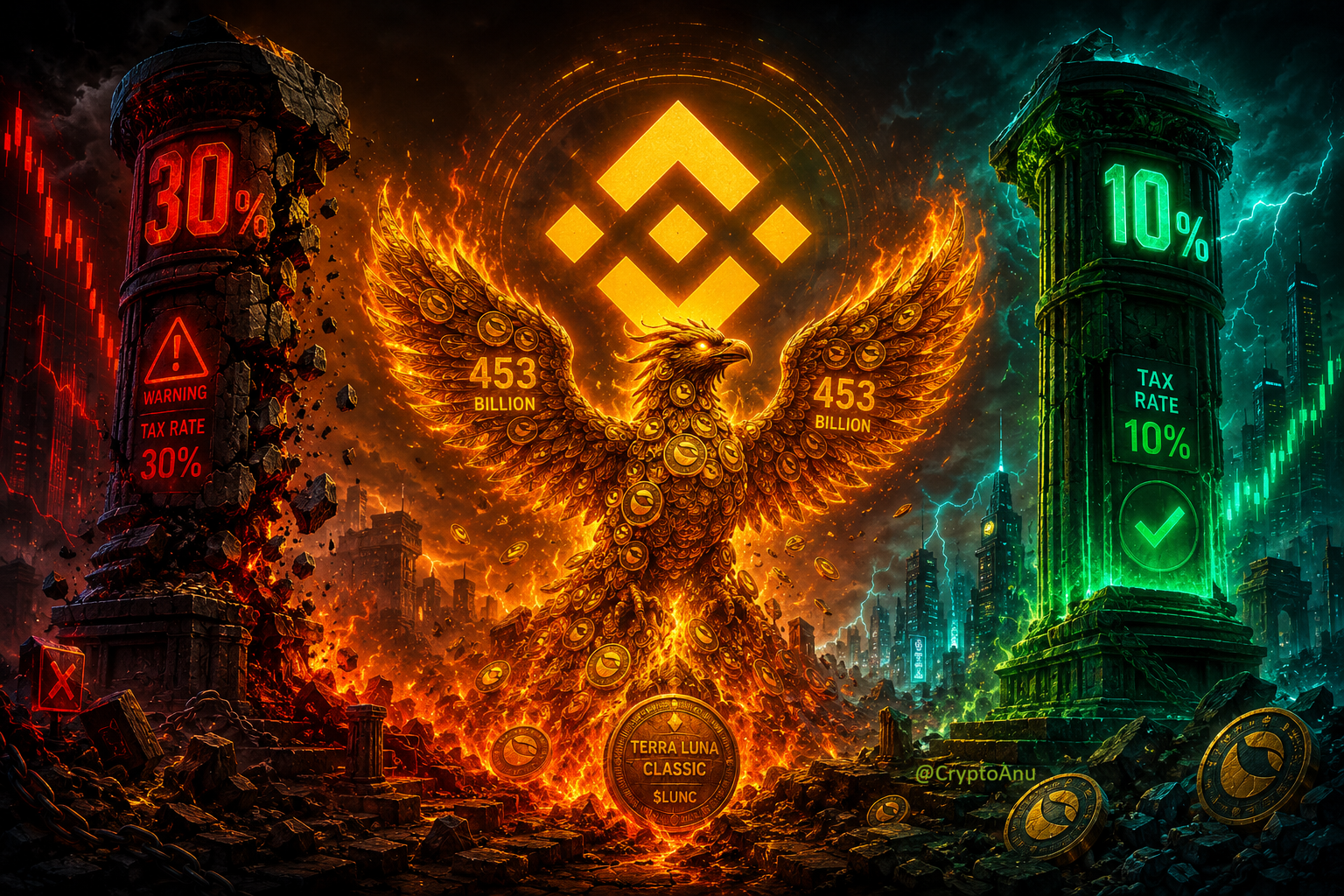
Binance reduced LUNC's collateral ratio from 30% to 10% within its Unified Account system.
At first glance, the move appeared bearish. Social media immediately filled with concerns about reduced exchange support, increased liquidation risk, and potential selling pressure.
However, the deeper implication may be far more important.
This event is forcing the community to confront a fundamental question:
Can LUNC survive without relying on Binance narratives?
What Binance Actually Changed
Binance announced the collateral-ratio adjustment on July 14, 2026, with implementation occurring around July 17.
The change affects how much value LUNC contributes as collateral inside Binance's Unified Account framework.
A lower collateral ratio means that traders can borrow less against their LUNC holdings.
This is primarily a risk-management decision.
Highly volatile assets typically receive lower collateral values because exchanges must protect themselves against rapid price swings that could create bad debt during liquidation events.
Importantly, this is not a delisting.
LUNC remains listed and tradable on Binance.
The distinction is critical.
Why the Market Reacted So Strongly
Leverage amplifies sentiment.
When an exchange reduces collateral efficiency, leveraged traders often need to:
- Add additional collateral
- Reduce position sizes
- Close positions
- Accept higher liquidation risk
These adjustments can create short-term selling pressure, particularly during already volatile market conditions.
That is why many traders initially interpreted the announcement as a bearish signal.
The immediate concern was not that LUNC would disappear from Binance, but that leverage-driven demand could weaken.
What happened next was perhaps more interesting than the announcement itself.
A growing segment of the Terra Classic community responded with a different message:
"Stop waiting for Binance to save LUNC."
This represents a significant narrative shift.
For years, Binance burns have been treated as one of the ecosystem's most important catalysts. Monthly burn announcements frequently generated excitement and short-term price reactions.
The collateral-ratio cut reminded many holders of an uncomfortable reality:
Exchanges can support an ecosystem, but they cannot build it.
That responsibility belongs to developers, validators, and the community.
The Burn Machine Is Still Running
Despite the controversy surrounding Binance's collateral decision, the burn engine remains active.
According to recent community tracking:
- Nearly 30 million LUNC were burned in a single day.
- Total burns since 2022 have exceeded 453 billion LUNC.
- Binance continues contributing through its trading-fee burn program.
These numbers are substantial.
However, context matters.
The Trillion-Token Problem
Even after removing more than 453 billion tokens, the circulating supply remains approximately 5.54 trillion LUNC.
This is the mathematical challenge at the center of every LUNC debate.
Burns can reduce supply, but the remaining supply is still enormous.
That is why many analysts argue that burns alone cannot create a sustainable long-term bull case.
A healthy ecosystem ultimately requires both:
- Declining supply
- Increasing demand
Without demand, deflation becomes less effective over time.
The Real Shift: From Burns to Utility
Perhaps the most important development is the evolution of community priorities.
The conversation is gradually moving away from:
"How many tokens were burned?"
toward:
"What utility is being built on Terra Classic?"
This is a far more mature discussion.
The focus increasingly includes:
- Cosmos SDK compatibility
- Tax2Gas improvements
- Layer-1 infrastructure upgrades
- IBC connectivity
- On-chain applications
- Sustainable fee generation
The goal is not simply to destroy tokens.
The goal is to create economic activity that generates fees, users, and long-term demand.
Why Staking Still Matters
Another often-overlooked signal is staking participation.
Despite years of volatility, a significant portion of LUNC holders continues staking with community validators.
This suggests that many participants are not treating LUNC purely as a short-term trading vehicle.
Staked supply reduces liquid circulation and can help stabilize market structure during periods of uncertainty.
More importantly, active staking indicates continued engagement with the ecosystem's governance and long-term direction.
A New Thesis for LUNC
The Binance collateral cut may ultimately become a catalyst for a healthier investment thesis.
The Old Thesis
- Binance burns more tokens
- Price reacts
- Community celebrates
- Repeat
The Emerging Thesis
- Developers build utility
- Users generate transactions
- Transactions create fees
- Fees fund burns and ecosystem growth
- Demand increases alongside deflation
The second thesis is significantly harder to execute.
But it is also far more sustainable.
Risks Remain Significant
None of this eliminates the substantial risks surrounding Terra Classic.
The project still faces:
- Massive token supply
- Strong competition from other Layer-1 ecosystems
- Regulatory uncertainty
- Limited mainstream adoption
- Lingering reputational damage from 2022
Investors should not confuse community resilience with guaranteed success.
Survival is impressive.
Sustainable growth is a different challenge entirely.
Conclusion
Binance's decision to reduce LUNC's collateral ratio from 30% to 10% is important, but perhaps not for the reason most traders initially believed.
Yes, it may create short-term pressure on leveraged positions.
Yes, it reflects Binance's assessment of LUNC's volatility.
But its greatest impact may be psychological.
It is forcing the Terra Classic community to confront a crucial truth:
Exchanges provide liquidity. Communities create value.
The ecosystem has already demonstrated extraordinary resilience through 453+ billion burns, active governance, continued staking, and ongoing technical upgrades.
The next chapter will likely be decided not by another burn announcement, but by whether Terra Classic can transform that resilience into genuine utility, sustainable demand, and real economic activity.
If it succeeds, the Binance collateral cut may eventually be remembered not as a bearish turning point—but as the moment the community stopped waiting for external rescue and started focusing on building its own future.