Binance is pressing forward with its licensing process under the European Union’s Markets in Crypto Assets (MiCA) regime, after reporting that the Greek regulator overseeing its application h
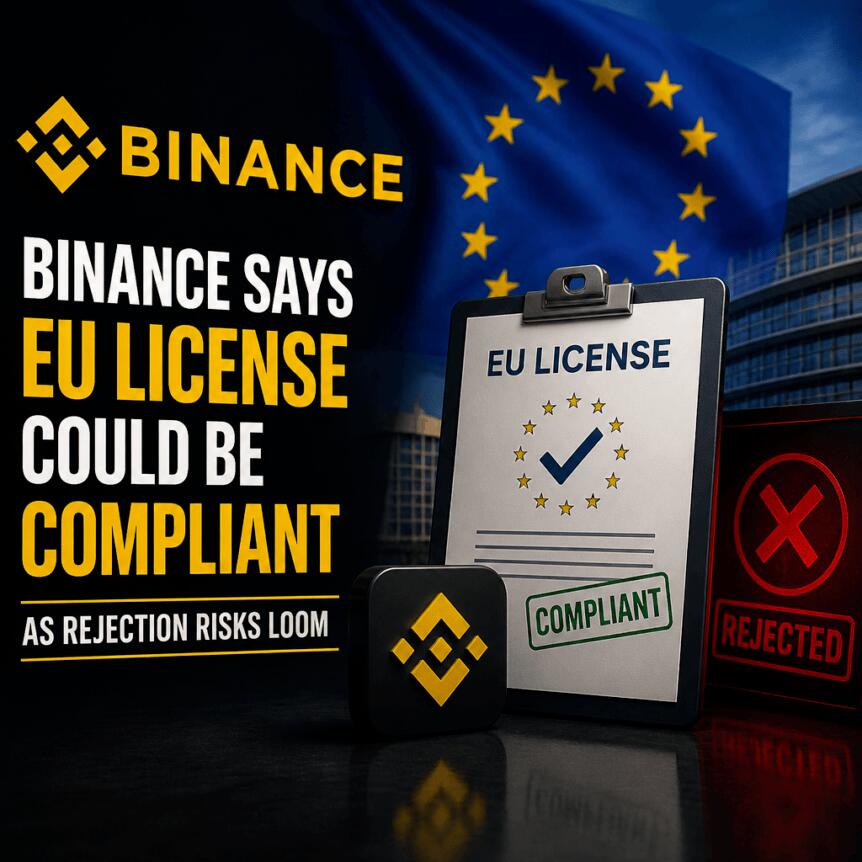
Binance is pressing forward with its licensing process under the European Union’s Markets in Crypto Assets (MiCA) regime, after reporting that the Greek regulator overseeing its application has completed an initial compliance review. The move comes amid reports that EU authorities may be preparing to reject the exchange’s bid for authorisation, which would materially affect its ability to provide services to customers in the bloc.
In a blog post published on Tuesday, Binance stated that Greece’s Hellenic Capital Market Commission (HCMC) has reviewed the application and “considered it compliant with MiCA requirements,” while noting that the authorisation outcome remains subject to further review by the European Securities and Markets Authority (ESMA). The company’s comments followed a Reuters report that EU regulators were preparing to reject Binance’s licensing request, potentially limiting the exchange’s access to the EU market.
Key takeaways
- Binance says HCMC has completed its review of its MiCA application and found it compliant, subject to ESMA-level scrutiny.
- EU licensing deadlines under MiCA mean that a rejection could restrict Binance’s ability to operate legally for EU residents from July 1.
- Reuters reported that some EU regulators are preparing to reject the application, highlighting uncertainty around the authorisation timeline.
- Binance indicated it would update users by June 30, the MiCA application deadline.
- The development intersects with broader regulatory expectations for exchange compliance, including alignment with EU consumer and market integrity standards.
MiCA licensing timeline and the implications of a decision
MiCA establishes a harmonised licensing framework for crypto-asset service providers operating in the EU. For exchanges, the regulatory transition period has created tight execution deadlines. As Binance approaches the end of June, authorisation decisions tied to MiCA compliance determine whether firms can continue serving EU customers without falling out of the legal perimeter.
Binance’s situation is particularly sensitive because MiCA expects approved status for ongoing EU operations beginning on July 1. If an application is denied, the practical outcome is not simply administrative—firms may have to restrict or cease services for EU residents to remain compliant, affecting customer access, onboarding, and potentially the continuity of regulated products and services.
In its blog post, Binance argued that any delay or distortion in its MiCA pathway would have downstream impacts beyond the company itself, including effects on liquidity and competition within the EU market structure. While those arguments are commercial in tone, the underlying compliance issue remains regulatory: the authorisation process defines whether an exchange is permitted to operate under the EU’s market-wide conduct and prudential expectations.
What Binance says HCMC concluded, and what ESMA still controls
According to Binance, HCMC—an EU authority tasked with initial regulatory review under MiCA—has completed its assessment of Binance’s application submitted under the Greek framework. The exchange said HCMC “considered it compliant with MiCA requirements,” while emphasising that the assessment is still subject to review by ESMA, the EU’s securities oversight body.
This sequencing matters for institutional and compliance monitoring. Even where a national regulator indicates that an application is compliant, final authorisation decisions in MiCA involve EU-level scrutiny, reflecting the regime’s objective of consistent cross-border oversight. In the current case, Binance’s stated position suggests the file has progressed past initial national review, but the outcome is not insulated from ESMA’s assessment.
Binance also told Cointelegraph that it expected ESMA “intended to progress the licence and move to authorise at an upcoming board meeting.” The exchange did not provide immediate additional comment on the Reuters report indicating potential rejection, but it stated it would update users by June 30. That commitment aligns with MiCA’s application deadline, underscoring that the operational question for firms and customers is whether authorisation will be granted in time to avoid legal disruption.
Broader regulatory context: other MiCA approvals and the risk of fragmentation
Binance previously applied for MiCA licensing in Greece under HCMC in January. The exchange’s progress should be viewed against a wider backdrop in which multiple EU regulators have already approved licences for crypto firms seeking MiCA compliance, particularly as the regime’s deadlines tightened.
From a policy and enforcement standpoint, the degree of regulatory consistency across member states is a key concern. MiCA is intended to reduce fragmentation by creating a unified rulebook and coordinated oversight, but licensing outcomes can still differ depending on the regulator’s assessment, the completeness and sufficiency of documentation, and the handling of issues identified during review.
For regulated entities—such as banks, custody providers, brokers, and payment firms integrating crypto services—uncertainty in licensing outcomes can become a compliance risk in its own right. It affects due diligence processes, vendor onboarding criteria, and ongoing monitoring obligations under AML/KYC expectations. If a major exchange faces authorisation setbacks, counterparties may need to reassess exposure to the regulated services they rely on, including contingency planning for service continuity.
Although Binance’s blog post frames the potential consequences as market-wide, the compliance angle is more precise: authorisation status is often a gating factor for whether EU-facing services can be offered lawfully, and the transition period can force operational changes on short timelines.
US enforcement history and the compliance expectations facing Binance
Outside the EU, Binance remains subject to scrutiny by US authorities. In 2023, Binance reached an agreement with US regulators in which then-CEO Changpeng Zhao stepped down and pleaded guilty to a felony charge. The company also agreed to a $4.3 billion settlement with the US Department of the Treasury and the Department of Justice, and to follow a monitoring program.
More recently, US lawmakers have pressed for further information related to Binance’s compliance amid broader geopolitical and sanctions-related concerns. Cointelegraph previously reported that US legislators sought answers regarding Binance’s handling of sanctioned entities, including claims that the exchange facilitated activity involving parties subject to sanctions.
While US enforcement and EU authorisation are separate legal processes, the combined scrutiny increases the importance of compliance evidence that can satisfy multiple regulators. Under MiCA, authorisation and ongoing supervisory expectations are structured around governance, consumer protection, market integrity, and robust controls relevant to crypto-asset service provision. For compliance teams, enforcement history tends to elevate the evidentiary bar for internal controls and transparency, especially where licensing decisions can influence whether the firm is permitted to provide services in regulated jurisdictions.
Closing perspective
With MiCA’s June 30 deadline approaching and ESMA-level review still pending, the key question for the EU-facing operation is whether Binance receives authorisation in time to continue services to EU residents on July 1. The next developments—especially ESMA’s actions and any official regulatory communications—will determine not only Binance’s legal posture in the EU, but also how regulated counterparties manage compliance uncertainty during the transition.
This article was originally published as Binance Says EU License Could Be Compliant as Rejection Risks Loom on Crypto Breaking News – your trusted source for crypto news, Bitcoin news, and blockchain updates.