Binance has withdrawn its Markets in Crypto-Assets (MiCA) licence application in Greece, stating it will pursue regulatory authorisation in another EU member state instead. The exchange confi
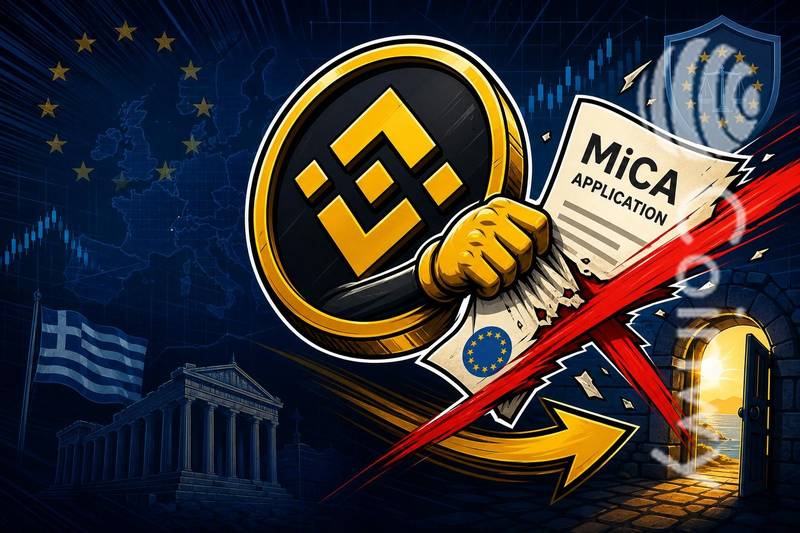
Binance has withdrawn its Markets in Crypto-Assets (MiCA) licence application in Greece, stating it will pursue regulatory authorisation in another EU member state instead.
The exchange confirmed the decision to pull its Greek filing, a move that raises questions about the company's broader strategy for operating within the European Union's new crypto regulatory framework. For related coverage, see DigiAssetFund Withdraws HYPE Tokens.
What the Withdrawal Means
Binance's decision concerns a specific MiCA licence application that had been filed with Greek authorities. The withdrawal does not necessarily signal a retreat from Europe, as the exchange has indicated it plans to seek authorisation elsewhere in the bloc. For related coverage, see Binance Adds bStocks Tokenized Securities Trading Pairs and Bot Support.
KEY TAKEAWAYS
- What happened: Binance withdrew its MiCA licence application filed in Greece.
- What Binance said: The exchange will pursue authorisation in a different EU member state.
- What it does not mean: The withdrawal is not an exit from Europe; it is a change in filing jurisdiction.
The distinction matters. Withdrawing an application in one country while redirecting to another suggests a strategic recalculation, not a regulatory failure. Companies routinely evaluate which national regulator offers the most efficient path to compliance, particularly under frameworks that grant cross-border passporting rights.
Why the Choice of Jurisdiction Matters Under MiCA
MiCA, which establishes a unified regulatory framework for crypto-asset service providers across the EU, allows firms licensed in one member state to operate throughout the bloc. The European Securities and Markets Authority (ESMA) has published guidance on the end of MiCA's transitional period, reinforcing the urgency for exchanges to secure proper authorisation.
Because a single licence unlocks access to the entire EU market, where an exchange files is a strategic choice. Factors include the speed of regulatory review, the regulator's familiarity with crypto business models, and local operational requirements. Greece was one option; Binance has now decided another jurisdiction better suits its needs.
This type of jurisdictional shift is not unique to Binance. As MiCA's transitional provisions expire, multiple exchanges are evaluating or re-evaluating where to anchor their European operations. The framework's passport mechanism makes the initial licensing decision particularly consequential.
Binance's Evolving EU Compliance Path
The withdrawal fits a pattern of Binance actively adjusting its regulatory posture across multiple markets. The exchange has been expanding product offerings like tokenized securities while simultaneously navigating complex compliance requirements in various jurisdictions.
Binance has not publicly named the alternative EU member state where it intends to file. That detail will be significant, as different national regulators within the MiCA framework have varying levels of capacity and experience processing crypto licence applications.
The move also comes at a time when other major players in the crypto and fintech space have made similar pivots. Truth Social's withdrawal of a Bitcoin ETF application and Cerebras Systems pulling its U.S. IPO reflect a broader pattern of companies recalibrating their regulatory and market strategies.
For Binance users in Europe, the practical impact depends on where and how quickly the exchange secures its MiCA authorisation. Until then, the company's ability to offer services in EU markets will remain tied to whatever transitional arrangements are still in effect. Binance has maintained a steady cadence of product launches, suggesting the regulatory shift is not slowing its operational momentum.
Disclaimer: This article is for informational purposes only and does not constitute financial or investment advice. Cryptocurrency and digital asset markets carry significant risk. Always do your own research before making decisions.
Read original article on coinwy.comRead also :