Key Takeaways Shares of BioNTech declined approximately 8% Friday following the discontinuation of a Phase 2 study testing mRNA cancer vaccine autogene cevumeran for colorectal cancer treatme
Key Takeaways
- Shares of BioNTech declined approximately 8% Friday following the discontinuation of a Phase 2 study testing mRNA cancer vaccine autogene cevumeran for colorectal cancer treatment
- A safety monitoring committee advised halting the study prematurely due to futility concerns and disparities in survival data across treatment arms
- This marks the second unsuccessful trial for autogene cevumeran this year, after a bladder cancer study was discontinued in March
- The news stands in stark contrast to recent positive momentum in the mRNA space, triggered by Moderna and Merck’s successful Phase 3 melanoma vaccine results
- Despite setbacks, BioNTech maintains a robust balance sheet with €16.6 billion in liquid assets, while its pancreatic cancer study continues
Shares of BioNTech experienced an approximately 8% decline Friday after the biotechnology firm and its partner Genentech announced the termination of a Phase 2 clinical study examining their mRNA-based cancer vaccine for colorectal cancer patients. Prior to the disclosure, shares were changing hands near the $104 level.
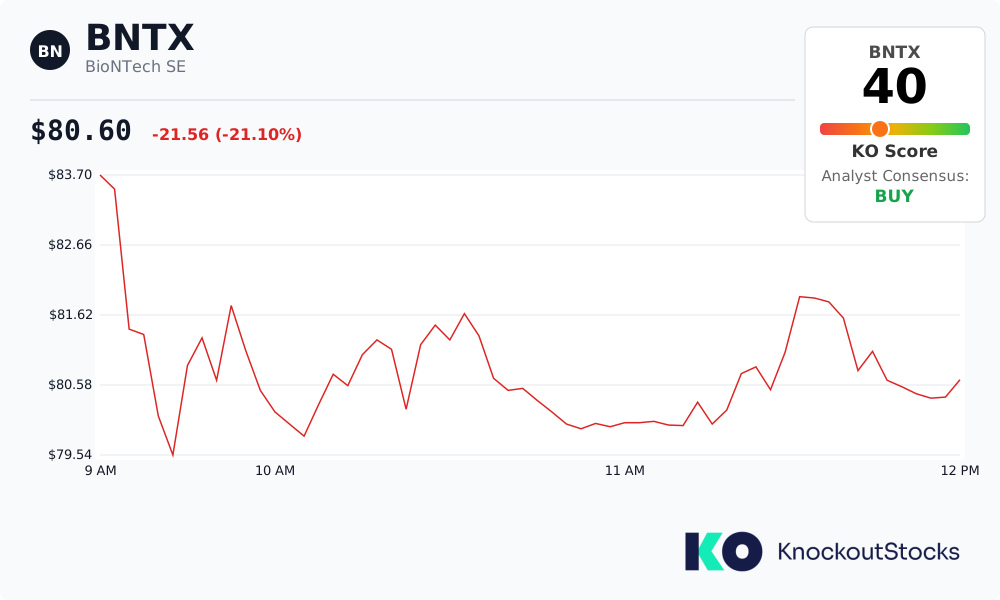 BioNTech SE, BNTX
The clinical study assessed autogene cevumeran as an adjunctive therapy for individuals with high-risk Stage II or Stage III colorectal cancer who had undergone surgical intervention.
An independent committee monitoring data safety identified disparities in overall survival rates between the study’s treatment groups. The committee determined that proceeding with the trial would be futile, with little probability of altering the final results.
The study had previously reached its futility threshold in October 2025. However, at that juncture, the monitoring committee determined the available data lacked sufficient maturity to support definitive conclusions regarding treatment effectiveness.
This represents the second setback for autogene cevumeran. Earlier this year in March, BioNTech and Genentech discontinued a bladder cancer study involving the identical vaccine, attributing the decision to evolving treatment standards in that indication.
Contrasting Fortunes in mRNA Oncology
The announcement’s timing proves particularly unfortunate. Just one week prior, BioNTech stock experienced its strongest trading day in six years following Moderna and Merck’s announcement of positive Phase 3 results for their mRNA melanoma vaccine administered alongside Keytruda.
Those results propelled Moderna shares upward by approximately 177% and created a rising tide effect throughout the mRNA sector. Friday’s development serves as a stark reminder that clinical success in one cancer indication doesn’t guarantee similar outcomes across different tumor types.
The underlying biological explanation relates to tumor characteristics. Melanoma represents an immunologically “hot” malignancy characterized by elevated mutation rates, making it generally responsive to immune-modulating therapies. Conversely, colorectal cancer is classified as “cold” and has demonstrated historical resistance to immunotherapy approaches.
Trial methodology also differs significantly. Moderna’s study combined its vaccine with Keytruda, an established checkpoint inhibitor therapy. BioNTech evaluated autogene cevumeran as a single-agent monotherapy, establishing considerably more stringent efficacy requirements.
BioNTech’s Path Forward
BioNTech’s Chief Medical Officer, Prof. Özlem Türeci, characterized the outcomes as disappointing while emphasizing the scientific knowledge gained regarding immune-suppressive tumor resistance mechanisms. She noted these insights would inform the development of future mRNA-based cancer treatments.
Notwithstanding this setback, BioNTech maintains a strong financial foundation. The company disclosed €16.6 billion in cash reserves and marketable securities during Q2 2026, despite recording a quarterly net loss of €820.8 million.
One clinical program remains active. BioNTech’s Phase 2 pancreatic cancer trial, which evaluates autogene cevumeran combined with checkpoint inhibition therapy and chemotherapy, continues according to schedule.
Market participants are now focusing attention on the ESMO Congress scheduled for October 2026, where comparative data from both BioNTech and Moderna programs may be unveiled.
BioNTech also anticipates an interim data readout from its BNT113 study targeting head and neck cancer. Head and neck malignancies demonstrate immunotherapy sensitivity, potentially providing a more favorable environment for vaccine efficacy.
Roche, Genentech’s parent organization, witnessed its U.S.-traded shares decline approximately 1.2% Friday in response to the announcement.
The post BioNTech (BNTX) Shares Plunge 8% Following Colorectal Cancer Vaccine Trial Discontinuation appeared first on Blockonomi.