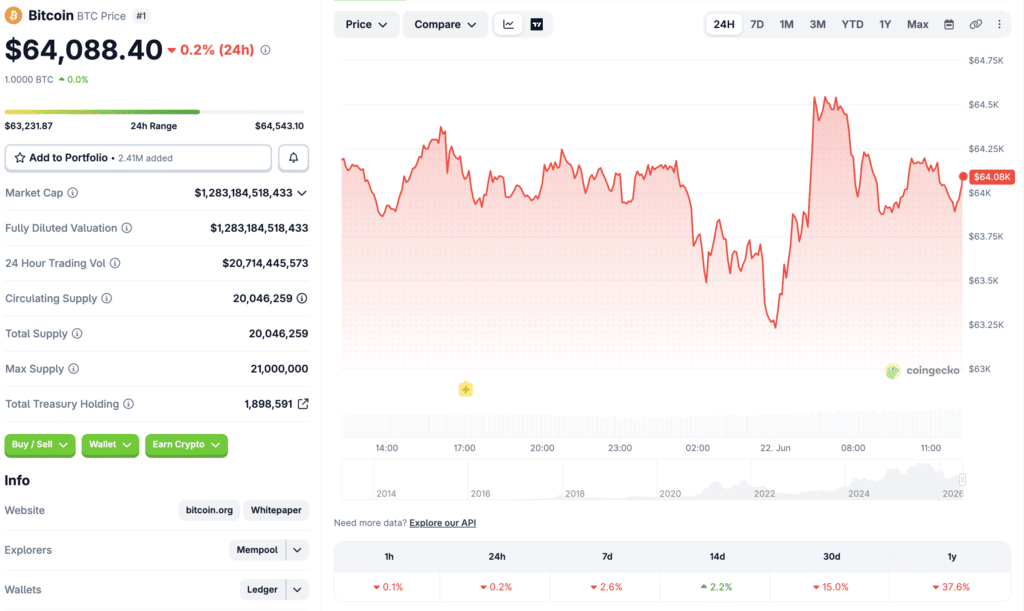
The Bitcoin bull phase narrative is gaining traction in 2026 as market data, macro shifts, and on-chain signals converge at a critical moment. Bitcoin trades near $63,938.68 with a market cap
The Bitcoin bull phase narrative is gaining traction in 2026 as market data, macro shifts, and on-chain signals converge at a critical moment. Bitcoin trades near $63,938.68 with a market cap above $1.28 trillion, showing slight short-term weakness but strong structural resilience. The recent Iran peace deal has reduced geopolitical tension, lifting risk sentiment across digital assets.
At the same time, CryptoQuant reports a surge in network activity that historically aligns with early expansion phases. The question now dominating the Bitcoin market outlook is whether this marks a true Bitcoin market bottom or just another temporary relief phase before further volatility.
Across trading desks and research models, the phrase Bitcoin bull phase is increasingly tied to long-cycle analysis rather than short-term speculation. With transaction volumes rising and liquidity tightening, the Bitcoin price prediction debate is becoming more polarized. Some analysts argue a confirmed CryptoQuant Bitcoin signal is already in motion, while others warn that demand quality still lags behind activity spikes. This tension defines the current structure of the Bitcoin market, where optimism and caution are colliding in real time.
Bitcoin Bull Phase in 2026 Builds as Network Activity Surges 5
Bitcoin bull phase in 2026 and network activity expansion signals
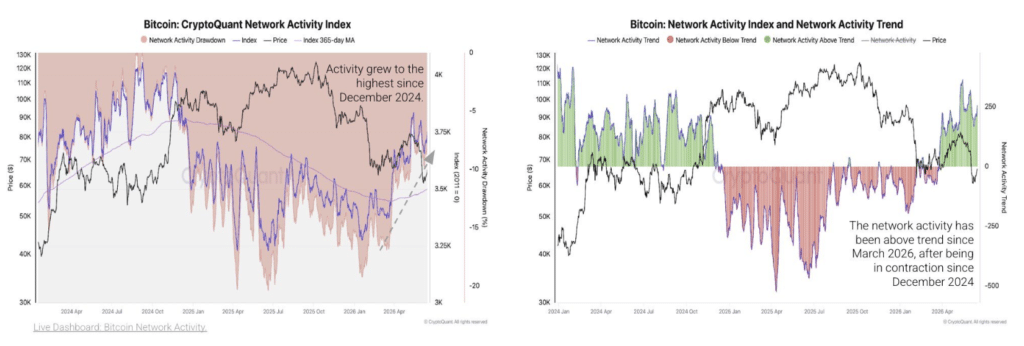
The Bitcoin bull phase is being closely linked to a major shift in on-chain behavior. CryptoQuant data shows Bitcoin network activity has crossed above its 365-day moving average for the first time since late 2024. This is a critical structural event often associated with early-stage expansion cycles. Daily transactions now exceed 800,000 in 2026, more than doubling from previous lows. The network activity index rising from 3,320 to 3,600 suggests sustained usage rather than short-term speculation.
The Bitcoin bull phase narrative strengthens as long-term holders continue accumulating, locking supply away from active circulation. Over 4.37 million BTC are now held by long-term cohorts, tightening available liquidity. Historically, such conditions align with early recovery phases. However, the Bitcoin bull phase indicators suggest recovery ahead only when transaction quality improves, not just volume. This is where the Bitcoin on-chain analysis becomes essential, revealing deeper signals beyond surface-level activity spikes.

Bitcoin Bull Phase in 2026 Builds as Network Activity Surges 6
Iran peace deal impact on Bitcoin market bottom sentiment and risk appetite
The geopolitical shift following the Iran peace deal has influenced the Bitcoin bull phase discussion by altering global risk sentiment. Markets often react strongly to reductions in conflict risk, and crypto is no exception. Bitcoin holding above the 200-week SMA near $62,000 signals long-cycle support is being tested again. Many traders now question whether a Bitcoin market bottom has formed or if macro relief is temporarily masking underlying weakness.
In this environment, the Bitcoin bull phase thesis gains credibility but remains conditional. The Bitcoin market outlook improves when geopolitical uncertainty declines, but liquidity and demand still dictate direction. The Bitcoin bullish signal emerging from macro easing must be validated by sustained capital inflows. Without that confirmation, the Bitcoin recovery process may remain uneven, even as sentiment improves across the broader BTC bull run narrative.
CryptoQuant’s latest research has intensified the Bitcoin bull phase debate by highlighting a break above the 365-day activity average. Historically, this threshold preceded major upward moves in 2024 and 2025. The firm classifies this as a transition into bull-phase behavior, strengthening the idea that a CryptoQuant signals new Bitcoin bull phase scenario may already be unfolding.
At the same time, the Bitcoin bull phase outlook amid weak demand introduces caution. A large portion of current transactions involves low-value activity driven by protocols like Ordinals and Runes. While this inflates network usage, it does not always reflect organic economic demand. This raises a critical question in Bitcoin market analysis: is the system genuinely expanding, or is it experiencing activity distortion? The answer will determine whether the current Bitcoin market bottom thesis holds or fades.
Bitcoin Bull Phase in 2026 Builds as Network Activity Surges 7
Bitcoin price prediction and market outlook shaped by structural on-chain shifts
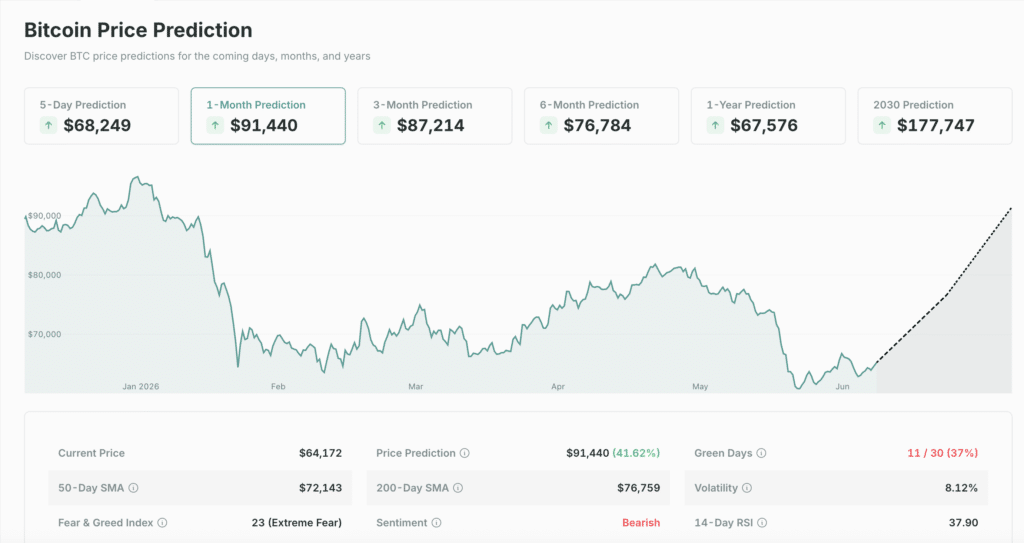
The Bitcoin bull phase narrative continues to influence institutional and retail Bitcoin price prediction models heading into 2026. With realized price levels acting as historical support zones, analysts are watching closely for confirmation of a cycle bottom. The Bitcoin realized price metric near long-term averages strengthens arguments for accumulation phases forming beneath current levels.
However, the Bitcoin bull phase may start near realized price level only if demand confirms structural absorption. Current Bitcoin market outlook remains mixed, as rising activity contrasts with uneven transaction quality. The Bitcoin bull phase and market recovery explained dynamic shows that price direction depends on whether liquidity returns in meaningful size. Without it, even strong signals risk becoming false positives within broader volatility cycles.
Bitcoin Bull Phase in 2026 Builds as Network Activity Surges 8
Conclusion
The Bitcoin bull phase in 2026 stands at a critical crossroads where macro relief, on-chain expansion, and investor uncertainty intersect. The Iran peace deal has improved sentiment, while CryptoQuant data highlights a potential structural shift in network activity. Still, the Bitcoin market bottom debate remains unresolved, with conflicting signals between transaction growth and demand quality.
If the Bitcoin bull phase continues to align with improving liquidity and sustained accumulation, a broader BTC bull run may gradually emerge. However, if activity remains driven by low-value transactions, the recovery narrative could stall. Market participants are now watching closely for confirmation signals that will define the next major trend in the Bitcoin market.
Appendix: Glossary of Key Terms
Bitcoin bull phase refers to a sustained period of upward momentum in Bitcoin’s market cycle driven by demand expansion and structural accumulation.
Bitcoin realized price is the average price at which all BTC was last moved, often used to identify support zones.
Bitcoin on-chain analysis involves studying blockchain data such as transactions and active addresses.
CryptoQuant Bitcoin signal refers to research indicators derived from network and exchange activity.
Frequently Asked Questions About Bitcoin bull phase
1. What is the Bitcoin bull phase in 2026?
The Bitcoin bull phase in 2026 refers to a potential market expansion period driven by rising network activity, accumulation trends, and improving sentiment across the Bitcoin market.
2. Is Bitcoin entering a new bull phase in 2026?
Early on-chain signals suggest possible formation of a Bitcoin bull phase, but full confirmation still depends on sustained demand and price strength.
3. What does CryptoQuant say about the Bitcoin bull phase?
CryptoQuant reports Bitcoin network activity has crossed key long-term averages, often linked with early-stage bull cycles and possible recovery phases.
ReferencesCoinMarketCap
Coingecko
CoinCheckup
Cryptonews.com-X Post
Read More:Bitcoin Bull Phase in 2026 Builds as Network Activity Surges">Bitcoin Bull Phase in 2026 Builds as Network Activity Surges