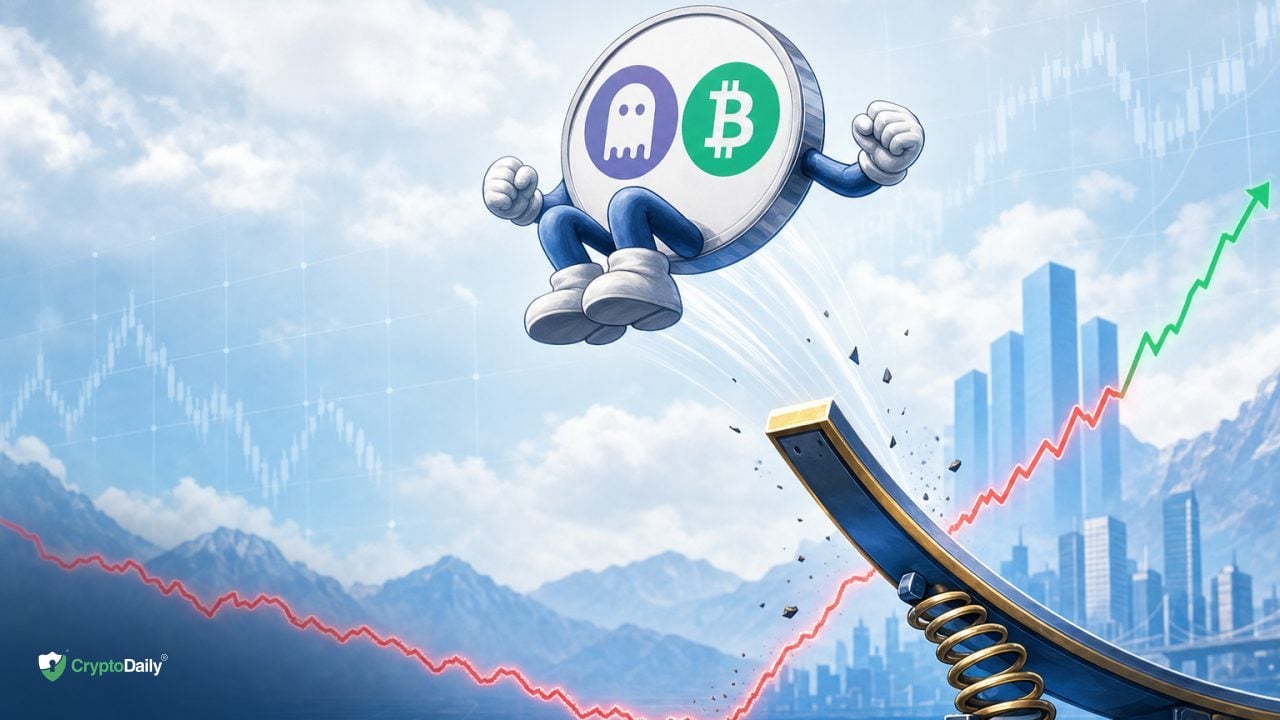
Mid-June gave us a weird tell. Bitcoin went nowhere, and yet a handful of utility tokens ripped. Uniswap’s UNI jumped roughly 22 percent in a single session while BTC hovered around 65 to 66k
Mid-June gave us a weird tell. Bitcoin went nowhere, and yet a handful of utility tokens ripped. Uniswap’s UNI jumped roughly 22 percent in a single session while BTC hovered around 65 to 66k. That set the tone for this kind of rally - not dominance-led, but rotation-led. CoinDesk flagged it in real time.
Fast forward and the bounce broadened. Aave perked up first, helped by deal chatter. Then Bitcoin Cash started to trend, quietly at first, and then not so quietly. As of writing, BCH trades near $193.64 and is up about 43.6 percent over the past 30 days, per CoinGecko (Bitcoin Cash page).
Aave’s been the other lightning rod. The token recently sits around $84.86 with brisk short-term gains - up about 17.2 percent week over week and 31.1 percent over 14 days. Its protocol TVL sits near $12.24 billion, according to CoinGecko pulling from DefiLlama. And there was the rumor mill: Kraken’s parent, Payward, was reported to be in talks for roughly a 15 percent stake in Aave Group at around a $385 million valuation. Founder Stani Kulechov pushed back on claims of a 70 percent discount and said Aave isn’t for sale at fire-sale terms. The Block captured the back-and-forth.
What is this move, exactly? It looks like the classic relief trade in crypto - when majors stall, capital hunts for beta in places with enough liquidity to enter, enough narrative to justify it, and enough neglect to squeeze shorts. The interesting twist this time is how many of these names are older utility tokens with real, if unglamorous, use cases.
When bitcoin goes sideways, the market starts fishing in pockets where positioning is light and liquidity is just good enough. That mix tends to live in mid-cap utility tokens with legacy communities and exchange coverage.
It’s also happening against a backdrop of shrinking DeFi deposits. Binance Research’s June monthly showed DeFi TVL sitting around $79.5 billion in May after persistent outflows. Liquidity thinned through spring, then spot and perps rediscovered certain names in June. That pull-push between dwindling base liquidity and sudden risk appetite is what makes this kind of pop so abrupt. Binance Research — Monthly Market Insights (June 2026).
Why Bitcoin Cash and Aave Are Suddenly Moving Together
They’re very different projects, but for this trade they rhyme. Both are liquid on major exchanges, have recognisable brands, and sit in that sweet spot between large enough to trade and small enough to move.
What’s pulling Aave higher
Deal speculation draws attention, even if it later gets clarified. The Payward-talks headline lined up with Aave’s short-term outperformance - 7 day up about 17 percent, 14 day up about 31 percent, token near $84.86 - while TVL remains one of the deepest in DeFi at roughly $12.24 billion. That combination - news catalyst plus deep protocol footprint - makes Aave one of the first ports of call when traders rotate into DeFi. See CoinGecko for market and TVL context and The Block for the corporate chatter and Kulechov’s response.
Why BCH is catching a bid
BCH often behaves like a liquid proxy for older crypto cycles. It has wide centralized exchange coverage. It responds quickly to risk-on bursts when traders want something with a simple mental model - a Bitcoin fork with a long history and a community still paying attention. With BCH up roughly 43.6 percent over 30 days and sitting near $193.64 per CoinGecko, it fits the pattern of the forgotten utility name getting rediscovered during sideways BTC conditions.
The rotation setup
That mid-June day where UNI ripped 22.5 percent while BTC stalled around 65 to 66k is a clean example of capital seeking motion where it can. Markets were waiting on the Fed. Traders bet that periphery assets had more room for upside if the macro didn’t break. CoinDesk captured the tape action. BCH and Aave have been beneficiaries of that same “chase the move” logic.
How This Relief Trade Actually Works
On desks, the playbook is pretty repeatable. It’s not elegant, but it is effective when conditions line up.
- Identify catalysts or dislocations - a rumor, a governance vote, a partner announcement, or simply a chart breaking out while BTC ranges.
- Check liquidity on both spot and perps - depth to 1 percent, borrow availability, funding skew, and whether majors are quiet enough to avoid correlation whiplash.
- Rotate into 2 to 4 names with recognisable brands and clean tickers - AAVE, BCH, and other mid-caps with clear narratives.
- Lean into momentum while monitoring funding and basis - if funding turns deeply positive too fast, start trimming or hedge with a short basket.
- Exit on the first sign of fading breadth or if BTC volatility picks up - relief trades rarely end gracefully.
Why older utility tokens benefit
They’ve got a few built-in advantages. Exchanges have long listed them, so access is easy. Market makers know the order flow. Borrow markets are established. There’s usually a baseline of on-chain or protocol activity. They might not be the new shiny, but for a three to ten day window, they punch above their weight.
Where it breaks
If BTC breaks out or breaks down decisively, this rotation gets steamrolled. Similarly, if the catalyst fizzles - say, deal chatter gets debunked or a governance vote fails - gains round-trip quickly. That’s why position sizing stays small and stops are tight in this setup.
What the Data Is Saying Right Now
It helps to anchor the story to hard numbers. A few snapshots:
Metric Asset or Scope Value Source Context 30 day price change Bitcoin Cash (BCH) +43.6% | Price ~ $193.64 CoinGecko Classic rotation beneficiary in a flat BTC tape Short-term performance Aave (AAVE) 7d +17.2% | 14d +31.1% | Price ~ $84.86 CoinGecko News-driven bounce plus liquidity depth Protocol TVL Aave protocol ~$12.24B CoinGecko/DefiLlama One of DeFi’s deeper pools despite industry outflows Industry TVL trend DeFi overall (May 2026) ~$79.5B Binance Research Outflows set the stage for sharp snapbacks Rotation signal UNI vs BTC, Jun 17 UNI +~22.5% while BTC flat CoinDesk Playbook example for relief-led alt pops
Liquidity and positioning color
Even with TVL down in May, spot and perp venues still offer plenty of size in these names. What changed in June was sentiment and a couple of headlines. That’s enough to flip funding, tighten spreads, and pull in cross-exchange arb and basis traders. The move in Aave had extra fuel thanks to corporate noise, while BCH looked like the liquid legacy bet for folks who didn’t want to chase smaller caps.
Who Benefits - And Who Doesn’t
Relief trades create winners and losers in odd ways.
Active traders and market makers
This is their playground. They capture the early expansion of volatility, provide liquidity into FOMO, and then fade when funding and social volume peak. They’re not married to the names - just the moves.
Long-only holders
They finally get a breather. If you held through the prior drawdown, the bounce is a chance to rebalance or derisk. The mistake is assuming this is the start of a new trend without confirming breadth, flows, and macro. Relief pops are notorious for failing if majors aren’t confirming.
Shorts caught leaning
Old utility tokens draw in structural skeptics. They look tired on higher timeframes, and borrow is easy. But that sets the stage for vicious squeezes when bids return. If you short into the first green candle, you might be forced to cover into thin liquidity, making the move worse.
Protocols and treasuries
Higher token prices lift treasury marks and governance optics. For Aave, even the discussion around strategic stakes puts a spotlight on the project’s institutional relevance - though a rumor does not change protocol risk. BCH doesn’t have a protocol treasury the same way DeFi projects do, but a stronger market cap can still help exchange negotiations and infrastructure mindshare.
What Would Confirm - Or Invalidate - More Upside
None of this is a prediction. It’s about evidence. Here are practical signals that matter over the next few weeks.
Confirmation signs
- Funding and basis stay moderate while price grinds up - shows spot-led demand rather than levered blow-off.
- Liquidity depth improves on both sides of the book - tighter spreads, more size resting.
- Cross-asset breadth widens beyond the first movers - not just Aave and BCH, but a consistent pattern across similar utility tokens.
- Follow-through on corporate or governance catalysts - for Aave, clarity around any strategic investment interest rather than vague rumor.
Red flags
- BTC wakes up with a large directional move - rotations get clipped when majors lead or dump.
- Funding rips positive while social metrics go parabolic - classic late-stage behavior.
- Deal rumors fade or are contradicted on the record - removes the extra oxygen for DeFi tokens.
- DeFi TVL keeps bleeding without offsetting rate or incentive changes - suggests shallower pools to support sustained rallies. See Binance Research for the May trend baseline.
Risks and What Could Go Wrong
- Headline risk - If the Aave stake chatter cools or turns out different than traders hope, the token can retrace hard.
- Macro shock - A hotter inflation print or a hawkish central bank surprise can flip the entire market back to defense in hours.
- Liquidity air pockets - With DeFi TVL still well below prior cycle highs, order books can thin out quickly, amplifying moves both ways.
- Smart contract or governance incidents - Unexpected issues on a major lending protocol can spill over to peers and to related tokens.
- Venue risk - Changes in listing status, regional rules, or leverage limits on a top exchange can abruptly change flow.
- Crowded short-term positioning - If everyone is chasing the same rotation, exits will be narrow.
Relief trades look easy in hindsight. In real time they are thin, headline-sensitive, and unforgiving on late entries.
If you want a steady feed of credible market color across regions, Crypto Daily curates both price action and the policy backdrop without the noise. I read it to triangulate signals from venues, on-chain activity, and traditional desks. You can find more of that coverage at Crypto Daily.
Frequently Asked Questions
Why did Bitcoin Cash pop alongside a DeFi token like Aave?
Different fundamentals, similar trade. Both have broad exchange coverage, familiar narratives, and enough liquidity for funds to rotate into during a relief bounce. BCH benefits from legacy brand and clean access, Aave from a deep protocol footprint and recent deal headlines.
Is the Aave stake talk from Kraken’s parent a done deal?
No. Multiple outlets reported discussions, but it is not a completed transaction. Aave’s founder publicly pushed back on talk of a 70 percent discount and said Aave is not being sold at that price. Treat it as speculation until official announcements arrive. See The Block.
How does lower DeFi TVL affect these rallies?
Lower TVL usually means thinner liquidity and more sensitivity to flows. That can actually make relief rallies sharper because smaller net demand pushes price more. But it also cuts both ways on the way down. Binance Research pegged May’s DeFi TVL near $79.5 billion, which is a lean base. Report here.
What should I watch to avoid chasing the top?
Funding flipping extreme, spreads widening after a spike, and breadth narrowing to just one or two names are classic late-stage tells. Also keep an eye on BTC volatility. If majors start trending hard, the rotation alpha usually fades.
Is this the start of a new alt season?
Too early to say. What we’re seeing looks like a relief rotation, not a full regime shift. For an alt season call, you’d want sustained breadth, consistent spot-led flows, and supportive macro. A single strong week does not make a cycle.
Why focus on older utility tokens instead of new narratives?
During relief bounces, traders often prefer familiar tickers with proven exchange routes and borrow markets. Newer narratives can work, but they tend to be less liquid and more idiosyncratic. Old utility names are the quick trade when time horizons are short.
Where do UNI and similar tokens fit into this picture?
They are good tells for rotation. That mid-June session where UNI jumped around 22.5 percent while BTC stayed flat signaled appetite for risk in utility-heavy names. If UNI and its peers keep leading on green days, the rotation likely has more juice. See CoinDesk.
Disclaimer: This article is provided for informational purposes only. It is not offered or intended to be used as legal, tax, investment, financial, or other advice.