The crypto market has been wavering between doubt and severe correction for several weeks now. Against all odds, bitcoin seems to be recovering. According to the data, the flagship asset inde
The crypto market has been wavering between doubt and severe correction for several weeks now. Against all odds, bitcoin seems to be recovering. According to the data, the flagship asset indeed records its best weekly performance since March 2026. Many experts attribute this feat to a major macroeconomic factor: the decline in inflation expectations in the United States. More details below!
In brief
- Bitcoin jumps nearly 7%, its best week since March.
- US inflation expectations fall below the Fed’s 2% target.
- WTI crude oil also declines, fueling hopes of monetary easing.
- A potential weakening of the dollar strengthens the bullish scenario for bitcoin.
- All eyes are now on the US CPI on July 14.
Bitcoin posts a gain of approximately 7% for the week ending July 5
The gloomy atmosphere weighing on the crypto and financial ecosystem has dissipated over the course of a few days. And bitcoin is among the main beneficiaries. Proof: the price of this digital asset has jumped 7% over a 7-day period. At the time of writing this article, BTC is trading at around $63,500. It had shown a slight decline before starting to rise again.
Crypto analysts agree on one point: the bitcoin rebound is by no means accidental. It results from a renewed optimism specific to the crypto market. But not only that! It is also a direct consequence of a radical change in long-term inflation expectations in the United States.
More precisely, we refer to the decline in inflation breakeven. Closely followed by crypto traders, this indicator measures price increase expectations of the economy by comparing conventional government bonds to inflation-protected bonds. According to the data, the two-year rate has fallen back below 2%. A first since the beginning of 2024! Especially since this is the Fed’s fixed target.
Your 1st cryptos with BitgetThis link uses an affiliate program.For crypto investors and traders, the message is clear: fears of an uncontrolled inflation spiral now belong to the past. For bitcoin in particular, this drop in breakeven acts as fuel. If inflationary pressures ease, the US central bank would indeed have greater room to ease its monetary policy in the medium term. This would reduce the pressure exerted by high interest rates on risky assets, including bitcoin.
Another favorable factor for bitcoin: a less strong Dollar Index
Almost all data confirm it! Historically, bitcoin (BTC) often moves inversely to the US dollar. When confidence in the greenback wanes, the flagship crypto tends to rise.
The US dollar index (DXY) currently shows clear signs of fatigue. Experts point to the retreat of WTI crude oil prices. These have indeed returned to their pre-Iran war levels. Since energy costs are the main driver of the consumer price index, their decline relieves the real economy. Most importantly, it weakens the short-term safe-haven status of the US dollar.
Freed from selling pressure exerted by an omnipotent dollar, bitcoin thus regains essential technical maneuvering space to break psychological resistances at $63,000 and attract new spot buying volumes.
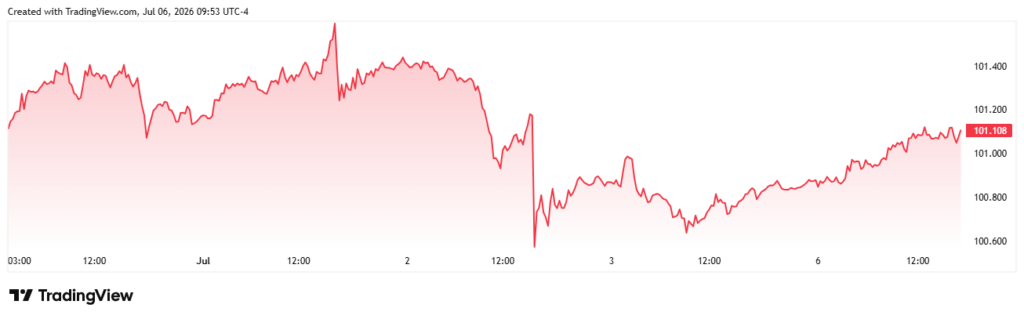 Chart showing the Dollar Index evolution over a 5-day period (Source: TradingView)
Certainly, the bitcoin price jumped 7% in the last week. However, not all crypto analysts share the same optimism regarding the decline in inflation in the United States.
The YCC Macro account, for example, warned on X:
The Fed cannot declare victory simply because gasoline prices are falling. Persistent inflation in services is precisely why policymakers should keep rates high for longer, even if the overall CPI continues to slow.
Economist Robin Brooks believes that the fall in oil prices could revive a disinflationary movement. According to him, the Fed’s next decision could be a rate cut rather than a hike if this trend is confirmed.
Bitcoin will have to wait for the US CPI to confirm its bullish momentum
Barring last-minute changes, the US CPI release is scheduled for July 14. According to crypto experts, two scenarios are possible.
- An inflation figure below expectations: this would confirm the disinflationary trend started by the breakeven inflation decline. This would strengthen bets on a rate cut. The scenario of a prolonged bullish rally for bitcoin would thus be definitively validated.
- A bullish surprise: it would revive fears about persistent inflation in the United States. This would restore strength to the US dollar and could weigh on bitcoin’s price in the short term.
From a purely graphical point of view, the return of buying volumes on bitcoin confirms the formation of a solid floor above long-term moving averages. The reduction of selling pressure accompanies a stabilization of outflows from institutional financial products. This suggests the capitulation of weak hands.
In the short term, two major scenarios now emerge for bitcoin:
- The clear break of current resistances would open the way to a rapid return to historic highs, supported by a massive short squeeze on futures contracts.
- Conversely, bitcoin could test its support zones again if macroeconomic doubts persist or if the US dollar starts a technical rebound on its supports.
Despite bitcoin’s rebound, caution remains warranted
The recent bitcoin gain reflects a change in investor perception rather than a simple speculative move. Declining inflation expectations, falling WTI crude oil, questions about the Fed’s evolution… These are all factors creating a more favorable environment for digital assets, including bitcoin.
Nonetheless, several variables remain unknown. We notably refer to the US central bank officials who continue to stress their dependence on economic data. However, inflation in services is still considered a cautionary factor. Upcoming statistics could therefore quickly change crypto market expectations.
One thing is certain: bitcoin is entering a pivotal week. The real verdict will now depend on upcoming US economic data. These will confirm or challenge the current optimism of the crypto market. A story to follow closely…