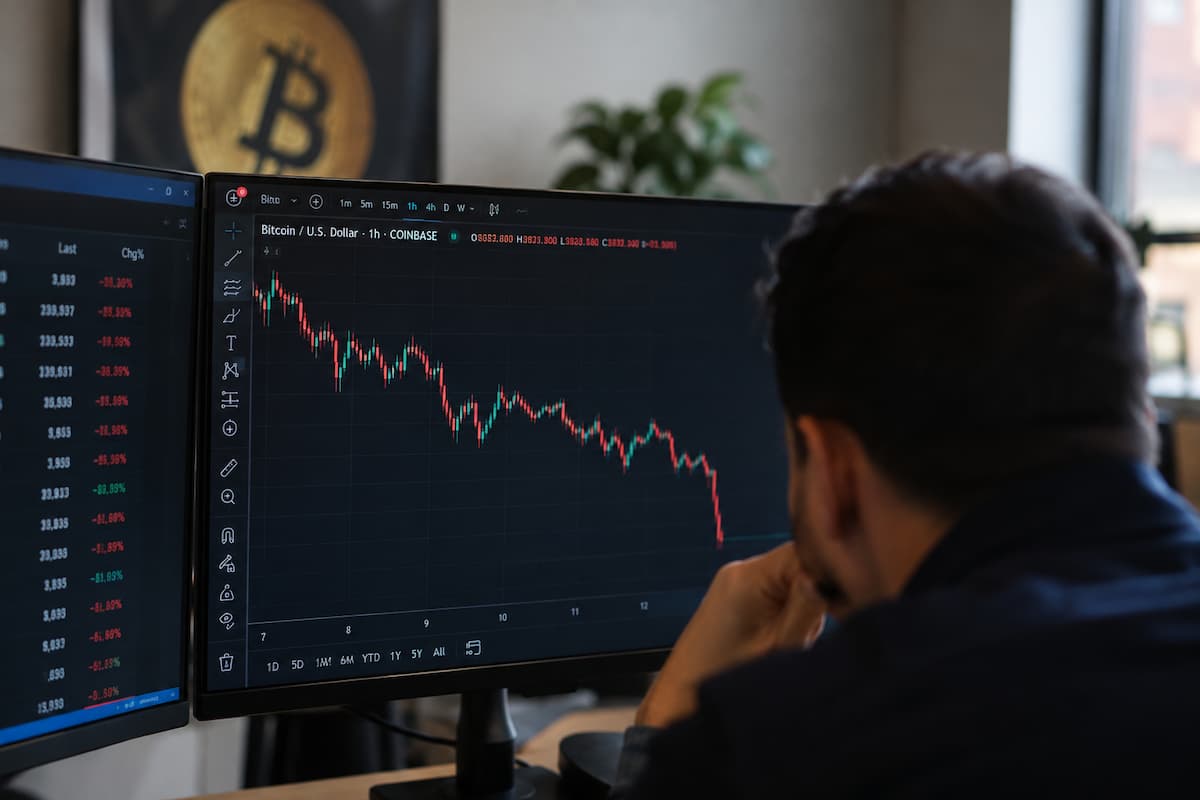
August core CPI rose 0.3% month over month, above the pace economists had penciled in. Futures-implied odds of a Federal Reserve rate hike climbed toward 87% after the print. Bitcoin slid und
- August core CPI rose 0.3% month over month, above the pace economists had penciled in.
- Futures-implied odds of a Federal Reserve rate hike climbed toward 87% after the print.
- Bitcoin slid under $77,000 as the higher-for-longer rate case regained ground.
Bitcoin dropped below $77,000 after the Bureau of Labor Statistics’ August Consumer Price Index release showed core inflation, the measure that strips out food and energy, running hotter than forecasters expected. That single data point did what months of Fed commentary had not: it moved interest-rate futures decisively toward pricing in another hike rather than a pause.
The mechanism is simple and it is the same one that has whipsawed bitcoin all year. Traders price Fed policy through interest-rate futures, tracked live on tools like the CME FedWatch Tool, and a hotter-than-expected inflation print pushes the implied odds of tighter policy higher within minutes. Tighter policy means higher yields on cash and short-term bonds, which makes a non-yielding asset like bitcoin relatively less attractive to hold. The correlation is not perfect and it is not constant, but on days when CPI actually surprises to the upside, it tends to show up fast in crypto price action.
Why This CPI Print Landed Differently
Inflation prints do not always move markets this hard. What made this one different is timing: it arrived close enough to the next scheduled Fed decision that traders had little room to argue it was noise that would wash out before policymakers meet. A 0.3% core reading is not a dramatic miss in isolation, but stacked against a Fed that has spent the year signaling data dependence, it was enough to flip the market’s working assumption from “hold” to “hike,” and that repricing is what actually moved bitcoin, not the inflation number by itself.
It is worth being precise about what moved and what did not. The CPI report itself measures the past, a snapshot of what consumers paid in August. Bitcoin’s drop reflects the market’s forward-looking bet on what the Fed does next, filtered through futures pricing. Conflating the two, treating the inflation print as though it directly caused the price move rather than the repriced rate odds it triggered, is the kind of shortcut that makes the story sound simpler than the mechanism actually is.
What Actually Confirms the Rate Story
The number to watch from here is not bitcoin’s price but the FedWatch-implied probability itself, since that is the direct market read on what the CPI data changed. If the probability of a hike keeps climbing into the Fed’s meeting, that is the market saying this print was not a one-off. If it fades back down as the meeting approaches, that says traders read this as noise after all, and bitcoin’s move down would look more like an overreaction than a repricing. Either way, the next real catalyst is the Fed’s own statement, not another inflation report.
This post first appeared in Bitcoin Falls to $77,000 as CPI Data Pushes Fed Rate-Hike Odds Higher