The decline in Bitcoin (BTC) price is increasing financial pressure on Strategy, the company with the world’s largest institutional Bitcoin treasury. As the company’s cash reserves dwindle an
The decline in Bitcoin (BTC) price is increasing financial pressure on Strategy, the company with the world’s largest institutional Bitcoin treasury. As the company’s cash reserves dwindle and preferential share dividend obligations continue to rise, concerns among analysts about potential funding difficulties and Bitcoin sell-offs have intensified.
According to market data, Strategy (MSTR) shares fell 4.18% during the day to $99.50, dropping below $100 for the first time since March 2024. The company currently holds the largest Bitcoin treasury holding 847,363 BTC, representing approximately 4% of the total Bitcoin supply, while the average cost of Bitcoin held by the company is around $75,651.
Bitcoin’s approach to the $60,000 level has increased the perception of risk to Strategy’s balance sheet. Some analysts believe that if the decline in Bitcoin continues, the price could fall to around $55,000. The selling pressure wasn’t limited to Bitcoin; publicly traded crypto companies’ shares occasionally saw even sharper losses than BTC.
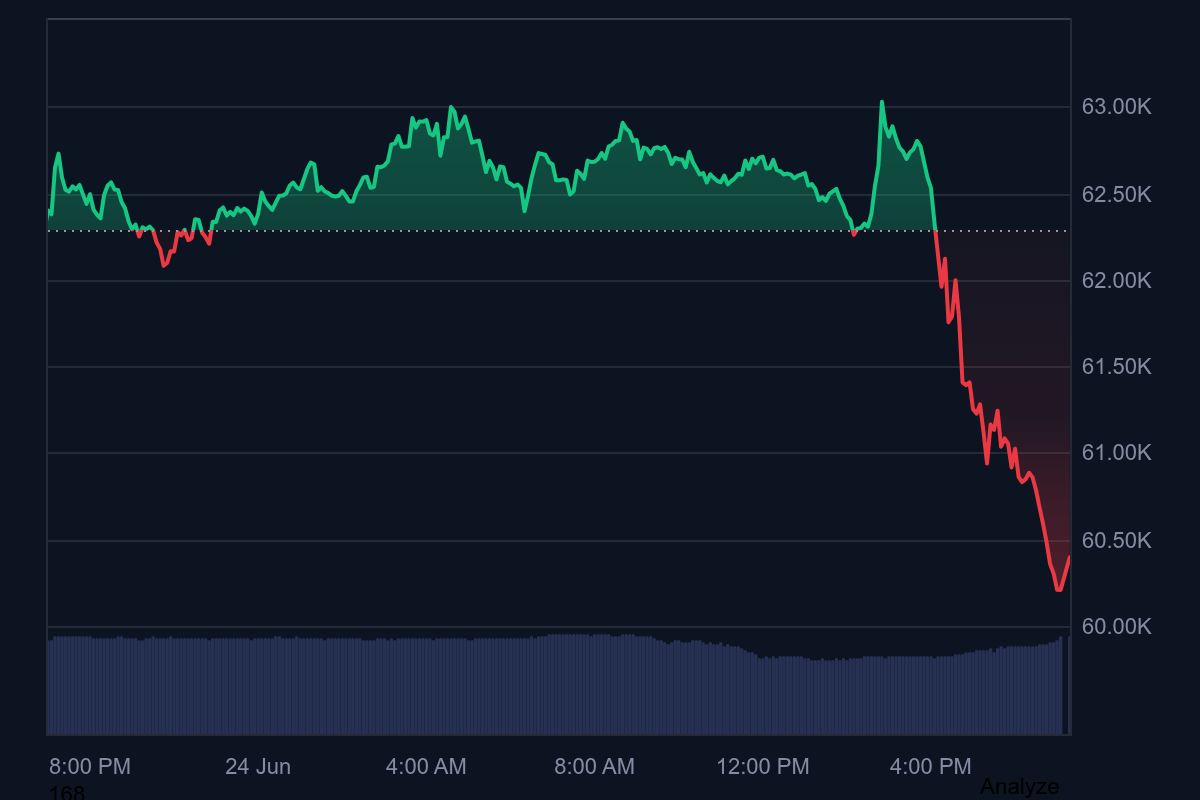
A graph showing the drop in BTC price.
Deutsche Bank Argues Bitcoin Price Weakness is Due to Multiple Factors
Deutsche Bank attributed Bitcoin’s weakness to a combination of institutional pressures. The bank stated that the shift in Fed expectations was a significant factor. Deutsche Bank now expects two rate hikes in 2026 instead of one rate cut. Higher interest rate expectations make alternatives like cash and bonds more attractive, weakening demand for risky assets like Bitcoin.
Related News: An Early-Stage Shiba Inu (SHIB) Whale Has Started Selling: Holds a Significant Portion of the Supply
Outflows from spot Bitcoin ETFs have also accelerated. According to data, ETFs have experienced net outflows of approximately $6 billion for six consecutive weeks, with outflows reaching $2.4 billion in June alone. Deutsche Bank analyst Marion Laboure noted that BTC is increasingly being treated as an “institutional risk asset,” with marginal buyers now being ETF portfolio managers and corporate treasuries rather than individual investors. According to Laboure, when these buyers withdraw from the market, the price moves downwards.
Another reason cited for the pressure on Bitcoin is the artificial intelligence (AI) theme. With US tech giants reportedly planning to spend over $700 billion on AI infrastructure by 2026, investors are said to be viewing Bitcoin and AI-related stocks as competing investment areas for speculative capital.
Julio Moreno, Head of Research at CryptoQuant, argued that Strategy should pause its BTC purchases. According to Moreno, while the company continued issuing STRC preferred shares to finance its Bitcoin purchases, its annualized dividend obligations increased from approximately $300 million at the beginning of the year to $1.2 billion. During the same period, cash reserves decreased by 38%. Therefore, the STRC dividend yield period, which was over seven years, has now shrunk to approximately 14 months.
Moreno stated that it would be healthier for Strategy to halt BTC purchases until it strengthens its cash reserves and dividend payment capacity. He also suggested that the company should establish a more systematic Bitcoin purchasing framework and realize profits by reasonably selling a portion of its BTC holdings in future bull markets, thereby reducing debt and replenishing cash reserves.
*This is not investment advice.
Continue Reading: Bitcoin Price Drops to the $60,000 Mark: Why Did BTC Fall? Here’s the Latest Information