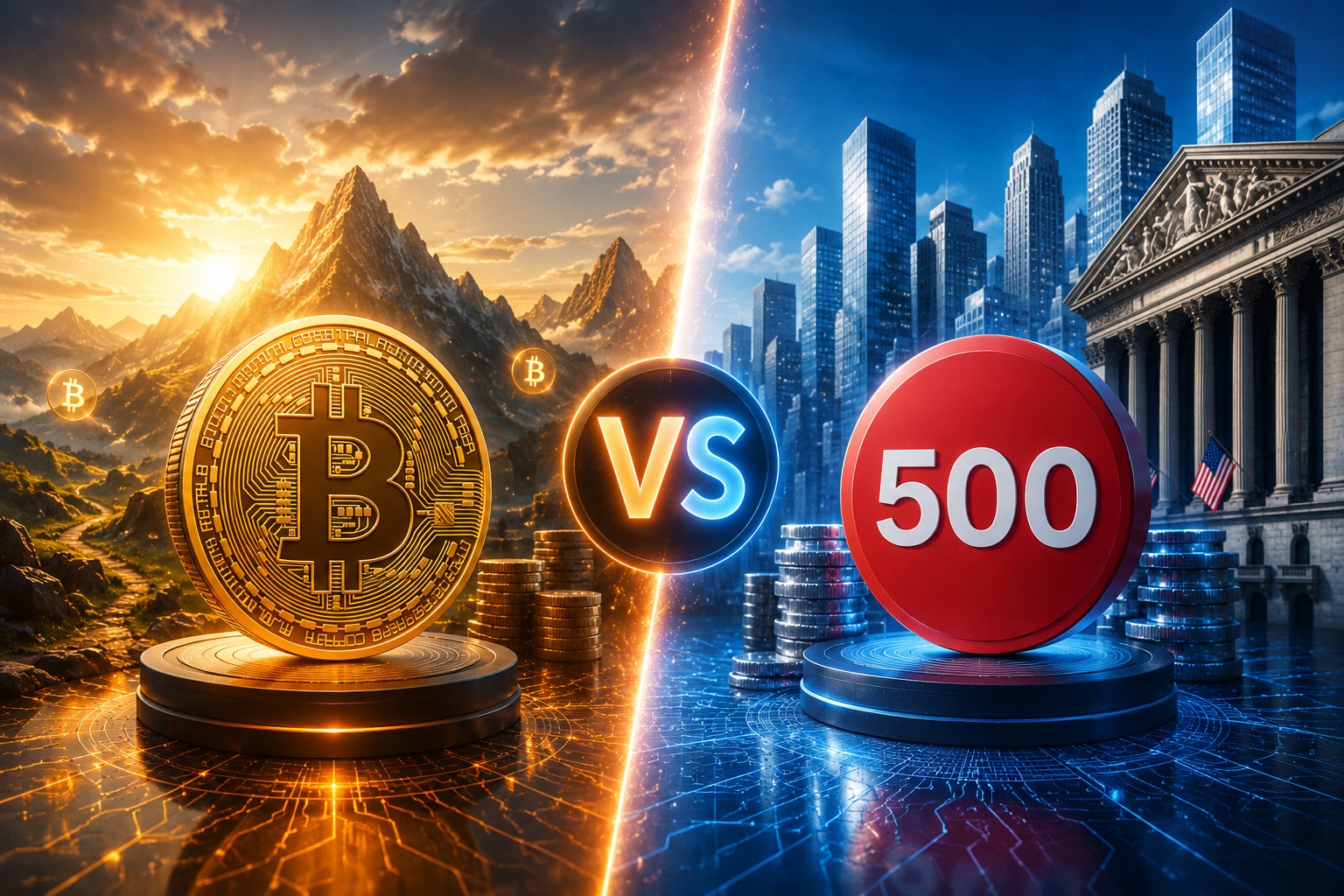
Data from TradingView shows that Bitcoin has delivered a return of approximately 82.64% over the past five years, slightly outperforming the S&P 500, which gained around 74% during the same p
Data from TradingView shows that Bitcoin has delivered a return of approximately 82.64% over the past five years, slightly outperforming the S&P 500, which gained around 74% during the same period. While the difference is relatively modest, the comparison highlights how the world's largest cryptocurrency has remained competitive with one of the most widely followed stock market benchmarks despite experiencing significantly greater price volatility.
The figures also reflect the different roles these assets play in investors' portfolios. Bitcoin is often associated with higher growth potential and larger price fluctuations, while the S&P 500 has traditionally been viewed as a benchmark for long-term stability and diversified exposure to the U.S. equity market.
Bitcoin Maintained Strong Growth Despite Market Volatility
Bitcoin's performance over the past five years has been shaped by several major market events, including bull and bear cycles, tighter monetary policies, and increasing institutional participation. Despite multiple corrections, the cryptocurrency consistently recovered and continued attracting investors, supported by broader adoption and the launch of spot Bitcoin ETFs in several markets.
At the same time, Bitcoin remains one of the most volatile investment assets. Sharp price swings can create opportunities for higher returns, but they also expose investors to greater short-term risk, making long-term conviction an important factor for those holding the asset.
Although it posted slightly lower returns than Bitcoin, the S&P 500 remains one of the world's most established investment benchmarks. The index represents 500 of the largest publicly traded companies in the United States, providing diversified exposure across sectors such as technology, healthcare, finance, and consumer goods.
Its diversified structure has helped deliver relatively stable long-term growth while experiencing lower volatility than cryptocurrencies. As a result, many investors continue to use the S&P 500 as a core component of their portfolios, particularly those seeking more predictable returns over time.
Returns Alone Don't Tell the Whole Story
The five-year comparison shows that historical performance should not be viewed in isolation. Besides returns, investors also need to consider factors such as risk tolerance, investment objectives, and time horizon when comparing Bitcoin with traditional market indices like the S&P 500.
The comparison shows that Bitcoin generated slightly higher returns than the S&P 500 over the past five years. However, the higher upside has also come with significantly greater volatility, while the S&P 500 continues to stand out for its stability and diversified exposure to large-cap U.S. companies.
Instagram : @asetqu_official
Tiktok : @asetqu_official
Twitter : @AsetQu_Official