Long-term Bitcoin holders showed restrained exchange deposit activity during Bitcoin's slide from $87,000, according to analysis from Bitfinex, a signal that the cohort most capable of suppre
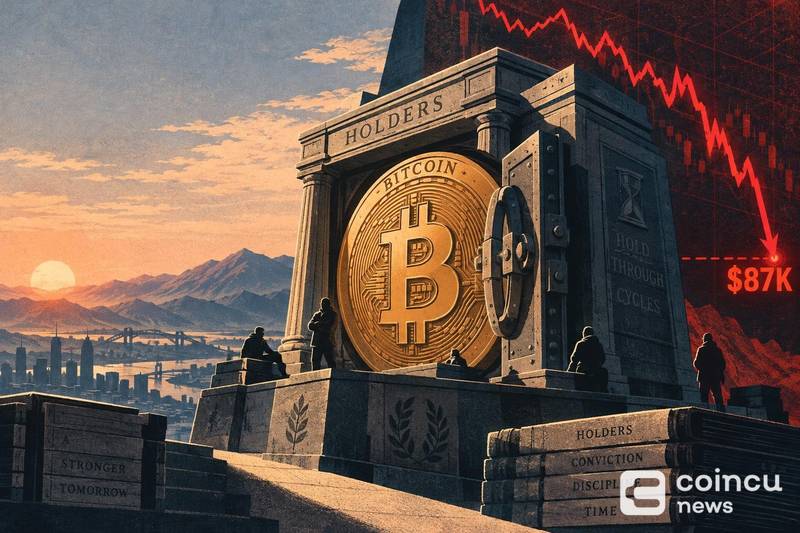
Long-term Bitcoin holders showed restrained exchange deposit activity during Bitcoin's slide from $87,000, according to analysis from Bitfinex, a signal that the cohort most capable of suppressing price did not rush to exit positions despite the drawdown.
What Bitfinex Observed During Bitcoin's Drop From $87,000
When Bitcoin declined from the $87,000 level, on-chain deposit flows to exchanges from long-term holders remained minimal, per Bitfinex data. Exchange deposits from this cohort are tracked as a leading indicator of potential sell pressure because coins must typically move to an exchange before they can be sold on the open market. For related coverage, see Is BTC’s Bull Run Coming to an End? Long-Term Holders Signal Ongoing Strength.
Long-term holders, defined as wallets that have held Bitcoin for an extended period without moving coins, represent a structurally significant supply bloc. Their inactivity during a price drop suggests the cohort did not treat the move from $87,000 as a distribution trigger, a distinction that separates the event from prior corrections where holder capitulation amplified downside. Research into long-term holder behavior during Bitcoin's bull run has consistently shown that this cohort's conviction readings carry outsized weight for market structure. For related coverage, see Bitcoin Breaks $77,000 After Trump's Iran Peace Deal.
Why Limited Deposits Matter for Long-Term Holder Behavior
An exchange deposit from a long-term holder precedes a potential sale but does not guarantee one; coins can be deposited for collateral, custody migration, or over-the-counter settlement without hitting the spot order book. What the Bitfinex observation establishes is that even this preparatory step barely occurred, meaning the pipeline for long-term-holder-driven sell pressure remained largely closed during the $87,000 decline. For related coverage, see Bitcoin Faces Major Correction Amid Macroeconomic Pressures.
The signal does not confirm every long-term holder was inactive; it reflects aggregate deposit flows across the wallets Bitfinex tracks. A subset could have sold through peer-to-peer channels or derivatives without touching exchange deposit addresses. The metric is directional, not exhaustive, and should be read as evidence of restrained behavior rather than proof of universal conviction. For related coverage, see Twenty One Capital Buys 4,812 Bitcoin in Tether-Backed Initiative.
Bitcoin has previously faced sharper corrections where macroeconomic pressures drove broad holder capitulation, making the muted response from long-term holders during the $87,000 drop a meaningful contrast against those prior episodes. For related coverage, see Bitcoin Vacuum Zone $72,000–$82,000: Upward Momentum Still Unconfirmed.
What the Signal Could Mean for Bitcoin Market Pressure
With long-term holder deposits subdued, the sell-side pressure during the decline from $87,000 was more likely sourced from shorter-duration participants: leveraged traders being liquidated, short-term holders taking losses, or algorithmic strategies responding to technical breaks. That composition matters because leverage-driven selling is typically self-limiting once margin positions are cleared, whereas long-term holder distribution can sustain downward pressure across weeks.
The Bitfinex deposit data therefore points toward a scenario where structural supply overhang from the most patient holders did not build during the move lower. Whether that translates into a price floor or a recovery depends on demand-side flows and macro conditions that a single exchange-deposit metric cannot determine. Analysts tracking Bitcoin's vacuum zone between $72,000 and $82,000 have noted that unconfirmed upward momentum requires corroborating volume signals beyond on-chain behavior alone.
How to Read the Bitfinex Deposit Signal Going Forward
The value of the Bitfinex observation compounds when tracked over time rather than read as a single snapshot. If long-term holder deposits remain low as Bitcoin attempts recovery, that absence of overhead supply is a constructive condition. If deposits accelerate sharply on any relief rally above $87,000, it would indicate the cohort is using strength to reduce exposure, a materially different dynamic.
Traders and analysts should cross-reference the Bitfinex deposit data against broader exchange reserve trends across multiple venues, since any single exchange's flow data reflects only a subset of total market activity. The exchange reserve chart on CryptoQuant offers a multi-exchange view of aggregate Bitcoin balances that contextualizes whether the Bitfinex signal holds across the broader custodial landscape. On-chain platforms such as Coin Metrics provide additional holder cohort breakdowns for further verification. This is a data signal, not an investment recommendation; the metric narrows the probability space but does not assign a directional price outcome.
Frequently Asked Questions
What does "barely depositing coins" mean in this context?
It means long-term Bitcoin holders moved very few coins to exchange deposit addresses during the price decline from $87,000, according to Bitfinex data. Since exchange deposits typically precede selling, a low deposit rate suggests the cohort was not preparing to liquidate positions at scale.
Why do long-term holder exchange deposits matter?
Long-term holders control a large share of Bitcoin's circulating supply. When they deposit coins to exchanges in volume, it signals potential sell pressure that can weigh on price. Their restraint during a drop reduces the risk of a supply-driven acceleration lower.
Does this signal guarantee Bitcoin will rise from the $87,000 drop?
No. The Bitfinex deposit observation is one metric from one exchange, covering one holder cohort. It indicates reduced structural sell pressure from long-term holders but cannot account for demand-side conditions, macroeconomic headwinds, or activity on other exchanges. The signal is conditionally supportive, not conclusive.
Disclaimer: This article is for informational purposes only and does not constitute financial or investment advice. Cryptocurrency and digital asset markets carry significant risk. Always do your own research before making decisions.
The post Bitfinex: Long-Term Bitcoin Holders Barely Sold During Drop to $87K was initially published on Coincu.