Bitget is turning user protection into a central part of its multi-asset strategy as global financial fraud losses hit an estimated $442 billion in 2025. The exchange has launched Anti-Scam M
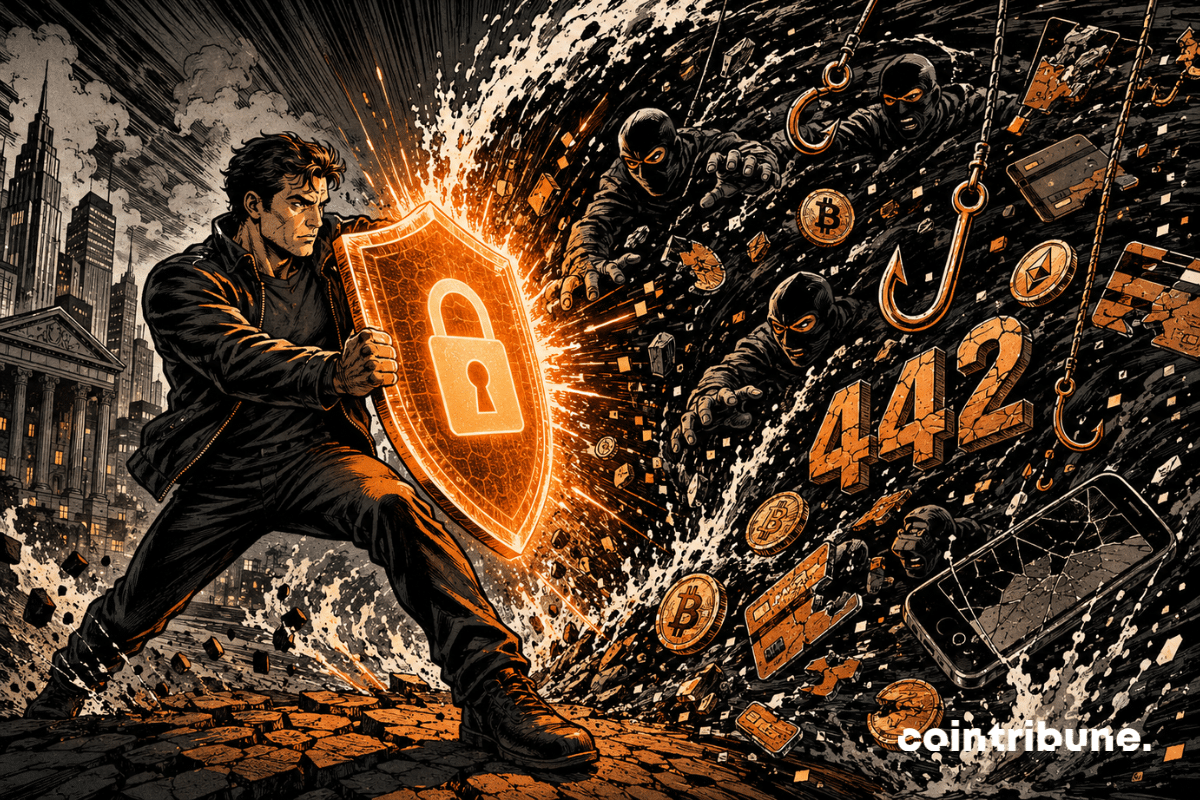
Bitget is turning user protection into a central part of its multi-asset strategy as global financial fraud losses hit an estimated $442 billion in 2025. The exchange has launched Anti-Scam Month 2026, a June-long campaign built around the theme “More Assets, Stronger Shield: Stay Safe in the Multi-Asset Era.”
In brief
- Bitget has launched Anti-Scam Month 2026 as fraud risks rise across multi-asset markets.
- The campaign targets phishing, fake apps, AI scams, malicious contracts and high-risk token schemes.
- The move reflects a wider shift: exchanges must now compete on security education, not only market access.
Bitget puts fraud prevention at the center of its UEX model
The timing is not random. Crypto users are no longer exposed only to classic phishing links or suspicious tokens. They now move between crypto, tokenized stocks, RWAs, AI-linked products, commodities, forex and other digital instruments. That wider access creates opportunity. It also gives scammers a larger surface to exploit.
Bitget’s Anti-Scam Month 2026 extends a security push already visible in previous awareness campaigns, including Bitget’s global campaign against online fraud. Under its Universal Exchange model, the platform offers access to crypto tokens, tokenized stocks, ETFs, commodities, FX and precious metals. That makes security education more than a side campaign. It becomes part of the trading experience.
The initiative will include security articles, video explainers, reports and live discussions. Bitget says the content will focus on attack methods such as SMS spoofing, fake applications, phishing systems, malicious smart contracts and high-risk token schemes. These are not exotic threats anymore. They are daily traps in digital finance.
The message is simple. A larger market requires stronger reflexes. Users may understand crypto volatility, but many still underestimate social engineering. Fraudsters often do not break platforms. They trick people into opening the door themselves.
Your 1st cryptos with BitgetThis link uses an affiliate program.A $442 billion warning for digital finance
The $442 billion figure gives this campaign a sharper edge. INTERPOL has warned that financial fraud is becoming more sophisticated, more global and more industrialized. Criminal networks now use artificial intelligence, fake identities, cross-border payment channels and coordinated scam operations.
This matters because multi-asset trading changes user behavior. A trader may hold Bitcoin, buy a tokenized stock, test an AI-related product and interact with a smart contract in the same week. Each move can expose them to a different kind of risk. The scammer only needs one weak moment.
Bitget’s campaign tries to address that shift. It does not present fraud as a crypto-only issue. It frames it as a broader financial problem moving across asset classes. That angle fits the market trend highlighted by Bitget’s 2026 report on investors moving into equities, commodities and AI. The next wave of scams will not respect the old categories between Web3, fintech and traditional markets.
AI and tokenized assets create a new fraud battlefield
Two areas stand out in Bitget’s campaign: artificial intelligence and tokenized real-world assets. Both sectors attract serious capital. Both also attract opportunists. AI can be used to create fake messages, cloned voices, deepfake videos and automated phishing flows. Tokenized assets can be abused through fake platforms, misleading yield promises and counterfeit investment products.
This is where user education becomes practical. A clean interface does not guarantee legitimacy. A familiar logo can be copied. A convincing message can still be fraudulent. In the multi-asset era, trust must be checked, not assumed.
Bitget plans to release anti-scam reports with onchain security agencies, RWA institutions and AI industry partners. That wider collaboration could help users understand risks before they become losses. It also signals that exchanges are under pressure to do more than list assets and process trades.
Security becomes a competitive issue for exchanges
For exchanges, security is no longer only about infrastructure. Proof of reserves, protection funds and account safeguards remain important. But they do not solve every problem. Many fraud cases happen outside the exchange, through fake links, fake apps or impersonation attempts.
Bitget appears to understand this reputational challenge. By expanding its education push, the company is trying to show that a universal exchange must also behave like a security guide. That may become a stronger differentiator as platforms compete for mainstream users.
The broader lesson is clear. The next phase of digital finance will not be judged only by liquidity, product variety or fees. It will also be judged by how well platforms help users survive complexity, a point that echoes Cointribune’s broader look at the most trusted crypto exchanges in 2026. In that sense, Bitget’s Anti-Scam Month is not just a communication campaign. It is a response to a market where access has grown faster than user protection habits.