Bless Network has had one of the more turbulent post-launch trajectories in the DePIN space. The token launched in September 2025 to significant fanfare — a 250% price surge on day one, listi
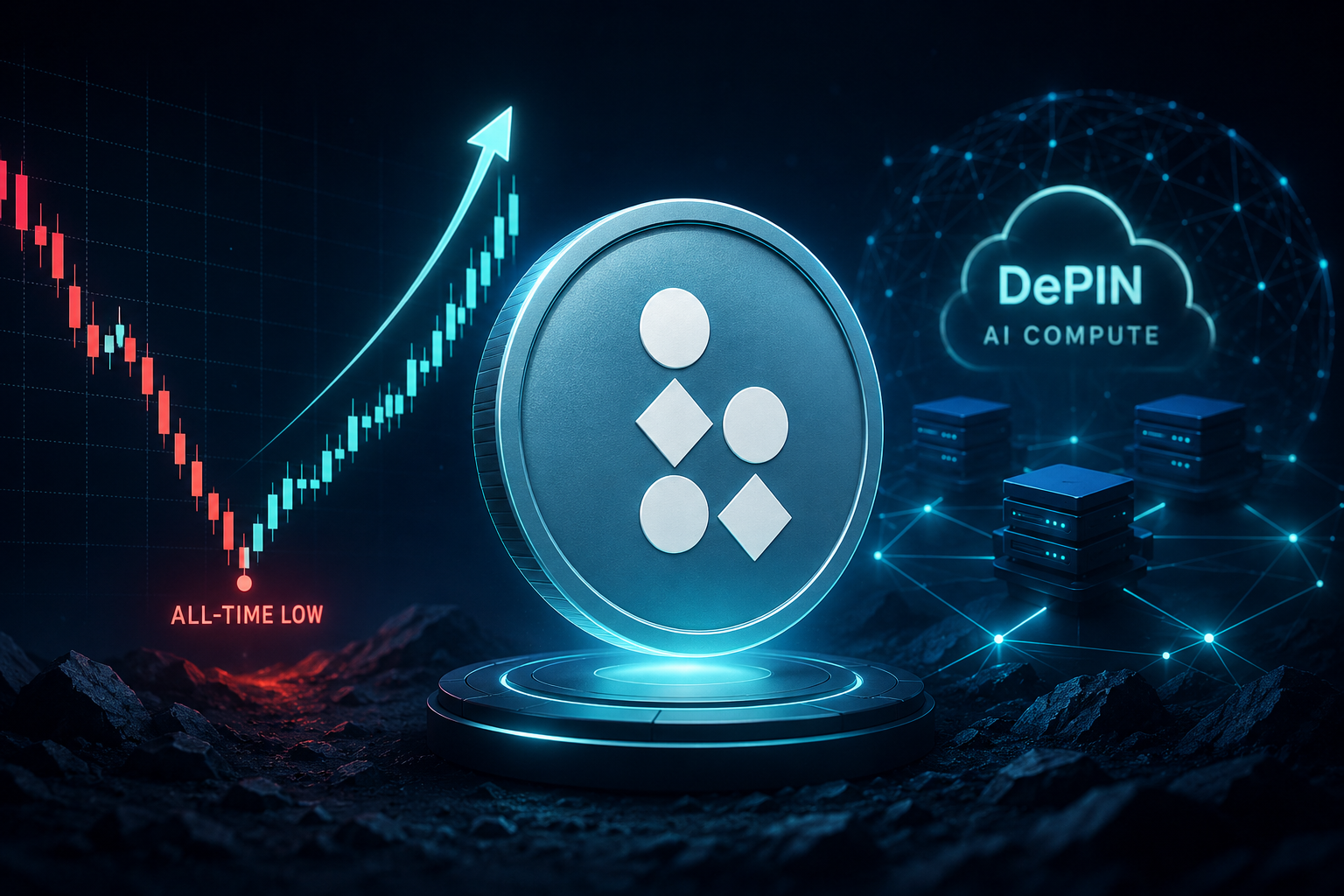
Bless Network has had one of the more turbulent post-launch trajectories in the DePIN space. The token launched in September 2025 to significant fanfare — a 250% price surge on day one, listings on Binance, Kraken, Gate, and MEXC, and a market cap briefly touching $403 million. Nine months later, BLESS is trading around $0.0078, roughly 97% below its all-time high of $0.2221. The more relevant number right now is the 27.4% gain over the past seven days — a recovery from the all-time low of $0.003962 hit on June 5, 2026.
The gap between where BLESS launched and where it trades today tells a story that mixes genuine infrastructure promise with uncomfortable insider selling patterns that have repeatedly undercut price recovery attempts.
What Bless Network Is Actually Building
The underlying concept is straightforward and addresses a real problem. Bless is a DePIN platform that aggregates idle computing power from everyday devices — laptops, phones, consumer-grade hardware — into a global distributed compute network designed to serve AI inference, machine learning workloads, blockchain infrastructure, and general web hosting. The pitch is up to 90% cost savings versus traditional cloud providers like AWS and Google Cloud.
The network demonstrated real scale during its testnet phase, growing to over 6.3 million nodes and 2.5 million users — figures that established genuine credibility before the mainnet launch. Node operators receive 90% of service revenues, and the barrier to entry is intentionally low: a browser extension is enough to start contributing compute and earning rewards.
The dual-token model uses TIME as the participation and rewards token within the network, convertible to BLESS, which serves as the governance and staking token. Node operators must stake BLESS to contribute compute resources, directly tying token utility to actual network participation. A percentage of network proceeds goes toward direct token burns, adding a deflationary mechanism as usage grows.
The Insider Selling Problem That Won't Go Away
Here's where the story gets more complicated. On-chain data from Arkham Intelligence revealed that on March 26, 2025, the Bless team sold 300 million BLESS tokens worth approximately $3.83 million, triggering a 55% single-day crash. That pattern continued into April 2026, with additional multi-million token sales routed to exchanges like Bitget. The recurring nature of these sales has been the single biggest headwind for BLESS holders trying to accumulate through the project's narrative cycles.
Until the team either completes its selling program or communicates a transparent vesting and distribution schedule, the overhang will continue capping recovery attempts. The project's long-term technical merits don't change that near-term dynamic.
The Roadmap That Matters
Bless has structured its development in clear phases. Phase 1 introduced desktop GPU-sharing nodes and an anti-sybil campaign to ensure fair reward distribution. Phase 2 — currently underway through 2026 — focuses on developer tools including Docker support and automated scaling for seamless application deployment. Phase 3, targeted for 2027, adds fiat payment options and dynamic reward structures based on node performance and demand.
The GPU node rollout is the most watched milestone for analysts tracking the token, since GPU compute access is where actual AI workload demand sits today — and where Bless's revenue model becomes genuinely competitive against centralized cloud alternatives.
Where BLESS Stands Now
The 27.4% seven-day recovery from the June 5 all-time low is encouraging as a technical signal, but BLESS remains below all major moving averages and in a structural downtrend. The DePIN sector itself is competitive — Render Network, Akash, and Filecoin all occupy parts of the same market with larger established user bases.
What BLESS has going for it is scale at the node level, a consumer-accessible entry model, and a narrative that aligns directly with the AI compute infrastructure demand cycle. What it needs to demonstrate is that insider selling has peaked, GPU node adoption is accelerating, and real developer demand is starting to flow through the network. Until those three things converge, the recovery will remain fragile.