When minting an NFT or recording a transaction, it is easy to assume the buyer now owns the underlying artwork, music, photograph, or intellectual property. The legal reality, however, is rar
When minting an NFT or recording a transaction, it is easy to assume the buyer now owns the underlying artwork, music, photograph, or intellectual property. The legal reality, however, is rarely that straightforward.
While a blockchain reliably proves that a specific digital record existed at a given time and makes that record nearly impossible to alter, intellectual property rights do not automatically follow. Recording a token ID on a ledger simply does not confer legal ownership of the asset itself.
Intellectual property rights are granted through traditional legal frameworks where copyrights come from copyright law, patents from patent offices, and trademarks from trademark statutes. Blockchain technology is merely parallel infrastructure, not a substitute for these established systems.
This distinction was made clear when the US Copyright Office and USPTO concluded their joint NFT study. The agencies determined that existing IP laws are fully equipped to handle NFT-related matters, concluding that new legislation or specialized registration systems were neither necessary nor advisable.
The Legal Reality of Ownership Versus On-Chain Tokens
The USPTO’s current trademark examination guidance makes the distinction explicit: an NFT can identify a digital asset, contain information about its creator and ownership history, and point to where the underlying asset is located, but the token is not the underlying good or service itself.
To understand how this works in practice, consider a digital artwork sold as an NFT for $100,000. Unless a separate agreement explicitly transfers the copyright, the buyer receives the token, not the creator’s exclusive rights to reproduce, distribute, display, or adapt the work. U.S. copyright law strictly separates ownership of an asset from ownership of its copyright, allowing those rights to be transferred independently through formal contracts. The same core principle applies internationally, even if specific rules vary by jurisdiction.
As WIPO points out, copyright protection arises automatically under the Berne Convention, so creators never need a blockchain to secure their legal rights. A blockchain can record that a claim was made, but it lacks the authority to determine whether that claim is legally valid.
Why Blockchains Cannot Create or Enforce IP Rights
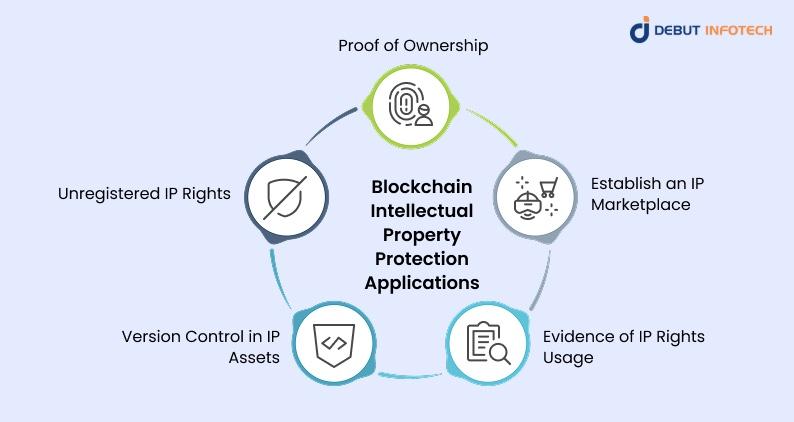
Blockchain Intellectual Property Applications
If someone uploads a photograph they did not create, hashes it, and mints an NFT, the blockchain can faithfully record that transaction, but it cannot determine that the person was a fraud. The ledger has no built-in understanding of authorship, contracts, employment relationships, inheritance, licensing agreements, or court judgments.
Blockchain can create a tamper-resistant record, but if incorrect information is entered initially, the blockchain does not magically make the information correct. There is also a jurisdiction problem. Patent rights, for example, are territorial. A patent granted in one jurisdiction does not automatically create enforceable patent rights everywhere else.
A blockchain transaction, however, can happen globally within seconds. That means the ledger and the legal system operate according to fundamentally different rules. The blockchain says: Wallet A transferred Token X to Wallet B, but the legal system may need to answer whether a Wallet can actually own the IP. What rights were transferred, and if the licence was exclusive
INTERESTING: Can You Copyright an AI Prompt? The Legal Fight Over Web3 Generated Art
What Blockchain Actually Does: Timestamping and Provenance
One of its strongest applications is blockchain IP provenance tracking. Instead of putting an entire copyrighted work on-chain, a creator can generate a cryptographic hash of the file and record that hash on a blockchain. If the file changes, its hash changes, and someone can later calculate the original file’s hash and compare it with the blockchain record, making it valuable in disputes.
Suppose two designers claim they created the same logo first. A blockchain timestamp does not automatically establish legal authorship, but it can provide evidence that a particular version of a file existed in someone’s possession at a particular time, which is a much narrower claim than “blockchain proves ownership,” making that narrower claim considerably more defensible.
Smart Contracts Could Make Licensing More Efficient
The more promising opportunity may not be proving who owns IP. It may be managing what owners allow other people to do with it. For example, global recorded-music revenue reached $31.7 billion in 2025, according to IFPI, with streaming accounting for 69.6% of revenue. Paid subscription streaming alone generated more than half of global recorded-music revenue, and behind those billions are enormous quantities of licensing data.
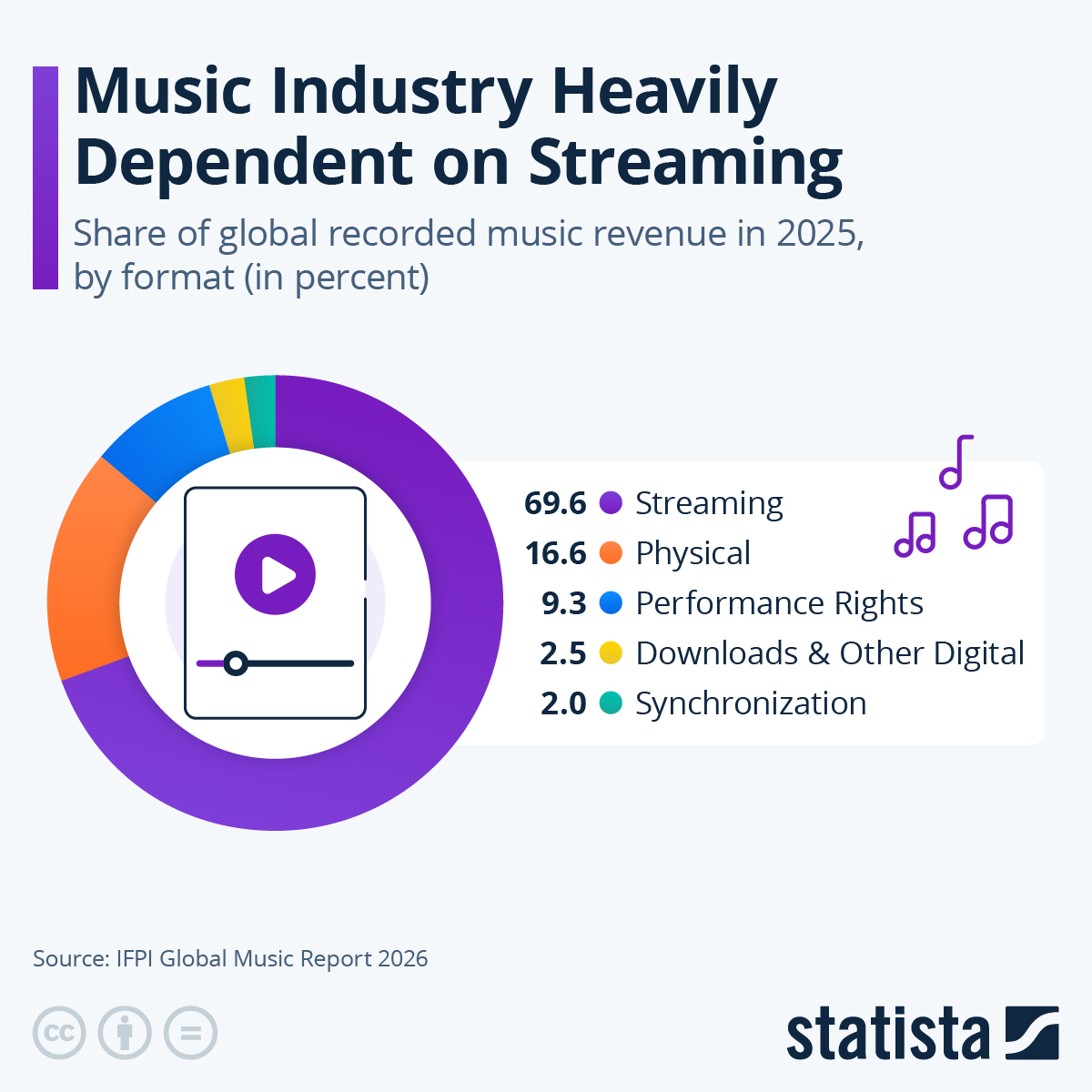
A graph of share of global recorded music revenue in 2025
So, who owns the composition? Who owns the recording? What usage occurred?
A licence could specify that a payment is triggered whenever a verified event occurs whereby a platform could report usage, an oracle could transmit the relevant data, and a smart contract could calculate and distribute payments according to predefined rules. Research published in Blockchain: Research and Applications describes “smart legal contracts”combined with blockchain smart contracts as a potential architecture for handling legally binding agreements, automated rights transfers, and royalty payments.
More recent research has proposed “smart licences” capable of automating royalty calculation, transaction execution, and payment distribution across multiple blockchain networks.
INTERESTING: AI Therapy on the Blockchain: Can Smart Contracts Replace Human Counsellors?
The Oracle Problem Is the Weak Link
This is where many tokenized intellectual property management systems encounter their hardest problem because blockchains are very good at answering what happened on the blockchain and are much worse at answering what happened in the real world.
Suppose a songwriter licenses a track for $0.01 per commercial stream. A smart contract can calculate the payment, but who tells it that 4.7 million legitimate streams occurred? The blockchain cannot listen to Spotify and independently determine whether the reported number is accurate. An oracle or trusted data provider must supply the information.
Now consider a patent licence; a smart contract might automatically release royalties when a product reaches 1 million units sold, but the blockchain cannot independently verify manufacturing records unless a trusted external data source supplies them.
Blockchain can automate a rule, but it cannot automatically verify every fact upon which that rule depends. The same problem exists with ownership; if two companies dispute who owns a patent, putting both claims on-chain does not resolve the dispute, and a court, patent office, or contractual dispute mechanism may still have to decide.
The NFT boom produced a useful real-world demonstration of this distinction where an artist, Mason Rothschild, created “MetaBirkins,” NFTs depicting digital versions of Hermès Birkin bags.

Mason Rothschild’s digital version of Hermès Birkin bags. Source:
EuroNews
Hermès sued, arguing trademark infringement and dilution, and in 2023, a US jury found Rothschild liable and awarded Hermès $133,000 in damages. The court later entered a permanent injunction. The blockchain did not settle the dispute, but trademark law did something easy to miss during the NFT boom: putting an asset on a blockchain does not take it outside existing IP law.
The same principle appeared in the Nike-StockX dispute. Nike sued StockX over NFTs connected to Nike shoes and alleged trademark infringement and counterfeiting. In 2025, the companies settled the case, but earlier in the litigation, a federal judge found StockX liable for selling 37 counterfeit Nike shoes.
The technology changed, but the legal questions did not.
Blockchain Is Better at Provenance Than Ownership
This assertion creates a more useful framework for understanding blockchain’s role in intellectual property. A blockchain can record when a digital object was registered, preserve evidence that a particular record has not changed, and provide a transparent history of token transfers. It can also show the recorded chain of custody and execute royalty rules written into a smart contract.
What it cannot establish on its own is legal ownership, a blockchain does not verify whether the person who minted a token actually owned the underlying copyright, whether a contract transferred full ownership or merely granted a licence, or whether the underlying work infringes someone else’s IP. It also cannot determine which country’s laws should govern a dispute, which is why asking can blockchain enforce copyright has a straightforward answer: not by itself.
Blockchain can strengthen evidence, streamline administration, and automate parts of licensing. Legal systems still determine who owns the rights and how those rights are enforced.
The Future of IP Management Will Probably Be Hybrid
The most realistic future is not a blockchain replacing copyright offices, courts, collecting societies and licensing departments but a hybrid system. A creator can establish rights under existing law, hash the relevant files, record provenance on a blockchain, attach a legally enforceable licence, and use smart contracts to automate some royalty payments.
A music platform could use blockchain as a shared rights ledger while conventional legal agreements define what those records mean. A patent portfolio could use blockchain to create an auditable history of licences while patent offices remain responsible for the underlying rights.
WIPO itself is exploring this direction with its Blockchain Task Force working on standards addressing interoperability, governance and regulation in blockchain-based IP ecosystems and pointing toward the technology’s real value. Blockchain does not need to create ownership to be useful, it can make ownership records easier to verify, make provenance easier to audit, make licensing rules more machine-readable, and make some royalty flows more automatic.
The mistake was expecting the ledger to become the law, and the more valuable opportunity is using the ledger to make the administration of legally existing rights cheaper, faster, and more transparent, which is a considerably less glamorous promise than “blockchain creates digital ownership.” It is also one the technology has a much better chance of keeping.
Disclaimer: This article is intended solely for informational purposes and should not be considered trading or investment advice. Nothing herein should be construed as financial, legal, or tax advice. Trading or investing in cryptocurrencies carries a considerable risk of financial loss. Always conduct due diligence.
Enjoyed this? BookmarkDeFi Planet, explore related topics, and follow us onTwitter,LinkedIn,Facebook,Instagram,Threads, and CoinMarketCap Community for seamless access to high-quality industry insights.
Take control of your crypto portfolio with DEFI PLANET PRO, DeFi Planet’s suite of analytics tools.
The post Blockchain Cannot Create Ownership, So What Does It Really Do for IP? appeared first on DeFi Planet.