BlockDAG Whitepaper Released: What the New Document Covers The project has published a new document called the Execution Whitepaper on 31 July 2026. This blog explains what the BlockDAG White
BlockDAG Whitepaper Released: What the New Document Covers
The project has published a new document called the Execution Whitepaper on 31 July 2026.
This blog explains what the BlockDAG Whitepaper covers, how the project describes its ecosystem, and what stages are still planned for the coming months.
The information below comes directly from the whitepaper and the project's official website.
What Is the BlockDAG Whitepaper About
The BlockDAG Whitepaper is described as an "Ecosystem Delivery Edition." It builds on an earlier technical white paper from April 2026, which set out BlockDAG as a proof-of-work layer-1 network using directed acyclic graph (DAG) architecture.
The new document keeps that technical base and adds detail on how the project plans to connect its products into one system.
The paper sums up its direction in one line: Mine, Build, Trade, Play, Store, Swap, Spend.
According to the document, a user can enter the ecosystem through mining, hold or stake BDAG (the network's native token), trade it, use it in entertainment applications, swap it for other assets, and eventually spend it through supported payment services.
Execution Position: Where Each Pillar Stands
The project document lists five pillars of the ecosystem and states where each one currently stands, along with what comes next.
Pillar
Current Position
Next Delivery
Blockchain
Mainnet, EVM execution, explorer, RPC, and staking active
Scale performance and developer adoption
Mining
Physical miner fulfilment started; mobile onboarding active
Complete delivery and activate the miner fleet
Casino
Live commercial and spending application
Expand rewards, wallet integration and reach
Exchange
Built as a BlockDAG-owned multi-asset exchange
Public launch in August 2026
Super App
Core services being unified into one app
Launch in September 2026
Technical Foundation: DAG Architecture and GHOSTDAG Consensus
The official document explains that BlockDAG uses a DAG-based ledger instead of a strictly linear blockchain. This allows multiple blocks to be produced and processed at the same time, rather than one after another.
The consensus mechanism responsible for ordering these blocks is called GHOSTDAG.
According to the document, GHOSTDAG has several roles:
Orders concurrent blocks within the DAG
Preserves Proof-of-Work security assumptions
Supports parallel block production
Resolves transaction-ordering conflicts
Protects against double spending
The network also uses an EVM-compatible execution environment, meaning developers can deploy smart contracts using tools built for Ethereum, such as Remix, Hardhat, and Foundry.
Mining Delivery and the Path From Miner to Ecosystem User
Mining is described in the project Whitepaper as both the network's security layer and its first large-scale distribution channel.
Physical miners contribute computing power, while the X1 mobile app offers a lower-effort way for users to take part.
The document states that physical miner fulfillment has already started, with full delivery and activation of the miner fleet listed as the next milestone. The stated goal is that a miner should not need to leave the BlockDAG environment after earning BDAG.
Instead, rewards can be held in a wallet, staked, traded on BlockDAG Exchange, used inside the casino, swapped for other assets, or spent once the Super App is live.
Tokenomics and BDAG Utility Across the Ecosystem
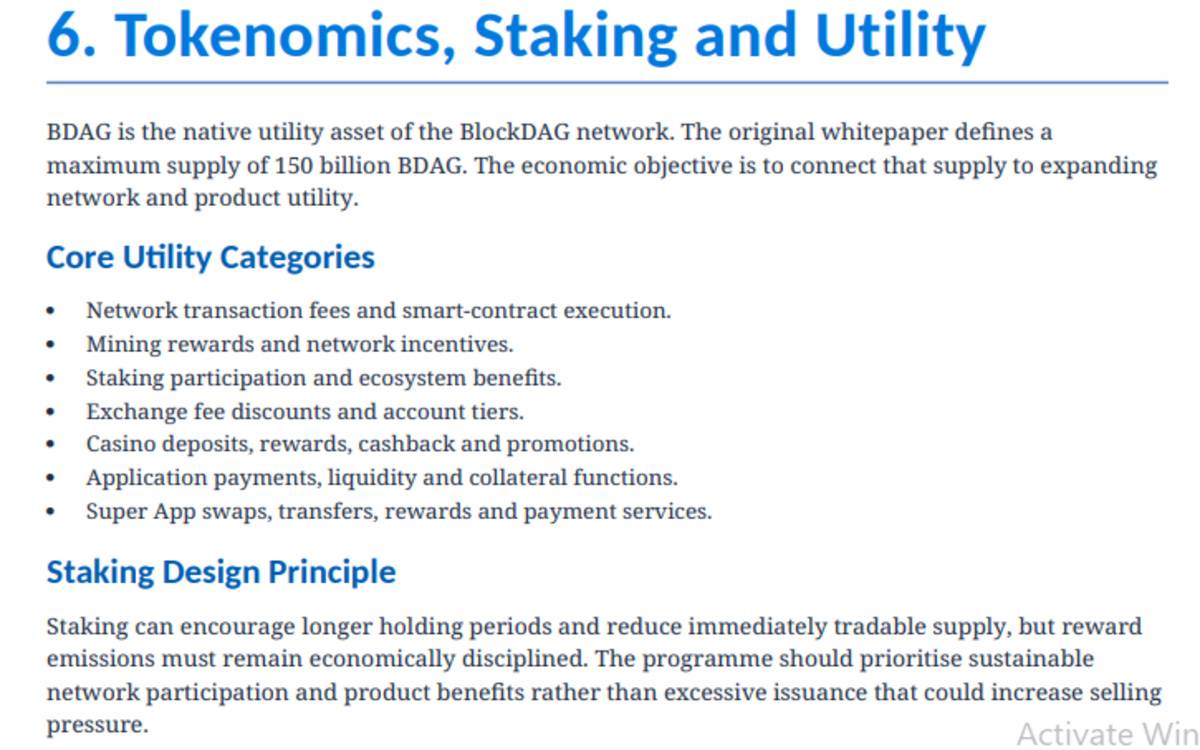
BDAG is described as the native utility asset of the network, with a maximum supply of 150 billion BDAG carried over from the original official document. The Execution Whitepaper lists several uses for the token across the ecosystem:
Network transaction fees and smart contract execution
Mining rewards and network incentives
Staking participation and ecosystem benefits
Exchange fee discounts and account tiers
Casino deposits, rewards and promotions
Application payments and liquidity functions
Source:Official Document
On staking, the whitepaper notes that reward emissions need to stay disciplined, since excessive issuance could add selling pressure.
It also states that treasury, liquidity, team, and staking allocations should stay publicly verifiable through the BlockDAG explorer and vesting contracts.
BlockDAG Exchange: Ownership and Planned Market Scope
A central part of the BlockDAG whitepaper is the BlockDAG Exchange, described as a BlockDAG-owned exchange rather than a simple listing venue. The document states it is designed to offer BDAG alongside Bitcoin, Ethereum, stablecoins, and other major digital assets.
Planned features listed in the paper include spot trading, staking and earning products, referral and affiliate rewards, and trading fee discounts for users who pay fees in BDAG.
The official document states that owning the exchange gives project more control over the user relationship, product design, and trading revenue compared with relying only on third-party listings.
The Exchange is scheduled to launch in August 2026.
BlockDAG Casino and Consumer Utility
The BlockDAG.com Casino is described as a live commercial application that already gives BDAG a spending and entertainment use case.
The whitepaper lists deposits, wagering, and withdrawals as sources of recurring transaction activity, along with gaming revenue as a funding source separate from token sales.
Planned BDAG integrations for the Casino include deposits and withdrawals in BDAG, loyalty rewards, and benefits tied to BDAG holdings or staking, with direct wallet transfers planned through the Super App.
The Super App: A Closed-Loop User Journey
The Super App is presented as the layer that connects everything else. According to the whitepaper, its core modules cover mining, storing assets, trading, swapping, staking, playing in the casino, and spending through supported payment rails.
The document summarizes the intended user journey as Mine, Earn, Store, Stake, Trade, Swap, Play, Spend, Repeat. The Super App is scheduled to launch in September 2026, following the Exchange launch the previous month.
Delivery Roadmap and Remaining Milestones
The BlockDAG Whitepaper lays out three remaining milestones needed to complete what it calls the core ecosystem.
Milestone
Target
Complete miner delivery
Fulfil, onboard and activate the remaining miner fleet
BlockDAG Exchange launch
August 2026
Super App launch
September 2026
Beyond these three points, the document also mentions further exchange listings, cross-chain bridges, developer grants, and expanded payment card availability as later-stage plans.
Risks and Governance Disclosed in the Document
The whitepaper includes a dedicated risk and governance section. It states that BlockDAG currently operates through a corporate and foundation structure while working toward broader decentralized participation.
Risks listed in the document include:
Digital asset price volatility and liquidity risk
Technology, smart contract and cybersecurity risk
Exchange, custody and counterparty risk
Regulatory and licensing uncertainty across jurisdictions
Hardware delivery and logistics risk
Dependence on third-party payment and banking partners
The legal disclaimer in the whitepaper also states clearly that the document does not guarantee any increase in BDAG's price and that statements about adoption, demand, and revenue are strategic objectives rather than promises of investment performance.
Final Thoughts
The BlockDAG Whitepaper positions the project as roughly halfway through a longer execution plan. The blockchain, mining program, and casino are already active, while the exchange and Super App remain the two major pieces still to launch in August and September 2026, respectively, as per the official X post announcement.
Disclaimer: This article is for informational purposes only and does not constitute financial advice. Cryptocurrency markets are volatile, and readers should conduct their own research before making any investment decisions.