BitcoinWorld Blockstream and Thales Launch Hardware Bitcoin Custody System Blockstream launched an enterprise Bitcoin custody system built with French technology and cybersecurity group Thale
BitcoinWorld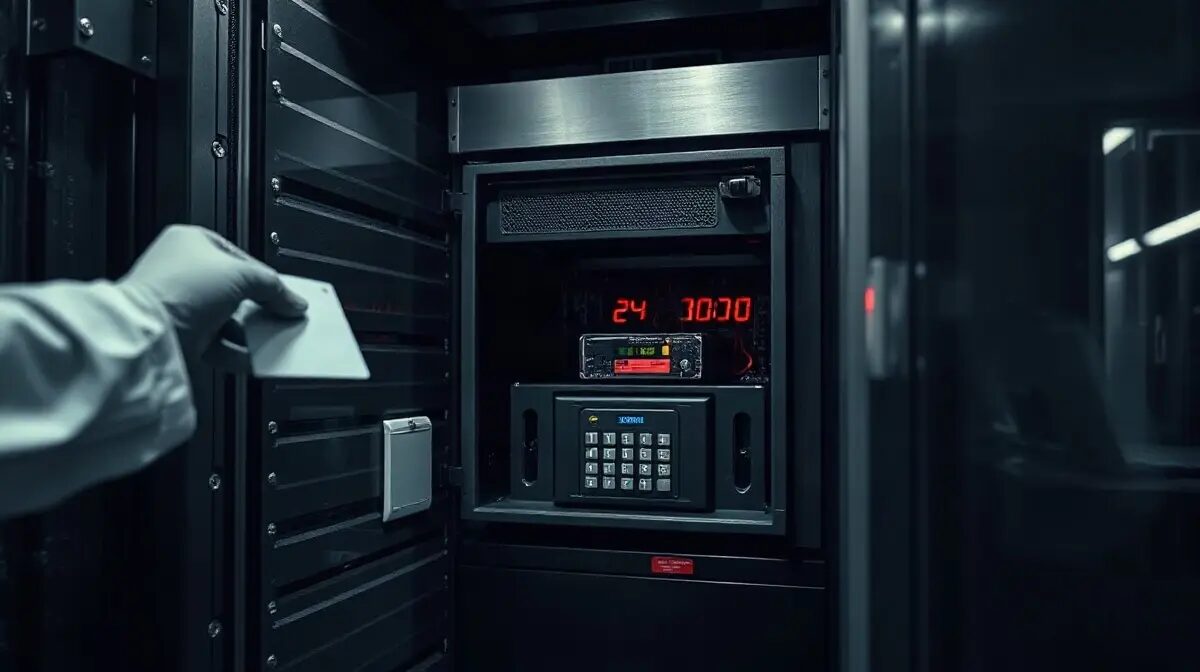 Blockstream and Thales Launch Hardware Bitcoin Custody System
Blockstream launched an enterprise Bitcoin custody system built with French technology and cybersecurity group Thales, the company announced on Nov. 13, according to Bitcoinist. The product keeps the most sensitive step in moving bitcoin — signing transactions — inside dedicated security hardware, an approach Blockstream co-founder and CEO Adam Back is pitching as a return to basics as AI-assisted attacks grow more capable.
Blockstream and Thales launched an institutional Bitcoin custody system on Nov. 13, 2026. It runs Blockstream’s Secure-MPC and the FROST threshold signing protocol entirely inside Thales hardware security modules, so signing keys never leave sealed devices.
Key facts
- The solution is delivered through Blockstream Enterprise and builds on a two-year relationship between the two firms.
- It pairs Thales hardware security modules (HSMs) with Blockstream’s Secure-MPC and the FROST threshold signing protocol, which lets authorized parties jointly sign without reconstructing a full private key.
- The announcement landed two weeks after hackers stole about $6.3 billion from Binance in an attack the FBI attributed to North Korea.
- Blockstream said its Liquid Network sidechain was drained of nearly 4,000 BTC through a software bug in September, with attackers returning 3,400 BTC after the flaw was patched.
What Blockstream is actually selling
The core claim is about where the signing happens, not whether multi-party computation is used. Blockstream says its system executes the signing protocol entirely within the HSM’s secure environment, while conventional MPC solutions may expose parts of the process to general-purpose computers that are easier to attack.
“By moving MPC execution inside the HSM, this architecture addresses critical security risks,” said Jeff Boortz, Blockstream’s chief product officer.
Cointelegraph reported a fuller version of Back’s argument: he told the outlet that common MPC protocols are often too complex and too interactive to work in a fully offline cold storage setting, which is why the HSM execution matters. “Complexity is the enemy of security. And going back to basics is the answer, you know, just cold-store it,” Back said, as quoted by Cointelegraph. The same interview was summarized by PANews on Nov. 14.
Back also argued that AI could make the problem harder, because it can help attackers spot small implementation errors in complex MPC code that would otherwise stay hidden. The Binance episode is his illustration: the exchange said attackers staged fake job interviews and planted malware in a coding assignment on an engineer’s work computer. A June incident involved a tampered installer downloaded while an engineer looked for an AI coding tool, and by Oct. 20 the attackers had used a compromised computer and an internal AI tool to reach two more employees working on wallet infrastructure, per BleepingComputer as cited by Bitcoinist. The blockchain was never the weak point.
Why it matters
Institutions treat custody as a gatekeeper, not a feature. Banks and asset managers need signing infrastructure that meets the same bar as the rest of their operations, and a hacked laptop should not be enough to move client bitcoin. “Financial institutions require secure, reliable infrastructure as they integrate bitcoin into their existing operations,” said Michael Minkevich, Blockstream’s president and chief operating officer.
The direction of travel is broader than one product. Thales has also expanded work with Fireblocks to keep signing operations inside customer-owned HSMs at banks and regulated institutions, which suggests custody is consolidating around hardware boundaries rather than software-only designs. The same demand has been visible elsewhere in institutional crypto infrastructure, including Standard Chartered’s plan for institutional crypto custody in Singapore.
The timing is awkward in one respect: Blockstream’s own Liquid setback in September shows that sealed hardware protects signing, but does not by itself protect a network from software bugs.
Market snapshot
Bitcoin traded at $65,438 (₹6,168,429) on Nov. 15, 2026 at 10:08 UTC, down 2.6% over 24 hours and 13.7% over seven days, with a market cap of $1.32 trillion and 24-hour volume of $37.08 billion, according to CoinPaprika data. The launch is infrastructure news arriving while the asset itself is under selling pressure.
What to watch
The next concrete test is adoption: whether regulated custodians and banks disclose deployments of the Blockstream Enterprise system, and whether other MPC vendors follow by moving signing execution into customer-owned HSMs. Back’s stated hope, per Cointelegraph, is that the wider custody industry adopts comparable offline models.
This post Blockstream and Thales Launch Hardware Bitcoin Custody System first appeared on BitcoinWorld.
